How to Declutter Your Home Step by Step, and Where It Goes
A step-by-step plan to declutter your home, plus where old medicines, batteries, electronics, paint and mattresses go and how long to keep tax papers.
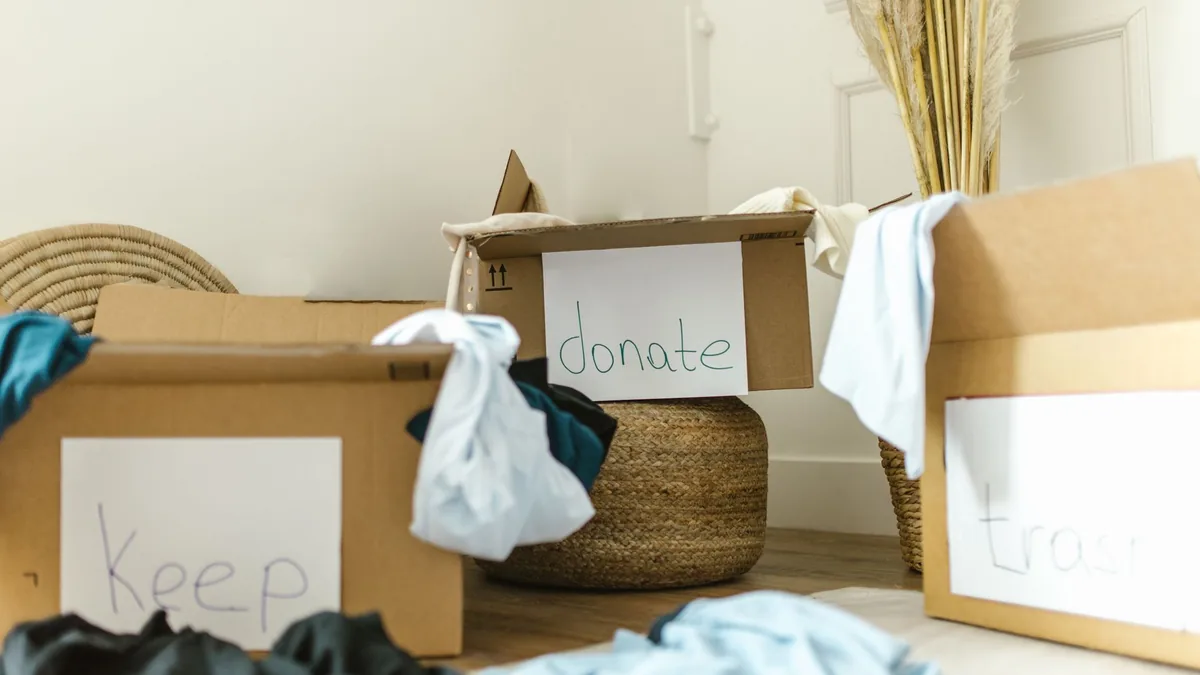
The piles in several rooms have no obvious start, and the things that are plainly finished, old pill bottles, dead batteries, a half-used can of paint, sit in a corner because you are not sure where they are allowed to go. Doing the whole house in one go risks overwhelm, which is why one professional organizer’s advice is to start small. Below is an order you can follow to the end, with the sorting rule for each room and, for the awkward items, where the official pages say they can go.
The short answer
| Step | What you do | Done when |
|---|---|---|
| 1. Pick a start | Choose one category and start small; for short sittings, one room or drawer at a time (our suggestion) | You know what you are doing first and for how long |
| 2. Set the piles | Keep, donate, sell, toss or recycle, plus a separate box for the hard-to-dispose items (our suggestion) | Each item you touch goes in one pile |
| 3. Clear the rooms | Kitchen, bathroom, kids and living areas, garage or storage, in that order (our suggestion); clothes go to the closet guide | Each room’s piles are bagged and out of the room |
| 4. Send the hard stuff on | Medicines, batteries, electronics, paint and mattresses each have their own route (see the table below) | Nothing hazardous is left in a donate or trash bag |
| 5. Sort the paper | Keep what a tax or property record needs, for the period the IRS lists | Paper is down to what you must keep |
| 6. Stop it coming back | A standing donation bin, a twice-a-year edit, no new storage until the space is done | The piles do not refill |
Where do I start, and does it have to be room by room?
Both organizers read for this guide work by category, not by room. The KonMari method tidies the whole house by category, in a fixed order: clothes, books, papers, komono (miscellaneous items), then sentimental items. It argues against going room by room: in its words, tackling one shelf, closet or room at a time “will doom you to a life of clutter”, partly because the same type of item is often stored in more than one place. NEAT Method works in small steps instead: its editing guide says to edit one category at a time and start small to avoid becoming overwhelmed, and when time is short its one-hour guide recommends tackling one category at a time, for example glasses one day and dishes the next.
Our suggestion: if you have a weekend, follow the KonMari order; if you have twenty minutes at a time, take one small category per sitting and keep a timer on it (neither source sets a time limit for you). The room-by-room list further down is our way of finding where each category’s stragglers are hiding, not a third method, and it is the order we suggest for short sittings. If you follow KonMari, gather each category from every room first. Clothes are the long job in either order, so they have their own plan in our guide on how to organize a closet; this page does not repeat it.
How do I sort what I find?
Set out four piles: keep, donate, sell, and toss or recycle, plus a fifth box for anything that needs a special route, covered in the second half of this page (our suggestion). Then use one test on each item. NEAT Method’s editing guide suggests asking when you last used it: if it has been a year or more, it is likely unnecessarily taking up space. It adds three questions: is it an effective tool, does it fit, and would I buy it again. Those are one organizer’s tests, not a rule, so if you prefer another test, use it on each item and do not switch halfway.
Where things go once they leave: in the same guide, most household items are easily donated to your local donation center, and tech and hazardous waste may need a bit of research for e-waste events or recycling centers (that is the next section). For the sell pile, the guide names consigning vintage and gently used items through avenues like The RealReal or ThredUp, and online buy-nothing groups for things like hangers that Goodwill may not take.
If I go room by room, what do I clear first in each room?
This order is our suggestion; the tips in each room are from the sources named.
Kitchen and pantry. Gather duplicates. In NEAT Method’s holiday edit, gadgets that are never used at the same time get one favorite kept and the others set aside for donation. The same edit has you check pantry expiration dates and toss anything past its prime, expired spices included. A single drawer is a good first sitting (our suggestion).
Bathroom. Toiletries are one of the categories NEAT Method lists as accumulating quickly in commonly used spaces. Bring the medicines out of the cabinet into the special-route box as you go; where they go is in the next section.
Kids and living areas. For toys, NEAT Method suggests considering whether your child is old enough to be involved; with younger children it may make more sense to edit while they are not around, to avoid meltdowns. Clothes in any room go to the closet plan.
Garage and storage. NEAT Method puts holiday decor, tools, cleaners and back stock in the group that can be addressed seasonally, so this is a good last room (our suggestion). Leftover paint, oils and cleaners can count as household hazardous waste: keep them in their original containers with the labels on, and do not mix leftovers with other products. Shelving and systems are covered in our garage storage ideas.
Paper is its own category in the KonMari order, and it is covered below.
Where do old medicines, batteries, electronics, paint and a mattress go?
The routes differ, and several depend on where you live. This table is the short version; each item is explained after it.
| Item | Where it goes | Where this applies |
|---|---|---|
| Unused or expired medicine | A drug take-back location or a prepaid mail-back envelope first; then FDA’s flush list or the trash steps | US; take-back sites vary by community |
| Alkaline, zinc-carbon batteries | In most communities can go in household trash; recycling or your local or state solid waste authority is the recommended route | Rules vary by community and state |
| Button-cell, coin, lithium and rechargeable batteries | Not in trash or municipal recycling bins; battery recyclers, participating retailers or household hazardous waste collection | Programs vary by location |
| Old electronics | Donate or recycle through manufacturer and retailer programs | Check your state or community |
| Leftover paint | PaintCare drop-off in its program states; elsewhere, many communities’ household hazardous waste collection | 12 states and the District of Columbia for PaintCare |
| Mattress | Bye Bye Mattress in four states; elsewhere your city or waste hauler | California, Connecticut, Oregon and Rhode Island |
Medicines
In the US, the best route for most types of unused or expired medicines, prescription and over-the-counter, is a take-back option: a drug take-back location, or a prepaid drug mail-back envelope mailed through the U.S. Postal Service. The DEA periodically hosts National Prescription Drug Take-back events, and authorized take-back locations may be retail, hospital or clinic pharmacies and law enforcement facilities; the same federal guidance links a year-round drop-off search. Scratch out the personal information on the label before you hand over a prescription.
When neither take-back option is readily available, check FDA’s flush list. For a medicine on it, the next best option is to flush it down the toilet immediately; these are medicines that can result in death from one dose if inappropriately taken. Do not flush any medicine that is not on the list. For a medicine that is not on it, with no specific disposal instructions in its medication guide or package insert, the trash steps for most medicines are: take the drugs out of their original containers; mix them, liquid or pills (do not crush tablets or capsules), with an unappealing substance such as dirt, cat litter or used coffee grounds; put the mixture in a sealed container such as a plastic bag; throw it in your household trash; and scratch out personal information on the empty bottle or packaging. Some products with uncommon dosage forms, such as sprays or lozenges, have product-specific disposal instructions: review the instructions that came with your prescription or contact your health care professional, such as a pharmacist or doctor. Needles and syringes have their own entry in FDA’s disposal Q&A.
Batteries
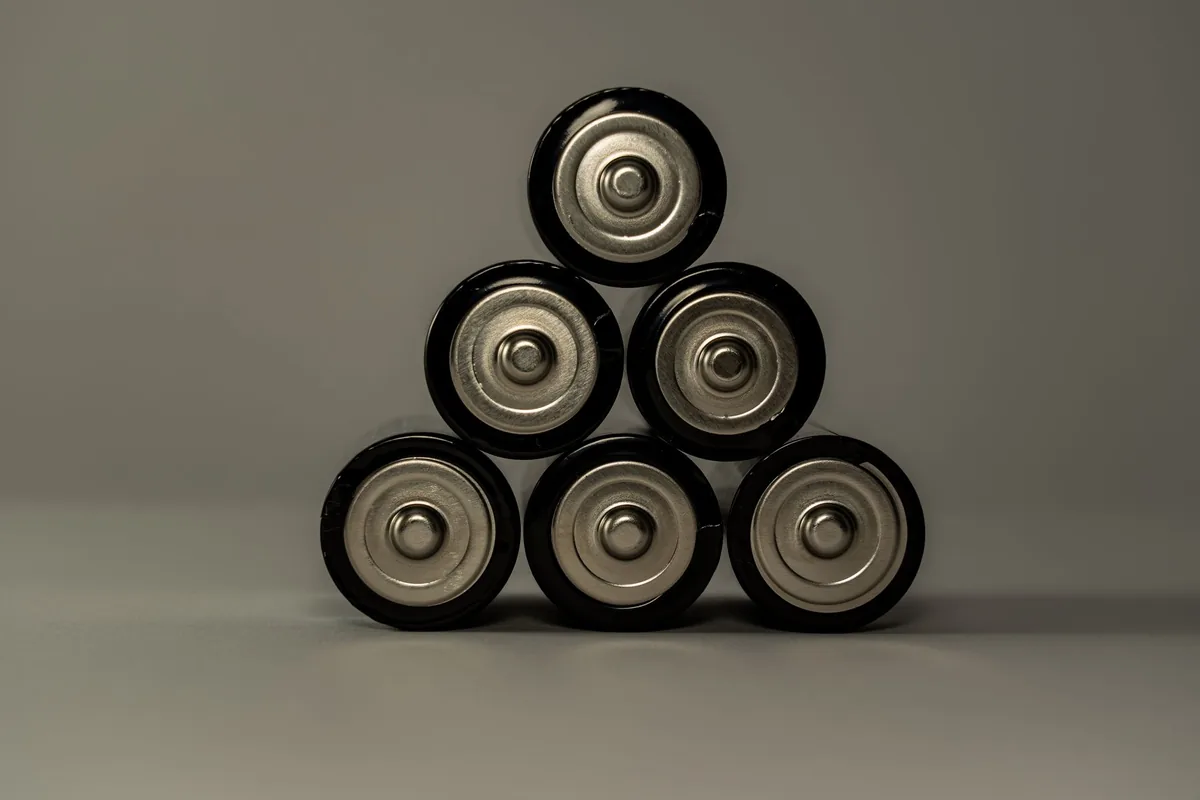
Certain batteries should not go in household garbage or recycling bins, and waste batteries can always be recycled or taken to household hazardous waste collection points (US federal guidance). Treatment depends on the type, which is printed on the battery:
- Alkaline and zinc-carbon (9 volt, AA, AAA, C, D; for any button cell, see the next bullet): in most communities these can be safely put in household trash. Recycling them at a battery recycler, or asking your local or state solid waste authority, is the recommended route.
- Button-cell, coin and lithium single-use: check for the word “lithium” on the battery; these do not go in the trash or municipal recycling bins. A lithium battery may spark and cause fires if damaged or if the terminal ends touch, so put each in its own plastic bag or cover the terminals with non-conductive tape such as electrical tape. They can be brought to specialized battery recyclers, participating retailers that provide battery takeback services or local household hazardous waste collection programs.
- Rechargeable (lithium-ion, nickel-cadmium, nickel-metal hydride and others): these do not go in the trash or municipal recycling bins either. To prevent fires from lithium-ion batteries, tape the terminals and/or put each in a separate plastic bag. Removable ones go to the same three places as the bullet above. For a battery built into a device, the whole device can go to a certified electronics recycler, a participating retailer that provides electronics takeback services, or a local electronics or household hazardous waste collection program.
Some states have battery recycling laws for various types of consumer batteries (a map is on the Call2Recycle site), so check yours. Until you drop them off, keep the taped or bagged batteries in the special-route box rather than loose in a drawer (our suggestion).
Old electronics
Before a phone, laptop or other device leaves your home, delete all personal information and take out any batteries you can remove: they may need to be recycled separately, and lithium-ion batteries and devices containing them do not go in household garbage or recycling bins. If the battery cannot come out, send the whole device through the routes in the battery list above. Check for recycling facilities in your state or community; manufacturers and retailers offer several donation or recycling options, and Call2Recycle, Earth911 and Greener Gadgets are the search sites listed for the purpose, for information only and not endorsed by the federal agency.
Paint
PaintCare runs leftover-paint recycling programs in states with paint stewardship laws: California, Colorado, Connecticut, Maine, Maryland, Minnesota, New York, Oregon, Rhode Island, Vermont, Washington, Illinois and the District of Columbia (its list shows 13 entries, 12 states and D.C., by our count). In those places its drop-off sites accept house paint, primers, stains, sealers and clear coatings such as shellac and varnish, and do not accept aerosol coatings, solvents, or products labeled for industrial or non-architectural use. A can must be in its original container of no larger than 5 gallons, carry the original manufacturer’s label and have a secured lid; PaintCare cannot accept open or leaking cans.
Outside those places, many communities have collection programs for household hazardous waste, a category that includes paints: contact your local environmental, health or solid waste agency about permanent or periodic collections (US EPA guidance). If your community has neither a permanent site nor a collection day, you might be able to drop off certain products at local businesses.
A mattress
The Bye Bye Mattress program is run by the Mattress Recycling Council, a nonprofit, in states that have passed mattress recycling laws: California, Connecticut, Oregon and Rhode Island are the four listed. In those states, use the program’s Find a Location page. For a state outside the program, the Bye Bye Mattress site shows a list of recycling facilities across the country and suggests contacting your city or waste hauler about the best way to dispose of a bulky item.
How long do I keep paperwork before I shred it?
For US federal income tax, records that support an item of income, deduction or credit on your return are generally kept until the period of limitations for that return runs out. Unless a row says otherwise, the years below run from when you filed (a return filed before the due date counts as filed on the due date); these are the periods the IRS lists:
| Situation | Keep records |
|---|---|
| The basic case, unless you are in the 6-year or indefinite rows below | 3 years |
| You file a claim for credit or refund after filing | 3 years from the date you filed the original return or 2 years from the date you paid the tax, whichever is later |
| You file a claim for a loss from worthless securities or a bad debt deduction | 7 years |
| You do not report income that you should, and it is more than 25% of the gross income shown on your return | 6 years |
| You do not file a return, or you file a fraudulent return | Indefinitely |
| Employment tax records | At least 4 years after the tax becomes due or is paid, whichever is later |
Two more IRS points matter for a clear-out. Records relating to property are generally kept until the period of limitations expires for the year you dispose of the property, because you need them to figure depreciation and the gain or loss on a sale. And when records are no longer needed for tax purposes, check whether you must keep them longer for other purposes before discarding them; the IRS gives the example of an insurance company or creditor that requires it. Keep copies of your filed returns too. These periods are for US federal tax records; state rules and other record types are outside what this page covers.
For papers you are ready to let go of, shred anything with account numbers or other personal details before it goes in the recycling (our suggestion).
How do I keep the clutter from coming back?
- Keep a donation bin going. NEAT Method suggests a designated donation bin and editing all year as you come across items, with a fuller edit of less-used categories twice a year or as the seasons change.
- Do not buy storage first. NEAT Method’s advice is not to purchase product until you have completely finished a space, because you will likely shift things around as you go. Once a room is done, our guides cover small space storage ideas and small closet ideas.
- One in, one out is a rule you can adopt if it helps (our suggestion); it is not one of the methods quoted above.
- Give each category a home. Whatever comes back into a cleared room goes in the place you decided on, not on the nearest surface (our suggestion).
Where these numbers come from
The medicine, battery, electronics and household-hazardous-waste steps come from FDA and EPA pages, paint and mattress program states from the PaintCare, Mattress Recycling Council and Bye Bye Mattress sites, and record-keeping periods from the IRS page, with the sorting method from NEAT Method and the KonMari site, all read on 6 November 2026. We counted the entries on PaintCare’s state list ourselves. The order of steps is our plan built from those pages.
Frequently asked questions
Where should I start when I declutter my home?
Start small and finish something. Both organizers read for this guide work by category: NEAT Method's editing guide says to edit one category at a time and start small to avoid becoming overwhelmed, and the KonMari method tidies the whole house by category in a fixed order (clothes, books, papers, komono, then sentimental items). KonMari argues against going shelf by shelf or room by room. Going room by room in short sittings is our suggestion, not either method.
Can I throw old medicine in the trash?
In the US, the best route for most types of unused or expired medicines is a take-back option: a drug take-back location or a prepaid mail-back envelope (US FDA guidance). If neither is readily available and the medicine is on FDA's flush list, the next best option is to flush it down the toilet immediately, because those medicines can result in death from one dose if inappropriately taken. If it is not on the flush list and the medication guide or package insert has no specific instructions, the trash steps are: remove the drugs from their original containers; mix them (do not crush tablets or capsules) with dirt, cat litter or used coffee grounds; seal the mixture in a container such as a plastic bag; put it in your household trash; and scratch out personal information on the empty bottle or packaging. Some products with uncommon dosage forms, such as sprays or lozenges, have product-specific instructions, so review what came with the prescription or ask a pharmacist or doctor.
Can I put used batteries in the household trash?
It depends on the type (US EPA guidance). Alkaline and zinc-carbon batteries (9 volt, AA, AAA, C, D) can in most communities be safely put in household trash, though recycling them or asking your local or state solid waste authority is the recommended route. Button-cell, coin, lithium single-use and rechargeable batteries do not go in the trash or municipal recycling bins; tape the terminals or put each battery in its own plastic bag, and take them to a battery recycler, a participating retailer or a household hazardous waste collection program.
How long do I need to keep tax records?
For US federal income tax records, the IRS page lists 3 years from when the return was filed as the basic period, unless you are in one of the longer situations: 6 years if you do not report income you should, and it is more than 25% of the gross income shown on the return, 7 years for a loss from worthless securities or a bad debt deduction, and indefinitely if you do not file or file a fraudulent return. Records connected to property are kept until the period of limitations runs out for the year you dispose of the property. Check whether an insurer or creditor needs anything longer before you shred.
- #decluttering
- #home organization
- #household hazardous waste