Bed Sizes Chart: Twin, Full, Queen and King Dimensions
Every bed size in inches from twin to California king, with the width each sleeper gets, the room each bed needs, and the sheet and comforter sizes to buy.
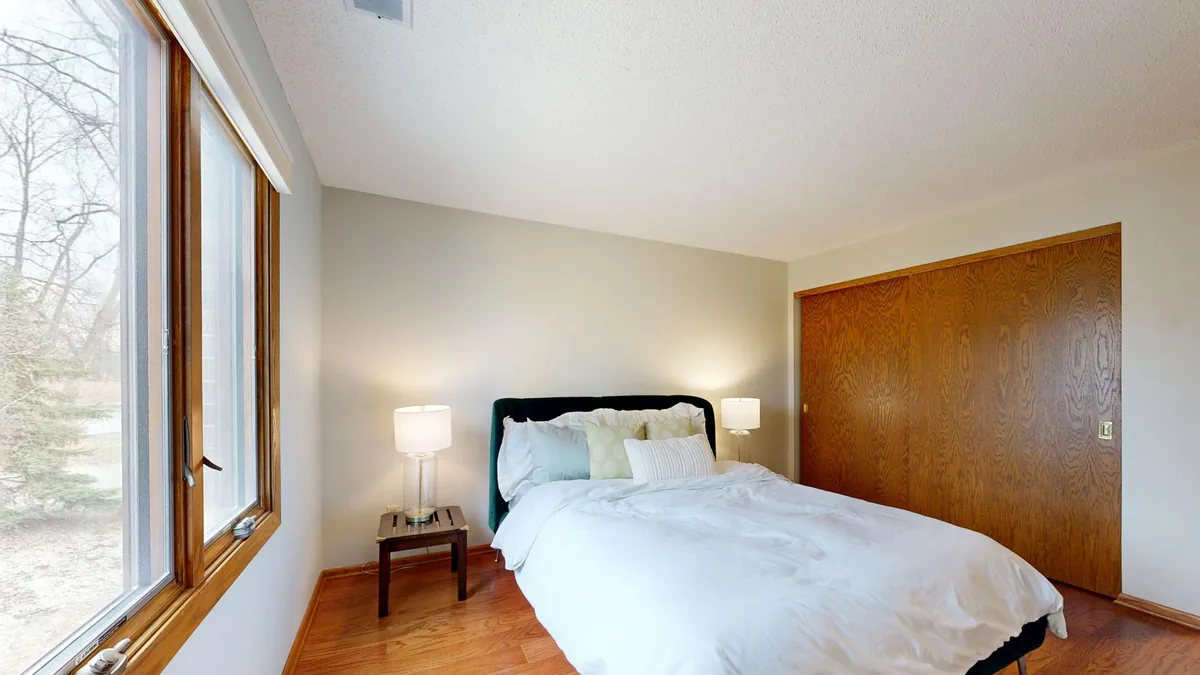
You find a queen online at 60 by 80 inches, mark that on the floor, and then the bed frame arrives 73 inches wide and the walkway beside it is gone. Measuring only the mattress is an easy slip: one maker’s queen frame with a headboard is 13 inches wider and 11.5 inches longer than the mattress it holds. Below is the full chart, how to choose between the sizes that sit close together, how to check a bed against your room with the frame included, and which sheet and comforter sizes go with each bed.
The short answer
- Mattress sizes (inches): twin 38 x 75, twin XL 38 x 80, full 54 x 75, queen 60 x 80, king 76 x 80, California king 72 x 84. Some makers list the twin and twin XL at 39 wide.
- Width per person, two sleepers: 27 in on a full, 30 on a queen, 38 on a king, 36 on a California king.
- Queen vs full: a queen is 6 in wider and 5 in longer. A full suits one sleeper; a queen is the usual starting size for couples.
- King vs California king: a king is 4 in wider, a California king 4 in longer. Pick the California king for length, the king for width.
- Room: leave at least 24 in on each side you use and at the foot, and measure the frame, not the mattress. Makers’ minimum rooms run from 7 x 9 ft for a twin to 12 x 12 ft for a California king.
- Bedding: the fitted sheet matches the exact mattress size and depth; duvets, comforters and quilts on the makers’ charts here come in Twin (or Twin/Twin XL), Full/Queen and King/Cal King.
What are the exact dimensions of each bed size?
| Bed size | Width x length (in) | Width per person, two sleepers | Notes |
|---|---|---|---|
| Twin | 38 x 75 or 39 x 75 | One sleeper | Kids, bunk beds, small rooms |
| Twin XL | 38 x 80 or 39 x 80 | One sleeper | 5 in longer than a twin |
| Full (double) | 54 x 75 | 27 in | Same length as a twin |
| Queen | 60 x 80 | 30 in | 6 in wider, 5 in longer than a full |
| King | 76 x 80 | 38 in | Same length as a queen |
| California king | 72 x 84 | 36 in (our arithmetic) | 4 in narrower, 4 in longer than a king |
| Split king | Two 38 x 80 | 38 in | Two twin XLs in a king footprint |
Where the makers differ. The twin and twin XL are 38 inches wide on two mattress makers’ guides. A third prints 38, but its own area table works out to 39 x 75 for the twin, 39 x 80 for the twin XL and 54 x 75 for the full, against its printed 53 (our arithmetic). They are 39 inches on another mattress maker’s product page and on a bedding maker’s size-matching guide. The queen, king and California king figures match on those five pages, and so does the full apart from that printed 53. Some mattresses also vary a little: on one maker’s guide, its handmade latex mattresses typically come out of the box within 1 to 2 inches of their listed size. So measure the mattress you have, or the product page of the one you are buying, before you order a frame or sheets (our suggestion).
Width per person is the number that separates the two-person sizes. The full, queen and king figures above come from one mattress maker’s size guide; the California king’s 36 is its 72 inches halved (our arithmetic). Shared, a full gives each person 27 inches, one inch less than the 28-inch width of a crib mattress (our arithmetic).
Other split and nonstandard sizes. One size guide also lists a split California king as two 36 by 84 halves and a split queen as two 30 by 80 halves. Standard queen fitted sheets won’t fit nonstandard sizes such as the Olympic queen (66 by 80), going by one mattress maker’s queen guide. One bedding maker suggests a queen flat sheet and a King/Cal King duvet for it, and says a Cal King fitted sheet will fit relatively well.
Queen or full? King or California king?
Queen vs full
A queen is 6 inches wider and 5 inches longer than a full (our arithmetic), which gives each of two sleepers 3 more inches.
- A full suits one adult who wants room to spread out, a teen, or a guest room, on one maker’s full-size guide. Two adults fit only tightly, at 27 inches each, and that maker does not recommend a full for couples long term.
- A queen is the usual starting size for couples, at 30 inches each, and still roomy for one sleeper. One mattress maker’s guide places it in guest rooms and small primary bedrooms.
- For kids, a twin fits bunk beds, trundles and small rooms. A twin XL adds 5 inches of length, lasts into the teen years and is the standard dorm size, so buying one for a growing child can save a later upgrade (our reading).
Height cut-offs vary between the guides, and within them. One maker puts a full at up to about 6 feet and a queen at up to about 6 feet 2 inches, yet also tells sleepers over six feet to consider a California king. A second says anyone under 6 feet 5 inches should find a queen or king long enough. A third points sleepers over 6 feet 2 inches to a California king, but elsewhere on the same page says a full, queen or king fits up to 6 feet 7 inches and that those taller than 7 feet should opt for a California king. Compare your own height with the mattress length, 75 inches for a twin or full and 80 or more for the rest, rather than with any one guide’s cut-off (our suggestion).
If a dog or a child regularly ends up in the bed, count them as a sleeper; on one maker’s guide that is a frequent reason couples move up from a queen to a king.
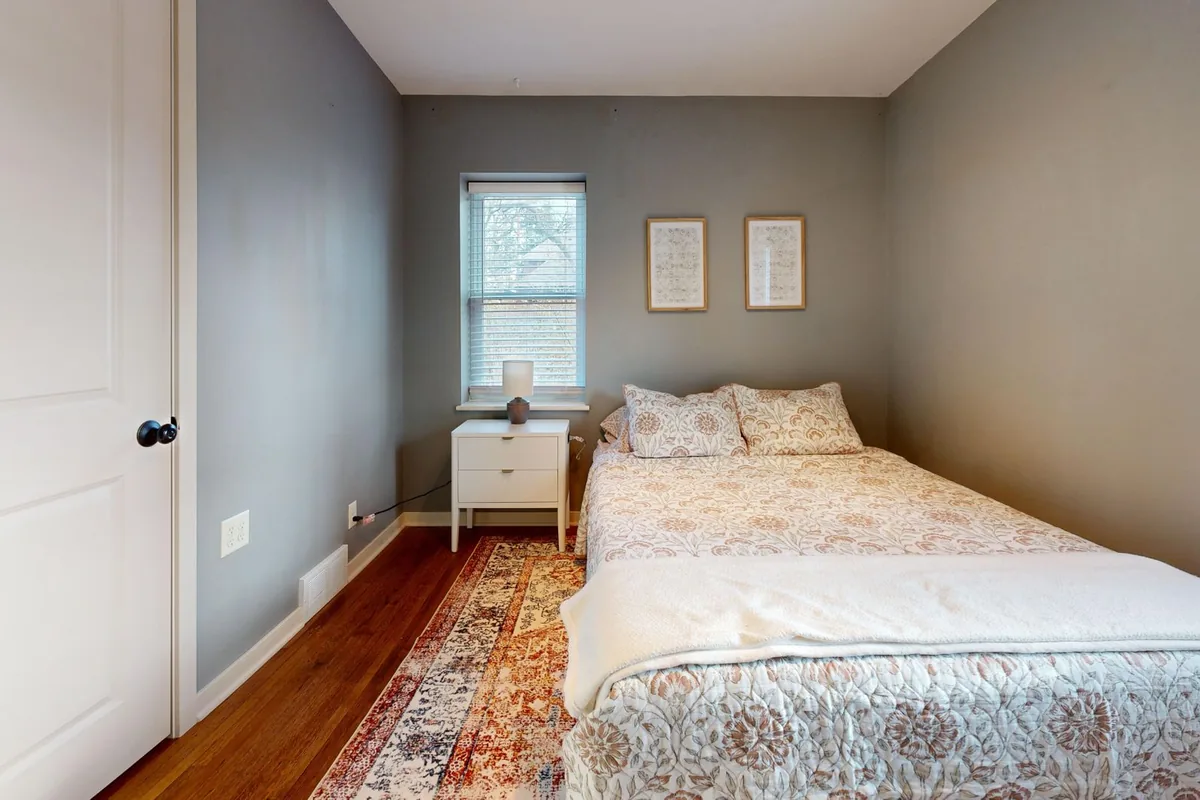
King vs California king
The two cover almost the same area: 6,080 square inches for the king and 6,048 for the California king (our arithmetic). The difference is shape.
- King, 76 x 80: 38 inches each, the width of a twin per person. It suits couples who want width, families who share the bed with children, pet owners and restless sleepers.
- California king, 72 x 84: 36 inches each but 4 inches more length. It suits tall sleepers (see the height cut-offs above) and bedrooms that are long rather than wide.
- Split king, two twin XLs at 38 x 80 each: the king footprint in two halves, so each side can have its own firmness and, on a dual adjustable base, its own position. Two smaller pieces are also easier to carry up stairs.
King and California king fitted sheets are not interchangeable. Top layers, and on one bedding maker’s chart the flat sheet, are sold in one King/Cal King size (see the tables below).
Will the bed fit your room?
Clearance around the bed
Plan for at least 24 inches of walkway on each side you use and at the foot of the bed. That figure appears on one mattress maker’s room guide, on a second maker’s queen guide and on a third’s bed size chart, which suggests 36 inches where the space allows. If the bed goes against a wall, only its open side needs the walkway (our reading); one maker’s worked example places a twin that way. Two more numbers matter once furniture goes in: a dresser needs roughly 36 inches in front of it to open the drawers, on the same maker’s twin, full, queen and king guides, and a storage bed needs 18 to 24 inches of open floor beside it for its own drawers, on one maker’s queen guide.
Measure the frame, not the mattress
A base can match the mattress or be much bigger than it. On one mattress maker’s queen guide, adjustable bases keep the standard 60 by 80 inch footprint; frames with headboards and footboards add to it. Here are queen frames from two makers, each against the 60 by 80 inch mattress:
| Queen frame | Footprint, width x length (in) | Beyond the mattress (our arithmetic) |
|---|---|---|
| Low-profile platform frame with headboard and footboard | Lists 80 x 60 x 7 in, the mattress size | Not printed: the page also lists a headboard and footboard, so its outer footprint isn’t given |
| Upholstered platform frame with headboard | 62.8 x 84.4 | 2.8 in wider, 4.4 in longer |
| Wood platform frame, with or without headboard | 73 x 91.5 | 13 in wider, 11.5 in longer |
| Typical queen frame on one mattress maker’s guide | 62–65 x 82–86 | Plan for 65 x 85 |
The queen guide behind the last row suggests planning around 65 by 85 inches, and the wood frame above goes beyond even that. The same wood frame in king size is 89 by 91.5 inches. Use the frame’s outer dimensions from its product page in the arithmetic below, not the mattress size (our suggestion).
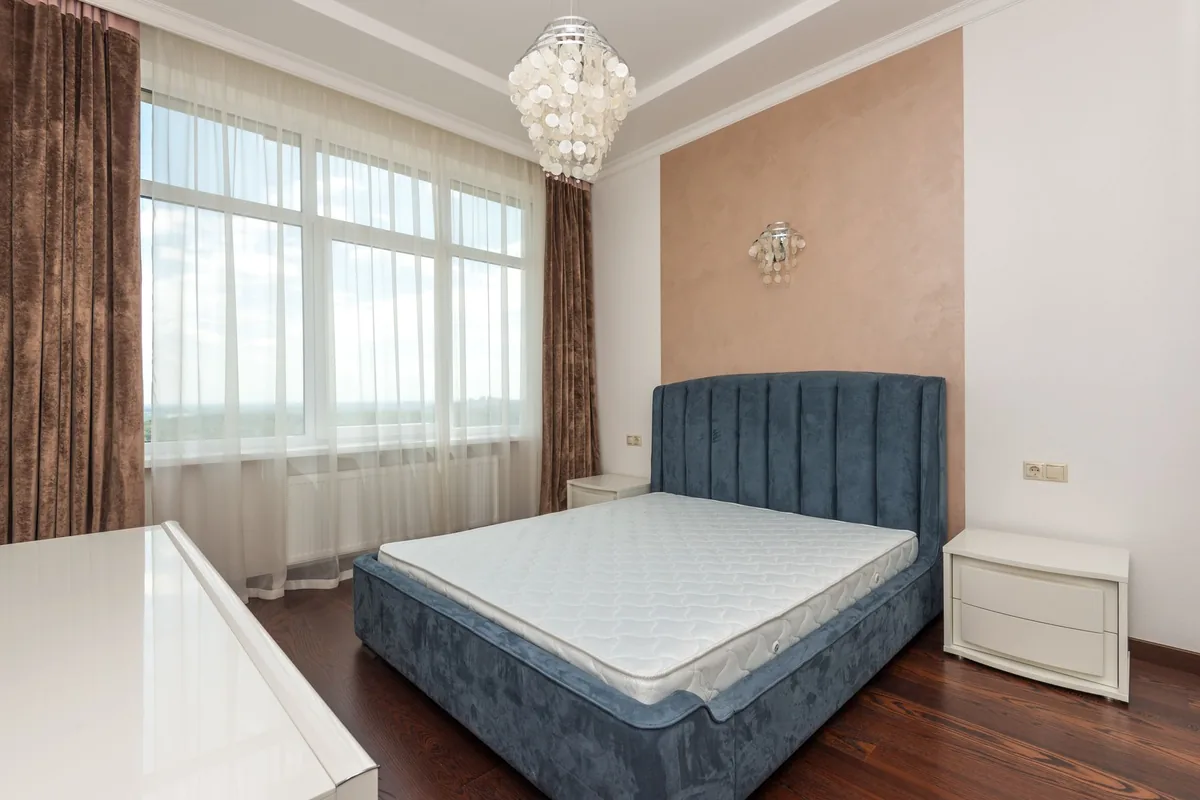
Minimum room size by bed
Three mattress makers’ guides give a minimum room for each size. They agree on the queen and the California king and differ by up to 2.5 feet elsewhere:
| Bed size | Avocado (ft) | PlushBeds (ft) | Casper (ft) |
|---|---|---|---|
| Twin | 7 x 10 | 7 x 10 | 7 x 9 |
| Twin XL | 7 x 10 | 9.5 x 10 | 8 x 10 |
| Full | 9 x 10 | 9.5 x 10 | 9 x 11 |
| Queen | 10 x 10 | 10 x 10 | 10 x 10 |
| King | 12 x 10 | 12 x 12 | 12 x 12 |
| California king | 12 x 12 | 12 x 12 | 12 x 12 |
For a more comfortable room with nightstands and a dresser, the range on Avocado’s guide is 10 x 12 to 10 x 14 feet for a queen and 12 x 12 or larger for a king. On Casper’s guide, a twin XL can also go in a room as narrow as 7 feet if the bed runs along the longer wall.
Check your own room in three steps
- Measure the room’s width in inches, wall to wall, on the wall the headboard will go against.
- Subtract the bed’s width, frame included, and halve what is left if you want to get in on both sides. Each half should be 24 inches or more. If the product page gives only the mattress size, plan for 65 x 85 for a queen, as one maker’s guide suggests.
- Do the same for the length: room length minus bed length should leave at least 24 inches at the foot, more if a dresser faces the bed.
Worked through (our arithmetic): in a 10-foot (120-inch) room, a queen mattress alone leaves 30 inches a side; on a 65-inch frame, 27.5; on the 73-inch wood frame, 23.5, just under the 24-inch guideline. A king in a 12-foot (144-inch) room leaves 34 inches a side as a bare mattress and 27.5 on the 89-inch wood frame. A twin pushed against the wall of a 7-foot room leaves 46 inches on its open side.
Before ordering, mark the bed’s outline on the floor with tape, as one maker’s guide suggests, and walk around it with the doors and drawers open (our suggestion). Measure doorways and stairwells too: a mattress that ships rolled in a box goes through tight turns, but once it has expanded it cannot be compressed again.
How deep is the mattress, and will the sheets fit?
Depth decides whether the fitted sheet goes on. Mattresses in one maker’s range run from 9 to 15.5 inches tall, and another maker’s guide suggests 11 to 15 inches. A queen guide puts a standard fitted-sheet pocket at about 12 inches, so a thicker mattress plus a protector needs deep-pocket sheets, and a topper adds to the height as well (our reading). Fitted sheets on one bedding maker’s size chart are 16 inches deep, and one sheet maker’s percale set fits mattresses up to 20 inches. Measure from the bottom seam to the top, add any topper, and compare that with the sheet’s listed fit (our suggestion). More on layers, toppers and pocket depth is in our bedding guide.
What size sheets and comforter go with each bed?
Sheets follow the mattress size. One bedding maker’s size-matching guide pairs each bed with its sheet and top-layer size:
| Bed | Fitted sheet | Flat sheet | Duvet, comforter or quilt |
|---|---|---|---|
| Twin | Twin | Twin | Twin/Twin XL |
| Twin XL | Twin XL | Twin | Twin/Twin XL |
| Full | Full | Full | Full/Queen |
| Queen | Queen | Queen | Full/Queen |
| King | King | King/Cal King | King/Cal King |
| California king | Cal King | King/Cal King | King/Cal King |
| Split king | Two Twin XL | King | King (King/Cal King) |
The split king row comes from a mattress maker’s king guide: two twin XL fitted sheets with king-size top bedding. One sheet maker sells a split king set the same way, with two 39 by 80 inch fitted sheets and the same 112 by 108 inch flat sheet as its king set. Fitted sheets can run a little over the mattress: that maker’s king fitted sheet, and the one on the bedding maker’s size chart, are 78 inches wide for a 76-inch king.
Top layers come in combined sizes, so one Full/Queen duvet or comforter covers either bed. The sizes vary by maker:
| Size sold | Duvet cover, one maker (in) | Comforter, a second maker (in) | Quilt, a third maker (in) |
|---|---|---|---|
| Twin/Twin XL | 70 x 88 | 70 x 90 (sold as Twin) | 66 x 90 |
| Full/Queen | 90 x 94 | 92 x 96 | 90 x 90 |
| King/Cal King | 108 x 94 | 96 x 110 (as listed) | 108 x 90 |
The duvet cover maker’s own sizing guide lists its covers 2 inches smaller each way (88 x 92 for Full/Queen), so check the product page itself. The comforter lists its king size as 96 x 110. Its Full/Queen is 92 x 96, so the king is probably 110 wide and 96 long (our reading); confirm which figure is the width before you compare it with your bed. A combined size hangs differently on its two beds: a 90-inch-wide Full/Queen overhangs a full by 18 inches a side and a queen by 15, and a 108-inch King/Cal King overhangs a California king by 18 and a king by 16 (our arithmetic). If you are still choosing between a duvet and a comforter, see duvet vs comforter. More guides are in our bedding section.
Where these numbers come from
Mattress sizes, room minimums, clearances and frame footprints come from mattress and furniture makers’ size guides and product pages; bedding sizes come from bedding makers’ size charts and product pages, linked above and read on 10 and 11 October 2026. Widths per sleeper for the California king, size differences, overhangs and room-fit examples are our arithmetic.
Frequently asked questions
What are the dimensions of a queen bed?
A queen mattress is 60 by 80 inches on the mattress makers' size guides read here. Shared by two people, that is 30 inches of width each. The frame is usually bigger: one mattress maker's queen guide puts typical queen frames at 62 to 65 inches wide and 82 to 86 inches long, and one wood platform frame with a headboard measures 73 by 91.5 inches.
Queen vs full: which should I get?
A queen is 60 by 80 inches and a full 54 by 75, so the queen is 6 inches wider and 5 inches longer. Shared, a full gives each person 27 inches and a queen 30. A full suits one adult, a teen or a guest room in a room of at least 9 by 10 feet in one maker's guide; a queen is the usual starting size for couples and needs at least 10 by 10 feet in the three makers' guides read here.
What are the standard mattress sizes in inches?
Twin 38 by 75, twin XL 38 by 80, full 54 by 75, queen 60 by 80, king 76 by 80 and California king 72 by 84. Some makers list the twin and twin XL at 39 inches wide, and one mattress maker's guide prints 38 for the twin and 53 for the full while its own area table works out to 39 and 54 (our arithmetic). A split king is two 38 by 80 inch mattresses side by side.
How big does a room need to be for a king bed?
Three mattress makers' guides give 12 by 10 feet or 12 by 12 feet as the minimum for a king, and 12 by 12 for a California king. A king mattress in a 12-foot-wide room leaves 34 inches on each side; on a frame 89 inches wide it leaves 27.5 (our arithmetic). Aim for at least 24 inches on each side you use and at the foot.
Does a full/queen comforter fit a full bed?
Yes. The duvet cover, comforter and quilt read here, one from each of three bedding makers, each come in a single Full/Queen size, and one bedding maker's size-matching guide pairs it with both beds. On a full it hangs about 3 inches further down each side than on a queen: a 90-inch-wide comforter overhangs a full by 18 inches a side and a queen by 15 (our arithmetic). Fitted sheets are different: buy the exact full or queen size.
- #mattress sizes
- #queen bed dimensions
- #queen vs full
- #room planning