How to Wash a Comforter at Home Without Ruining It
How to wash a comforter at home: what the care label means by fill, whether your washer can take it, and how to wash, rinse and dry it so the middle is dry.
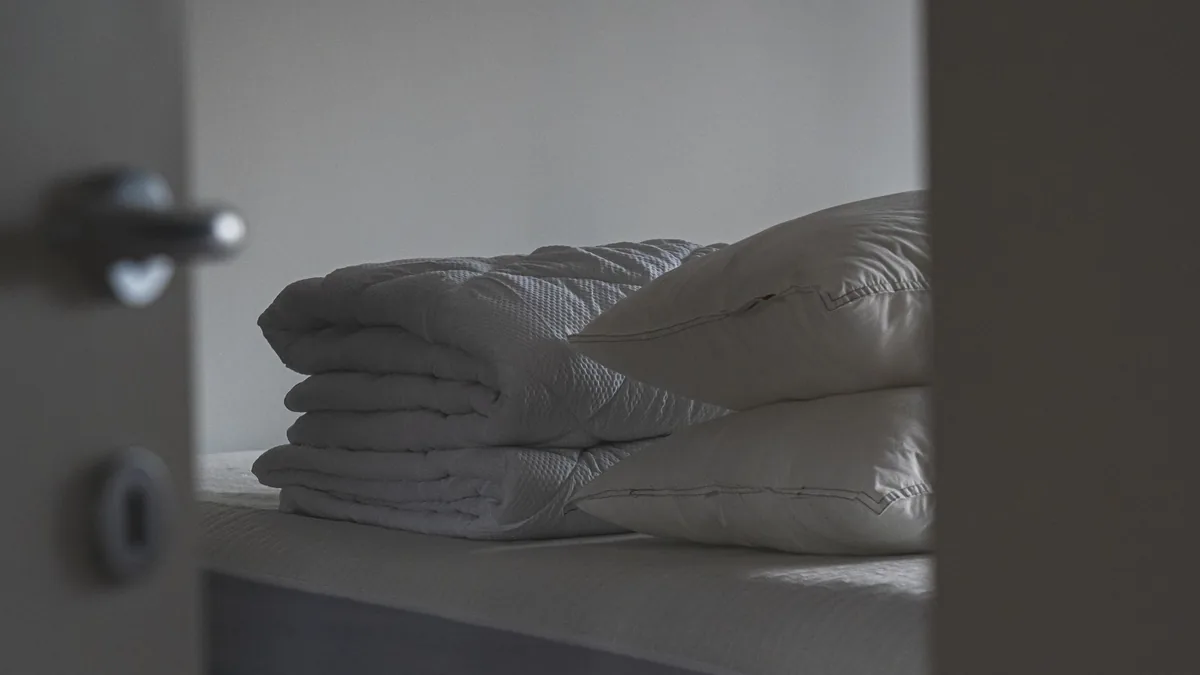
The comforter comes out of the washer as a wet, lopsided lump, the machine thumps through the spin, and two hours in the dryer later one corner is still cool and damp. The obvious shortcut, a hot wash and a high-heat dry to get it done in one go, is what none of the comforter care pages below calls for: they range from cold to warm water, and their dryer settings top out at medium. Below are the steps in the order you do them: read the label, check the washer, wash, dry it until the middle is dry, and then wash it less.
The short answer
- Label first. Down alternative is machine wash cold, tumble dry low on one maker’s and one store’s pages. Down is split between makers that machine wash it and makers that say spot clean or dry clean. Silk is spot clean or dry clean on the two pages read here.
- Washer: for down, a large front-loader, or at least a washer without an agitator. Wash the comforter on its own.
- Wash: a bedding, bulky or delicate cycle, cold water unless the label says otherwise, a small amount of mild or down detergent, no bleach, then a second rinse.
- Dry: the label’s setting, never high heat, with two or three tennis balls, or dryer balls; move it and pull clumps apart as it dries. Plan on hours: 2 to 3 on one guide, at least 6 to 8 on another, for down.
- Done when the middle has no cool, damp spots. Wool goes on a line, never in the dryer, on both wool makers’ pages here.
- Wash less: a duvet cover, spot cleaning and airing. One washer maker says 2 to 3 washes a year; one down maker, at most once every 5 to 7 years.
Can your comforter go in the washer? Read the care label first
The sewn-in label is the instruction that counts: where it differs from a maker’s general advice, one bedding maker’s care guide says to follow the label. The instructions change with the fill, and makers of the same fill don’t always agree:
| Fill | Care instructions on one maker’s or store’s page | Source |
|---|---|---|
| Down | Machine wash in an oversized or front-loading washer without an agitator, cold, mild detergent. Recommends never dry cleaning | Cuddledown |
| Down | Large front-loader only, cold, delicate or hand-wash cycle. Dry cleaning should never be used; spot clean first where possible | Ogallala Comfort |
| Goose and duck down | Dry clean only or spot clean | Egyptian Linens |
| Any (its general comforter guidance) | Spot clean or dry clean; avoid machine washing unless the label expressly permits it | Pacific Coast |
| Down alternative | Machine wash cold, tumble dry low | Egyptian Linens; Wamsutta (Supreme Comfort comforter) |
| Down alternative | Dry cleaning recommended; or machine wash cold on delicate cycle, “rinse cycle only with regular detergent” (its wording), no fabric softener or bleach, gentle machine dry or hang dry | Cozy Earth |
| Washable wool | Wool cycle or the gentlest setting, wool detergent, hang to dry, never tumble dry | Woolroom |
| Wool | Spot clean only recommended; machine wash only as a last resort, by soaking and spinning. Do not dry clean | Holy Lamb Organics |
| Silk | Cozy Earth (silk and bamboo): spot clean or dry clean; Egyptian Linens (mulberry silk): dry clean only or spot clean | Cozy Earth; Egyptian Linens |
What that means before you start:
- Synthetic fill is the easy case. Down-alternative comforters are much easier to maintain and clean than down, on one bedding maker’s fill guide. Wamsutta’s, and those on Egyptian Linens’ store chart, are plain machine wash cold; Cozy Earth’s can be machine washed, but dry cleaning is its first recommendation.
- “Dry clean only” on your label settles it. The down makers disagree among themselves. Never dry cleaning down is Cuddledown’s recommendation, and on Ogallala’s care page the chemicals can damage down fibres; on Egyptian Linens’ store chart, goose and duck down comforters are dry clean only. So go by the label on your own comforter, not by its fill (our reading). Even if your washer has a Bedding cycle, the material may be too delicate for it, and you may want to consider dry cleaning instead, on one washer maker’s bedding guide.
- Check the warranty before the first wash. On Ogallala’s care page, washing at home is at your own risk and voids warranty coverage. If yours might be the same, read its terms before you wash it (our suggestion).
Will it fit your washer, and does the type matter?
Front-loader or top-loader. For down, two makers name the machine: an oversized or front-loading washer without an agitator on Cuddledown’s page, and a large-capacity front-loader, never a top-loader, on Ogallala’s. One bedding brand’s guide to down in top-loaders allows a top-loader without a central agitator, with care. With an agitator, it suggests professional cleaning instead, since the centre post can damage down clusters and leave the fill uneven.
Size. For down in a top-loader, the same guide asks for a washer of at least 3.5 cubic feet, and a comforter that takes up no more than two-thirds of the drum when wet. Check which capacity figure your washer quotes: one washer maker’s agitator top-loader is sold as 4.6 cubic feet and big enough for a king comforter (for down, its agitator rules it out on the guide above), and the same page lists it as 4.0 cubic feet on the DOE measure.
Top-loaders with an impeller. Comforters go on the Bulky cycle, as oversized, nonabsorbent items, in one washer maker’s top-loader help. On the same page:
- Load loosely, and only as high as the top row of holes in the wash basket. Never overload it.
- Make sure the top of the impeller is still visible.
- Check that the label allows a top-load washer at all; some bulky items say to wash only in a front-load commercial-style washer.
One at a time. Wash the comforter separately, regardless of size, on Samsung’s bedding guide; its Bedding cycle is for one type of bedding at a time.
When to use a laundromat. If your comforter is down and your washer is a top-loader with an agitator, or the comforter won’t sit loosely below the top row of holes or within two-thirds of the drum, take it to a laundromat’s large front-loader (our suggestion). That is the kind of machine the down makers above describe. Dry it there too if your dryer is small: Samsung’s and Ogallala’s drying steps both call for a large-capacity dryer.
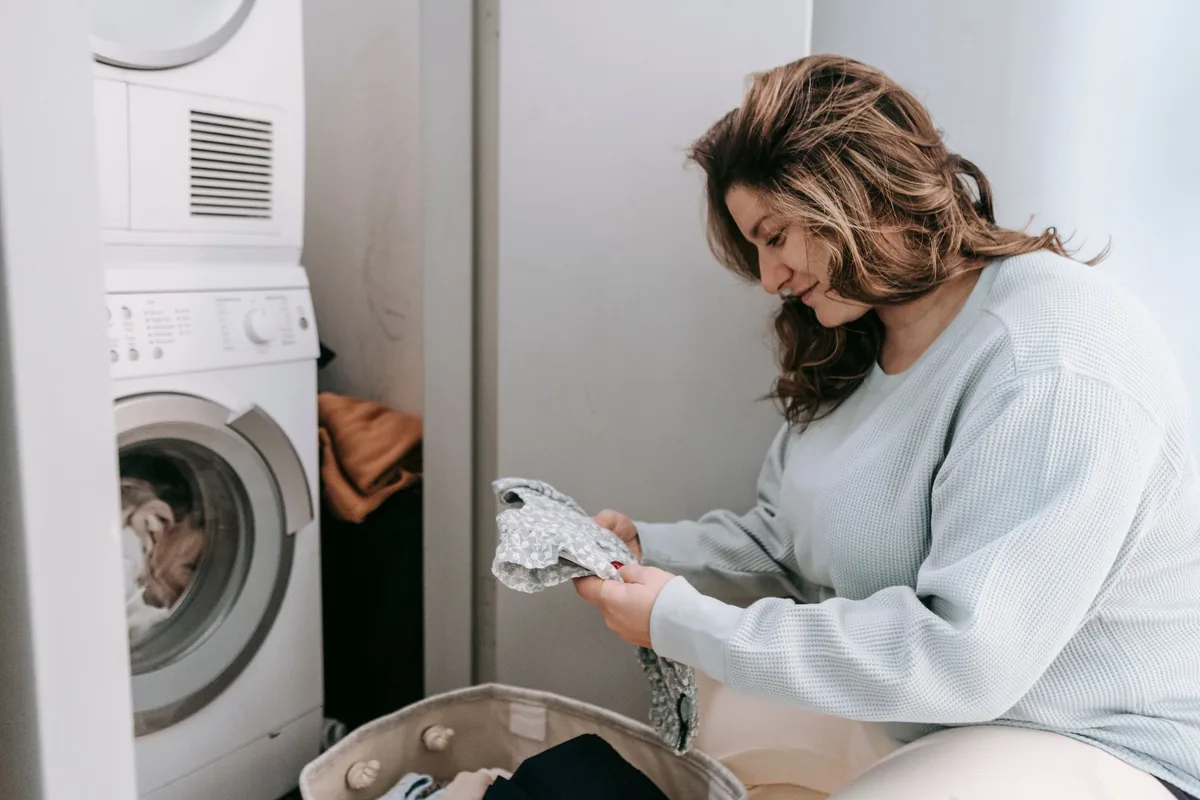
How do you wash a comforter, step by step?
If the label allows machine washing, this is the order. Where makers give different settings, each step says whose setting is whose.
Wool is the exception; read this before you start. Washable wool comforters from Woolroom go on the wool cycle with wool detergent, then hang out to dry. For comforters from Holy Lamb Organics, spot cleaning only is recommended, and if one must be washed, it never goes on a wash cycle, not even delicate. Instead, on that page: fill the washer with cold water and a small amount of biodegradable detergent or wool wash and let it soak, then run the spin cycle on its own, and repeat if needed. On Holy Lamb’s page, every wash of its wool risks shrinkage or felting.
- Check it over. Look for tears or loose seams and fix them before washing. Clean the drum and take out anything that could snag it or transfer colour. Both steps are on the top-loader down guide linked above.
- Load it alone and loosely. Spread it evenly around the drum, in a loose zigzag on that down guide. Don’t roll it up: rolled items might get stuck in the drum on the Bedding cycle, on Samsung’s cycle guide.
- Pick the cycle. For down: delicate or hand-wash on Ogallala’s page, the most delicate cycle on the top-loader down guide, while Samsung’s down steps use its Bedding cycle. For down alternative: delicate on Cozy Earth’s page; Wamsutta’s and Egyptian Linens’ give no cycle, so a Bedding or Bulky cycle if your washer has one (Samsung’s and Maytag’s pages name comforters for theirs, and Samsung’s cotton and polyester steps use its Bedding cycle). For wool, see above: the wool cycle or gentlest setting on Woolroom’s, no wash cycle at all on Holy Lamb’s.
- Set the water. Cold, on every maker’s or store’s page here that gives a temperature for its own comforters: Cuddledown’s and Ogallala’s for down, Wamsutta’s, Egyptian Linens’ and Cozy Earth’s for down alternative, and Holy Lamb’s soak for wool. On Samsung’s guide the water depends on the fill: cool or cold for cotton and polyester comforters, because warm or hot water may shrink and damage them, but warm for down. The top-loader down guide gives 85 to 95°F for down. If your label doesn’t say, cold matches both down makers’ own pages (our reading).
- Add a small amount of mild detergent. Mild detergent is on Cuddledown’s and Samsung’s pages, and Samsung’s Bedding cycle calls for liquid detergent. For down, use an approved down wash such as Le Blanc Down Wash or Dreft, and not Woolite, on Ogallala’s page; on the top-loader down guide, a minimal amount of down-specific detergent, because too much is hard to rinse out of a top-loader. Wool takes a wool detergent on Woolroom’s page. No bleach, for any comforter in Samsung’s guide, and no fabric softener on Cozy Earth’s down alternative.
- Rinse it twice. Rinse thoroughly: leftover detergent can eventually break the material down, on Cuddledown’s page. For down, run a second cycle without the down wash, on Ogallala’s. You may have to rinse more than once, on Samsung’s guide; on its washers, a Rinse + Spin cycle run after the wash adds the extra rinse.
- Spin gently, then lift it out. Keep spin speeds low, on the top-loader down guide. Squeeze out excess water gently, without wringing; a wet down comforter may smell strongly, and on Cuddledown’s page the smell goes once it is dry. For cotton and polyester comforters, take it out as soon as the cycle ends and shake it out before drying, on Samsung’s guide.
How do you dry it so the middle is dry too?
Heat. Use the setting on your label, and never high heat, which Pacific Coast’s comforter guidance says to avoid. The comforter pages here split like this:
| Comforter | Dryer setting | Source |
|---|---|---|
| Down | Low, with two or three tennis balls | Cuddledown |
| Down | Low, with dryer balls or rings, in a large-capacity dryer | Samsung (washer and dryer maker) |
| Down | Medium, in a large-capacity dryer; do not air dry | Ogallala Comfort |
| Down alternative | Tumble dry low | Wamsutta; Egyptian Linens |
| Down alternative | Gentle machine dry or hang dry | Cozy Earth |
| Cotton or linen | Low, in a large-capacity dryer | Samsung |
| Polyester | Cool or No Heat, in a large-capacity dryer | Samsung |
| Wool | Never in the dryer; hang to dry | Woolroom; Holy Lamb Organics |
Keep the fill moving.
- Add two or three tennis balls (Cuddledown) or dryer balls or rings (Samsung, for down), so the fill moves as it dries.
- Add a few dry towels to soak up some of the moisture, on Cuddledown’s page.
- Take it out and reposition it: halfway through for down, and every 15 minutes or so for cotton and polyester, on Samsung’s guide. Check every 30 minutes and pull apart any clumps, on Ogallala’s.
Plan on hours. No two pages give the same time. The top-loader down guide plans for 2 to 3 hours on low with periodic fluffing. Ogallala’s page gives at least 6 to 8 hours on medium, then one more cycle once the comforter feels dry. On Cuddledown’s, it may take a long time.
Check the middle, not the corners. It is done when the middle has no cool, damp spots, odour or wet clumps (our suggestion). Feel the middle of the comforter, between the stitched sections, before you call it done (our suggestion).
Air it, or don’t. For down, cotton and polyester, Samsung’s guide suggests a day or two airing on a rack after the dryer, to make sure the comforter is completely dry; for cotton and polyester the same guide takes it out of the dryer while still slightly damp, which for cotton is to keep it from shrinking. For down, Ogallala’s page says do not air dry, because lingering moisture can lead to mildew, and ends with one extra dryer cycle instead; we read that as the opposite advice (our reading). Either way, it goes back on the bed or into storage only when it is completely dry: don’t use or store bedding while damp, on Pacific Coast’s guide, and store down completely dry in a well-ventilated space to avoid mildew, on Cuddledown’s.
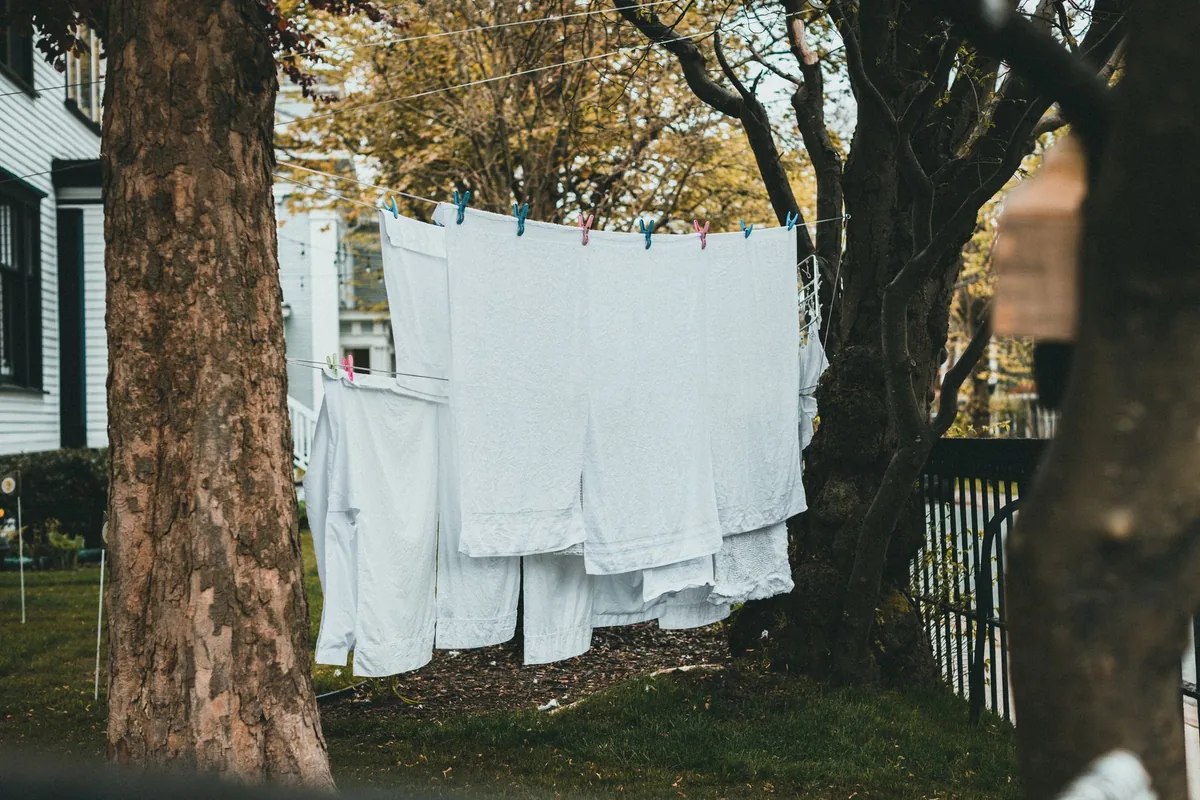
How often should you wash it, and how do you wash it less?
How often. The pages disagree widely:
- Samsung’s bedding guide: 2 to 3 times a year, once each season.
- Cuddledown, for down: seldom. At most once every 5 to 7 years, and if you keep it covered you should never really need to; frequent washing can wear it out sooner.
- Woolroom, for its wool: no need to wash a new one, and you hardly need to wash it at all.
- Cozy Earth, for its bamboo and silk comforters: regular washing is unnecessary if you use and wash a duvet cover. To freshen one, hang it in mild to moderate sunlight for 1 to 3 hours once every 3 to 5 months.
If it has gone flat or clumpy, moisture and oils are often the cause on Ogallala’s page, and proper laundering can help restore loft, though results vary with the comforter’s age and condition; the same page puts spot cleaning first.
Put it in a cover. A duvet cover is what makes the long gaps possible. Wash the cover instead of the down comforter, on Cuddledown’s page; Holy Lamb’s and Pacific Coast’s pages point to a washable cover too. That is the washing difference in our duvet vs comforter comparison: the cover comes off and goes in with the sheets.
Spot clean what you can. Treat a local stain the way the label says, on Pacific Coast’s guide. For down, blot spots and spills the moment they happen with a clean white cloth, working from the stain’s outer edge toward the centre so it doesn’t spread, on the top-loader down guide. The most detailed spot-cleaning steps read here are for wool, on Holy Lamb’s care page:
- Blot the spill straight away with a clean, absorbent towel.
- Skip harsh detergents and stain removers. For stains, dab on hydrogen peroxide with a paper towel; it may lighten the fabric.
- For a larger stain, run water with a biodegradable detergent through the soiled area only, without submerging the whole piece.
- Press it between towels; don’t rub or wring it. Line dry it in the sun or somewhere warm.
Shake it and air it. Shake a down comforter weekly so the down doesn’t bunch up, unless it is sewn-through box-stitched, and air it outside to keep it fresh, on Cuddledown’s page. Unmake the bed in the morning so moisture can evaporate, on Holy Lamb’s.
For sheets and duvet covers, which go in the wash far more often, the care table in our bedding guide covers four makers’ instructions. More is in our bedding category.
Where these instructions come from
The settings, times and frequencies above come from bedding makers’ care pages, one bedding brand’s down guide and two washer makers’ support and product pages, linked in each section and read on 10 and 11 October 2026. The laundromat, drying check and warranty steps are our suggestions, labelled where they appear.
Frequently asked questions
Can you put a comforter in the washing machine?
Often, but the care label decides. Down-alternative comforters on one maker's and one store's pages are machine wash cold and tumble dry low. Down is split: two down makers machine wash it, Cuddledown in an oversized or front-loading washer without an agitator and Ogallala in a large-capacity front-loader, and both say never to dry clean it, while one store's chart lists goose and duck down as dry clean or spot clean only, and one bedding maker's general guidance for its comforters is spot clean or dry clean and avoid machine washing. Wool depends on the maker, and silk is spot clean or dry clean on the two pages read here.
How do you wash a down comforter?
If its label allows machine washing: on its own, in a large front-loader or at least a washer without an agitator, on a delicate or bedding cycle, in cold water on the two down makers' pages (one washer maker and one bedding brand say warm), with a small amount of mild or down-specific detergent, then a second rinse with no detergent. Dry it on low heat (medium on one down maker's page) with two or three tennis balls, pulling the clumps apart as it dries, until the middle has no cool, damp spots.
Will a queen or king comforter fit in my washer?
It needs room to move. One bedding brand's guide to washing down in a top-loader asks for at least 3.5 cubic feet and a comforter that fills no more than two-thirds of the drum when wet; one washer maker's top-loader help says to load large items loosely and only as high as the top row of holes in the basket. If yours can't manage that, or it is a top-loader with an agitator and the comforter is down, a large front-loader at a laundromat is the kind of machine the down makers here describe (our suggestion).
How long does a comforter take to dry?
Longer than a normal load, and there is no single number: one bedding brand's down guide plans for 2 to 3 hours on low with periodic fluffing, while one down maker gives at least 6 to 8 hours on medium, then one more cycle once it feels dry. It is done when the middle has no cool, damp spots, odour or wet clumps (our suggestion).
How often should you wash a comforter?
Less often than sheets, and the makers disagree on how much less. One washer maker's bedding guide says 2 to 3 times a year, once each season. One down maker says seldom: at most once every 5 to 7 years, and with a cover you should never really need to. Several makers here point to a duvet cover that you wash instead.
- #comforter care
- #down comforters
- #laundry