Elevated Planter Box: Depth, Height and Which to Buy
Five elevated planter boxes compared on planting depth, height, printed load rating and price, with how deep herbs and tomatoes need and what to ask first.
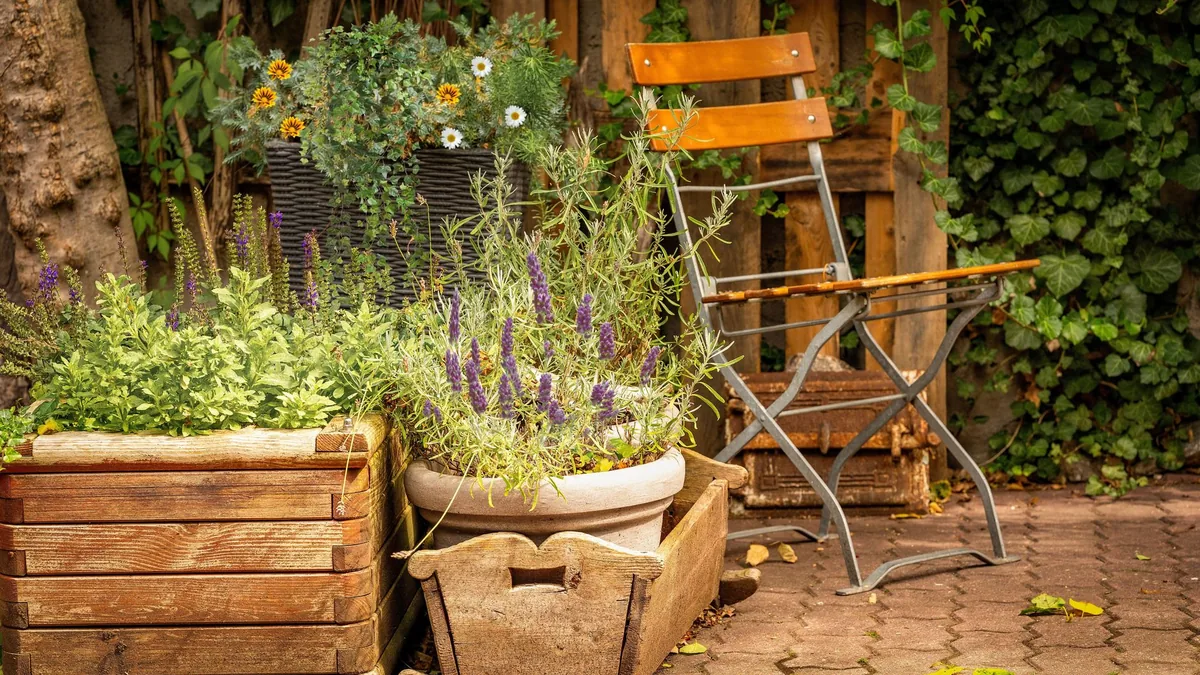
The box stands 29 or 31 inches tall, so you picture waist height, but the soil in it is only 9.6 to 10 inches deep: that is the planting depth printed for the cedar boxes from Gardener’s Supply and Greenes. Or the depth is right and the box, which Vego rates at 800 lb for its 8.59 cubic foot bed, goes on a deck or balcony that has not been checked. Shopping by overall height or looks skips both numbers, so the depth for what you grow and the weight come first, then five boxes from four makers, each with planting depth, size, price and a drawback.
The short answer
| Pick | Suits | Planting depth and height | Price (reference) |
|---|---|---|---|
| Gardener’s Supply cedar, 2 x 4 ft | Salad, peppers and herbs on a deck or patio | 10 in deep, 29 in tall | $250 |
| Greenes premium cedar, 24 x 48 in | The cedar box for less | 9.6 in deep, 31 in tall | $150 |
| Vego Classic Rolling Garden Bed, 1.75 x 4 ft | Tomatoes and carrots: the deepest soil here | 15 in deep, 19 in tall | $220 |
| Keter Splendor, 31.7 gallon | The lowest-priced of the five picks | Depth not printed, 29.8 in tall | $127 |
| Gardener’s Supply Urban Balcony | Herbs and salad on a small balcony | 10 in deep, 28 in tall | $139 |
How deep does the soil need to be for what you want to grow?
Overall height is how tall the box stands; planting depth is the soil the roots get, and the two are far apart: the Greenes bed is 31 inches tall with 9.6 inches of soil. These minimums are from one Colorado container chart (chart), an Illinois herb article (herbs) and an Oregon container guide (guide).
| What you grow | Minimum depth listed |
|---|---|
| Radishes | 8 in (chart); 4 to 6 in (guide) |
| Leaf lettuce, spinach, chard | 8 in (chart) |
| Herbs | 6 to 8 in; dill and fennel at least 10 in (herbs) |
| Peppers, beans, cucumbers | 8 in (chart) |
| Kale, broccoli, cabbage | 10 in (chart) |
| Tomatoes | 12 in (chart); patio types suit containers, standard garden types need something like a whiskey barrel |
| Carrots | 12 in (chart); at least 12 in (guide) |
| Potatoes | At least 3 ft deep (guide) |
The two container sources do not agree on everything: the chart puts peppers at 8 inches, while the guide’s general line is that most vegetables do best in at least 12 inches and 2 to 5 gallons of soil. Read against the boxes (our reading), 8 to 10 inches of planting depth covers herbs, salad greens, radishes and, by the chart, peppers; tomatoes and carrots are 12 on the chart and the guide’s general line is 12 as well, which only the Vego bed (15 inches) clears, and no box here is deep enough for potatoes. Gardener’s Supply’s 4 x 4 ft page calls its 10 inches deep enough for tomatoes and root crops like carrots, so that maker and the chart differ: in a 10-inch box, a patio-type tomato is the safer choice (our reading).
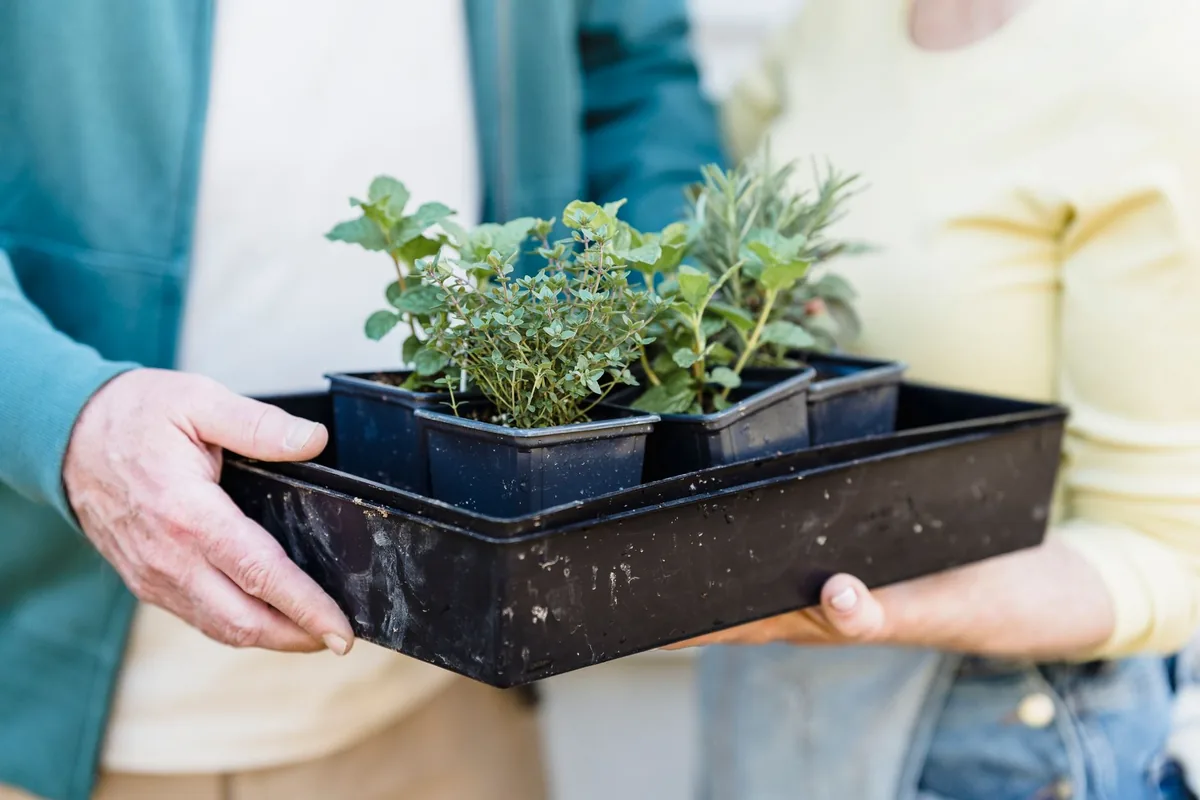
Will your deck or balcony hold it?
Two makers print a figure next to a soil volume, and both are ratings: Vego lists a soil and weight capacity of 800 lb for its 8.59 cubic foot, 1.75 x 4 ft bed, and Keter lists a loading capacity of 264 lb for its 31.7 gallon box. Vego’s pair works out at about 93 lb per cubic foot of the soil it holds (our arithmetic); that is Vego’s rating for its own bed, not a measured weight of wet potting mix, and it is not carried over to the other boxes.
| Pick | Soil volume as printed | Weight or load as printed | Footprint |
|---|---|---|---|
| Gardener’s Supply 2 x 4 | 6 cu ft | Not printed | 8.0 sq ft |
| Greenes premium | 6.2 cu ft | Not printed | 9.5 sq ft (50.5 x 27 in) |
| Vego 1.75 x 4 | 8.59 cu ft | Soil and weight capacity 800 lb | 7.0 sq ft |
| Keter Splendor | 31.7 gal (4.24 cu ft, our arithmetic) | Loading capacity 264 lb | 6.1 sq ft (44.88 x 19.41 in) |
| Gardener’s Supply Urban Balcony | 12.8 gal (1.7 cu ft, our arithmetic) | Box alone 8.3 lb | 3.0 sq ft |
A wood deck built to the DCA 6 tables is sized based primarily on a 40 psf live load and a 10 psf dead load; those tables cover single-level residential wood decks only, and concentrated loads such as hot tubs fall outside them and need a design professional. A full box standing on legs or casters puts its weight through them rather than spreading it (our reading), so treat a full box on a deck as a question for whoever rates your deck, not a number to squeeze under (our suggestion).
For a balcony, ask the building manager or landlord what it is rated for before you fill the box, and give them the box’s soil volume and footprint from the table above (our suggestion). Keter’s page does not say what its 264 lb covers, so ask Keter whether that includes soil and water before filling the box to the rim (our suggestion).
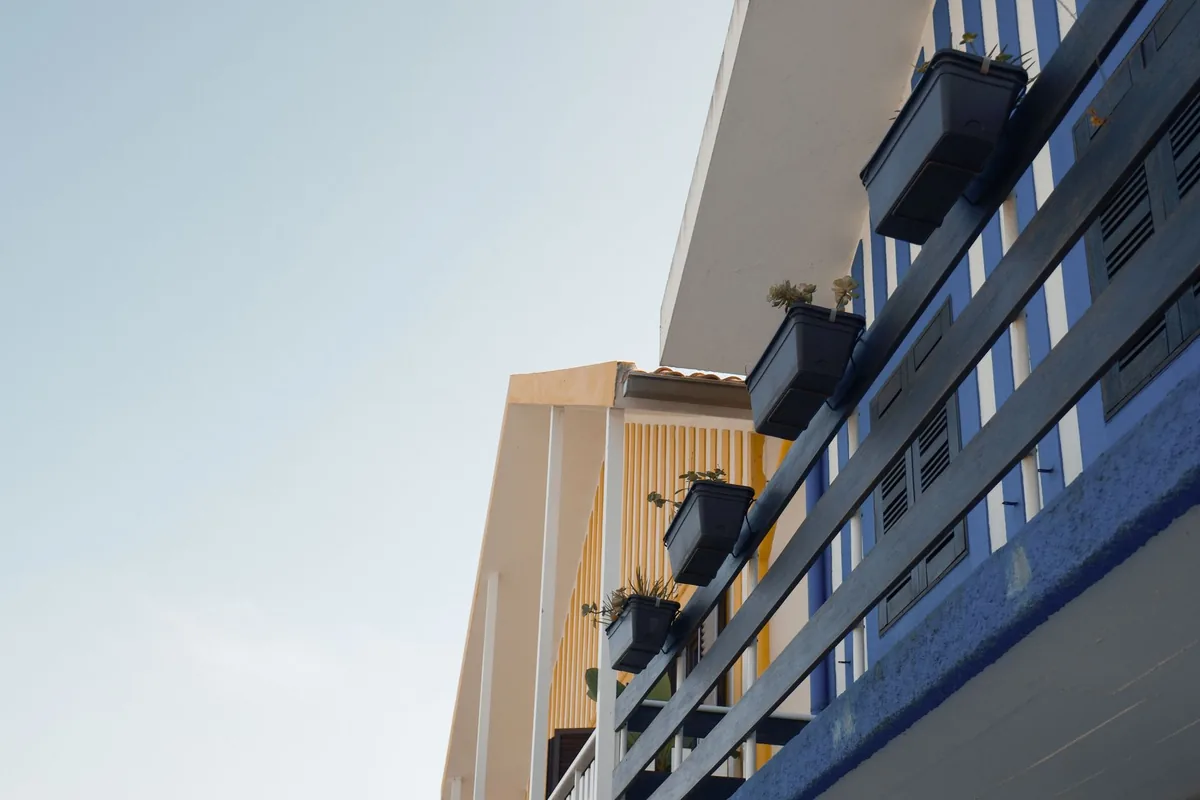
Wood, metal or plastic?
Only what each maker prints for its own box, and that does not carry over to another brand:
- Cedar, Gardener’s Supply: cedar sides it calls naturally rot-resistant, held by powder-coated aluminum corners, with a slatted base that lets excess water drain through and a fabric liner included.
- Cedar, Greenes: untreated cedar it describes as naturally rot and insect resistant, with a fabric liner included; its premium version uses 3/4 in. boards and the original 11/16 in. ones.
- Steel, Vego: galvanized steel with a powder-coated finish; the page claims 20+ years and describes a corrugated bottom with side gaps for drainage.
- Resin, Keter: resin it says will not rust, peel or rot, with a water reservoir system and a simple drainage system.
- Plastic, Gardener’s Supply Urban Balcony: a plastic box with a hose adapter on the underside so drainage can be led away.
The drainage point matters on a deck: water leaves through slats, gaps or a hose adapter, so it lands on what is under the box (our reading). On a patio, a liner along the bottom may help keep soil in, and a liner water can pass through, such as landscape fabric, is the one to choose rather than nonpermeable plastic. A tray or a spot where runoff does not matter is our suggestion.
Which elevated planter boxes are worth buying?
Each price is the one shown on its page without a code, for the size named. The two cedar boxes come first, then the deep steel bed, then the resin and plastic ones.
Gardener's Supply Elevated Cedar Planter Box, 2 x 4 ft
Our pick for a deck or patio, for reasons you can check: it is 29 inches tall, the page calls that the height for no-bend gardening, and its 10 inches of planting depth clears the 8 the chart lists for lettuce, spinach and peppers and the 6 to 8 for herbs. The page says it is made by hand in Vermont from cedar with aluminum corners, that the slatted base drains, and that you can build and plant it in under an hour. Its details add a note that planter boxes cannot hold regular garden soil, topsoil, sand, clay or rocks, so use potting mix only.
Drawbacks: Ten inches is under the 12 the chart lists for tomatoes. The page gives the soil capacity as 170 quarts (6 cubic feet) in its details and as 9 bags (180 quarts) in its description, so buy a little extra. Assembly is required.
Greenes Fence Premium Cedar Elevated Garden Bed, 24 x 48 in
The cedar box for less: $150 against $250 for the Gardener’s Supply 2 x 4 for a near-identical 6.2 cubic feet (our arithmetic). The page lists untreated North American cedar, made in the USA, in 3/4 in. boards that go together with a rubber mallet, and 31 inches overall, two inches taller than the Gardener’s Supply box. The inside size is 47 x 23.75 inches.
Drawbacks: At 9.6 inches the soil is a little shallower than the Gardener's Supply box's 10 and under the 12 listed for tomatoes and carrots. The $79.00 original version is 7.5 inches deep and holds 4.8 cubic feet, which is thin for anything beyond herbs and greens (our reading).
Vego Garden Classic Rolling Garden Bed, 1.75 x 4 ft
The pick for tomatoes and carrots: 15 inches of soil is the only printed planting depth here above the 12 that the chart lists for tomatoes and carrots (the guide lists 12 for carrots), and the page says 15 inches supports most edible plants. Each caster is listed as supporting 240 lb, so it can be moved. The steel is galvanized with a powder-coated finish, and the 1.75 ft width fits narrow spaces along a wall or fence.
Drawbacks: At 19 inches overall it is the lowest of the five, so you may still bend to it (our reading), and it is below the 27 inches that one extension guide gives as comfortable for wheelchair users. The 800 lb is Vego's own rating for this bed, so give that 800 lb and the 7 sq ft footprint to whoever rates your deck or balcony (our suggestion).
Keter Splendor 31.7 Gallon Elevated Garden Bed, Brown
The lowest-priced of the five picks, and at 22.05 lb empty on its page a box you can carry. The page labels 264 lb a loading capacity, which is useful to have before you buy and a reason to ask Keter what the number covers. The page describes a rattan-look resin, a water gauge, a water reservoir and a drainage system, and assembly with basic tools.
Drawbacks: The page prints no planting depth, so you cannot check it against the crop depths above. It lists a loading capacity of 264 lb without saying what that covers, so ask Keter whether that includes soil and water.
Gardener's Supply Urban Balcony Elevated Planter Box
The small one, for a balcony or a narrow patio: 14.5 inches wide, 28 inches tall and 8.3 lb empty. The page lists a 10 inch planting depth, which suits herbs at 6 to 8 inches and salad greens at 8; a hose adapter on the underside takes a drainage hose.
Drawbacks: At 10 inches deep it is under the 12 the chart lists for tomatoes, so it is a herb and salad box (our reading). The page calls it a Graf balcony raised bed and lists assembly as required; the cloche cover is sold separately.
Which one for you?
- Herbs and salad on a balcony. The Urban Balcony box: 12.8 gallons, 10 inches deep, and a hose adapter to carry drainage away. Check the balcony first (our suggestion).
- Tomatoes and peppers. The Vego bed for tomatoes or carrots at 15 inches; for peppers alone, either cedar box clears the chart’s 8 inches. A 10-inch box with a patio-type tomato is the compromise (our reading).
- A bad back or a wheelchair. One extension guide gives 27 inches as generally comfortable for wheelchair users, and the four boxes other than the Vego print 28 to 31 inches overall (Urban Balcony 28, Gardener’s Supply 29, Keter 29.8 and Greenes 31); that is the rim, so the soil surface sits lower (our reading). The Vego at 19 is the low one.
- Renting or likely to move. The Vego casters, or the 22.05 lb Keter and the 8.3 lb balcony box, empty. A full box is another matter, so empty it before it travels (our suggestion).
If you would rather plant in the ground or in a bed that sits on the surface, see best raised garden beds; for a small outdoor space more broadly, see small patio ideas or the patio and garden section.
What should you do before you fill it?
- Settle the weight question. Ask the building manager or landlord for a balcony, or whoever rates your deck for a deck, before you fill the box. Give them the box’s soil volume and footprint from the table above, that it stands on legs or casters, and the maker’s rating if it prints one (our suggestion).
- Assemble it where it will stand. Gardener’s Supply says its box builds and plants in under an hour, Greenes lists a rubber mallet, and Keter lists basic tools; a full box is not one you move (our suggestion).
- Check the liner. Gardener’s Supply and Greenes list a fabric liner with the box; for any other box, ask the maker whether the bottom holds soil in (our suggestion).
- Fill with potting mix, not garden soil. Gardener’s Supply’s page says potting mix only for its 2 x 4 box; for how much soil a given volume takes, our guide on how to make a raised garden bed has the formula, though its topsoil and compost mix is for beds open to the ground (our reading).
- Water until it runs out the bottom. Check the soil each day and, when it is dry, add water until it runs out the drain holes.
Where these numbers come from
Sizes, soil volumes, load figures and prices are from the five product pages linked above, read on 16 November 2026. Crop depths are from Colorado, Illinois and Oregon extension pages, the wheelchair working height from a Minnesota one, and the deck design loads from the American Wood Council. No first-party weight for moist potting mix or rating for a balcony was found, and the 93 lb per cubic foot is our arithmetic from Vego’s 800 lb and 8.59 cubic feet.
Frequently asked questions
How deep should an elevated planter box be?
It depends on the crop. Leaf lettuce, spinach, peppers, beans and cucumbers are listed at 8 inches and tomatoes and carrots at 12 on [a Colorado container chart](https://cmg.extension.colostate.edu/Gardennotes/724.pdf), most herbs need [6 to 8 inches, and dill and fennel at least 10](https://extension.illinois.edu/news-releases/small-batch-culinary-herbs-add-flavor-gardening-menu), and [most vegetables do best in containers at least 12 inches deep](https://extension.oregonstate.edu/imported-publication/container-gardening-basics) in an Oregon guide. Of the five boxes here, the planting depths printed are 10 inches (Gardener's Supply, both sizes), 9.6 (Greenes), 10 (the balcony box) and 15 (Vego); Keter prints none (our reading: only the Vego clears 12).
How heavy is a full elevated planter box?
Two of these makers print a figure, and it is a rating rather than a measured soil weight. Vego rates its 8.59 cubic foot, 1.75 by 4 foot bed at 800 lb, about 93 lb per cubic foot of the soil it holds (our arithmetic; that is Vego's rating for its own bed, not a figure for other boxes), and Keter lists a loading capacity of 264 lb for its 31.7 gallon bed. The balcony box weighs 8.3 lb empty on its page.
Can I put an elevated planter box on a balcony or a wood deck?
Ask first. The DCA 6 tables for wood decks size the framing based primarily on a 40 psf live load and a 10 psf dead load, cover single-level residential wood decks only, and put concentrated loads such as hot tubs outside their scope. A full box standing on legs or casters is a concentrated load (our reading), so ask the building manager or landlord about a balcony, or whoever rates your deck, and give them the box's soil volume, its footprint, that it stands on legs or casters, and the maker's rating if it prints one (our suggestion).
What soil goes in an elevated planter box?
Potting mix, going by one maker's page here: Gardener's Supply's 2 x 4 ft box page says planter boxes cannot hold regular garden soil, topsoil, sand, clay or rocks and to use potting mix only. For containers on a porch, balcony or patio, [commercial potting soil rather than soil dug from the ground](https://extension.oregonstate.edu/imported-publication/container-gardening-basics) is the line in one Oregon guide. For raised beds on the ground, [potting soil dries out too quickly](https://extension.umn.edu/planting-and-growing-guides/raised-bed-gardens) in a Minnesota guide (our reading: that is about beds open to the soil below, not boxes on legs).
- #garden planter box
- #vegetable planter box
- #elevated planter box
- #raised planter on legs