Best Raised Garden Beds: Metal, Wood and Fabric Compared
Six raised garden bed kits compared in steel, cedar and fabric, with height, soil volume and price per square foot to match one to your yard or patio.
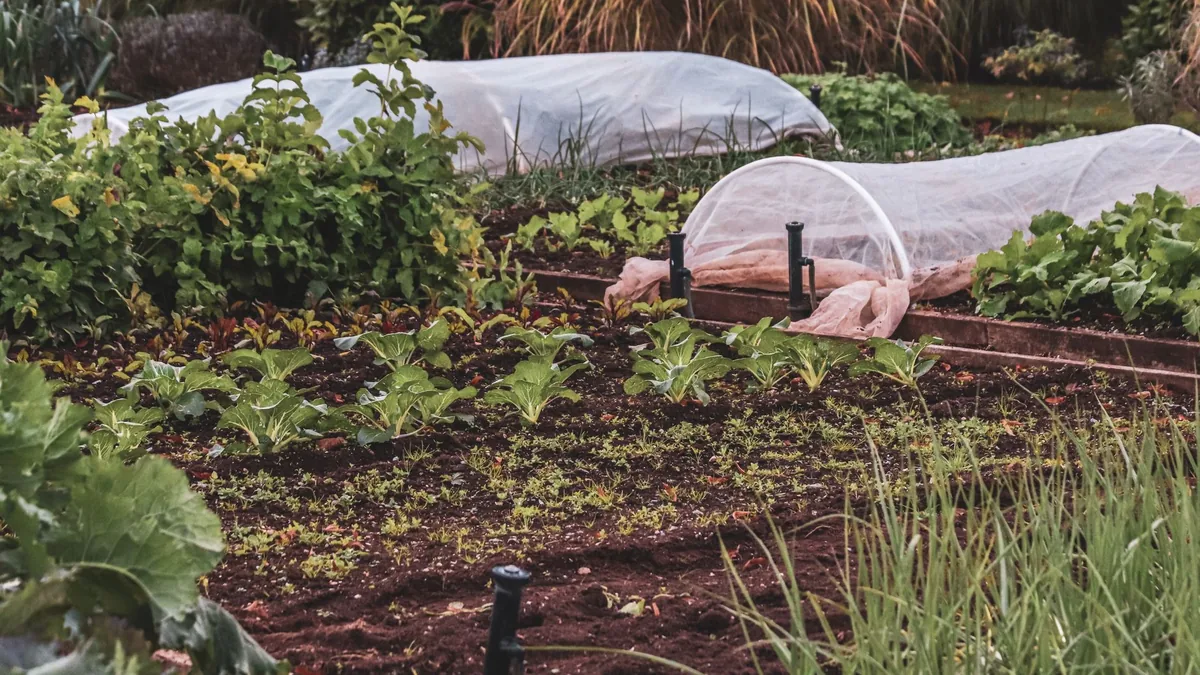
The kit arrives and takes 44 bags of soil, not the handful you budgeted for, or it is only 8 inches deep on a patio where those 8 inches are all the root room the plants get. Shopping by price per kit hides how far apart these are: across the six below, the printed soil capacity runs from 3.8 to 65.2 cubic feet and the price per square foot of footprint from $3.52 to $28.97 (our arithmetic). Each pick lists what it is made of, how tall it stands, how much soil it takes and what it costs, with a drawback, so you can match one to your yard, patio or back.
The short answer
| Pick | Suits | Size and height | Price (reference) |
|---|---|---|---|
| Vego Garden 17-inch Modern, 4 x 8 ft | Our pick for a yard bed: steel, $7.81 per sq ft | 4 x 8 ft, 17 in | $250 |
| The Harvest Company galvanized steel, 6 x 3 ft | The lowest-priced steel kit here | 71 x 35.5 in, 17.5 in | $74.99 |
| Vego Garden 26-inch Woodgrain, 4 x 8 ft | A tall steel bed for a patio or less bending | 4 x 8 ft, 26 in | $350 |
| Gardener’s Supply Demeter Elevated | A small standing-height herb and salad bed | 40 x 20.5 in, 31.5 in | $165 |
| Gronomics cedar bed, 48 x 95 in | The cedar option, in two depths | 95 x 48 in, 10.5 or 17.5 in deep | $350 at 17.5 in ($260 at 10.5 in) |
| GeoPlanter fabric bed, 48 x 48 in | The cheapest bed, and one with no tools | 48 x 48 x 12 in | $56.30 |
Each price is the one shown on its page without a code, for the size and colour named in its pick below.
What should you check on a raised garden bed kit before you buy?
Six checks sort these kits, and each is a number or a line on the product page. If you would rather build from boards, the guide linked in check 4 has the cut list.
- Material and coating, as each maker describes it. Four of the six are steel: the Vego 17-inch is powder-coated galvanized steel panels on steel posts, the 26-inch is called triple-galvanized, food-safe coated steel, the Harvest Company lists galvanized steel and nothing on the coating, and Demeter is powder-coated galvanized steel. Gronomics is untreated cedar and GeoPlanter is geotextile fabric on a PVC frame. Lifespans are the makers’ own claims, and the sources disagree on steel: Vego’s 17-inch page says 20+ years in one line and up to 20 years in another, while one university extension guide calls galvanized steel virtually rust-resistant for upwards of 50 years. The same guide says zinc from the coating may leach into highly acidic soils (pH below 5) and that some prefabricated beds sold online have been found to contain lead, so ask the seller whether the bed’s materials have been tested for lead before you order (our suggestion).
- Height against where it sits. Most plants need at least a 6 to 12 inch rooting zone, and deeper is better. On soil, beds shallower than 12 inches should have no bottom so roots can reach the soil below. On a patio the bed is all the soil the roots get (our reading), so depth matters more: the depths here run from 8 inches (Demeter) through 10.5 (Gronomics, shallow option), 12 (GeoPlanter), 17 and 17.5 to about 26 inches (Vego 26-inch), and the Demeter stands 31.5 inches overall.
- Footprint and reach. Four feet is a convenient width if you can reach both sides, and 3 feet if the bed backs onto a fence or wall, in the same guide as the rooting zone above. Four of the six are 4 feet wide; the Harvest Company bed is 35.5 inches wide and the Demeter 20.5.
- How much soil it takes. Order soil by the capacity the page prints, which matches length x width x height (the planting depth for the Demeter) within 1% for the Vego 17-inch, the Harvest Company, the Demeter and GeoPlanter’s chart, and is 6% to 15% lower for the Vego 26-inch and the Gronomics bed (our arithmetic). The formula, the soil mix and what goes under a bed are in our raised garden bed guide.
- Bottom, edges and assembly. Check whether the bed is open-bottomed, whether the corners are rounded, and what assembly asks for. Each pick below gives what its maker says.
- Price per square foot. Footprint is the length times the width of the printed size (for Gronomics, the 32 square feet its page prints), so a tall bed is not credited for its extra depth (our arithmetic). Steel and cedar beds are close at 4 x 8: $7.81 for the Vego 17-inch, $8.13 for the cedar at 10.5 inches deep, $10.94 for the Vego 26-inch and for the cedar at 17.5 inches. At 4 x 4 ft the Vego 17-inch is $190 (its store listing), the Gronomics cedar $155 at 10.5 inches or $250 at 17.5, and the GeoPlanter fabric bed $56.30 (price for reference only).
| Pick | Material, per its page | Size as printed | Soil capacity as printed |
|---|---|---|---|
| Vego 17-inch | Powder-coated galvanized steel | 4 ft W x 8 ft L x 17 in H | About 45 cu ft (1.7 cu yd) |
| Harvest Company | Galvanized steel | 71 L x 35.5 W x 17.5 H in | 25.5 cu ft |
| Vego 26-inch | Triple-galvanized, food-safe coated steel | 4 x 8 ft, 26 in overall height | 65.2 cu ft |
| Demeter Elevated | Powder-coated galvanized steel | 40 L x 20.5 W x 31.5 H in | 3.8 cu ft (95 quarts), 8 in planting depth |
| Gronomics 48 x 95 | 100% natural, untreated cedar | 95 L x 48 W in, 32 sq ft planting area | 25.8 cu ft at 10.5 in; 39.2 cu ft at 17.5 in |
| GeoPlanter 48 x 48 | Geotextile fabric, PVC frame | 47 x 47 x 12 in outside, 45 x 45 x 12 in inside | 16 cu ft on the page’s chart |
The six kits: steel, cedar and fabric
Each price is the one shown on its page without a code. The steel kits come first, then cedar, then fabric.
Steel
Vego Garden 17-inch Modern Metal Raised Garden Bed, 4 x 8 ft
Our pick for a yard bed, for a reason you can check: at $250 for 4 x 8 ft it works out at $7.81 per square foot, the lowest of the three 4 x 8 beds here (our arithmetic). The page prints the size, the 17 inch height, a soil capacity of about 45 cubic feet and the material, powder-coated galvanized steel panels on steel posts. Its FAQ says the bed is open-bottomed so roots can reach the soil below, that most people can put even the 4 x 8 together in under 30 minutes with standard household tools (a power drill is faster), and that it has rounded corners and twine holes along the top for a 1 ft planting grid. It comes in five sizes, from 2 x 4 to 4 x 8 ft.
Drawbacks: The finish can scratch or chip: its page says sharp tools, hard impacts or abrasive contact may mark it. Its cover and trellis for this series are listed as in development, and the older Classic cover systems do not fit it.
The Harvest Company Galvanized Steel Raised Garden Bed, 6 x 3 ft
The lowest-priced steel kit here, and the lowest of the steel beds per square foot: 71 x 35.5 inches is 17.5 square feet, so $4.28 a square foot (our arithmetic). It is 17.5 inches tall, the page gives its volume as 25.5 cubic feet and says to buy 17 bags of 1.5 cubic feet. At 35.5 inches wide it stays within the 3 feet that an extension guide gives for a bed you can reach from one side only (our reading), so it suits a bed along a fence.
Drawbacks: The page names galvanized steel and says easy to assemble, and gives no coating, steel thickness or lifespan, so there is less to check than on the Vego pages. Its title rounds the size to 6 x 3 x 1.4 ft while the body gives 71 x 35.5 x 17.5 inches.
Vego Garden 26-inch Woodgrain Metal Raised Garden Bed, 4 x 8 ft
The tall steel option for a patio or for less bending. Its overall height is 26 inches, which the page presents as letting you garden without bending; one extension guide gives 27 inches as generally comfortable for wheelchair users, and says raising a bed one or two feet on very hot pavement can help reduce heat. Vego’s FAQ on this page says the bed can sit on any surface, including concrete, pavers or tiles, though it recommends grass or soil, that soil may stain concrete, and that landscaping fabric along the bottom can help. Assembly is bolts with the hand wrench in the kit, with no cutting or drilling, and the finish is a woodgrain finish on steel.
Drawbacks: It takes the most soil of any bed here, about 44 bags of 1.5 cubic feet on its page, and it is bottomless; on a patio Vego suggests landscape fabric along the bottom to hold the soil in. At $10.94 a square foot it is the joint dearest of the three 4 x 8 beds (our arithmetic).
Gardener's Supply Demeter Elevated Raised Bed
A standing-height bed for herbs, salad leaves and annuals on a patio or balcony. The page lists 31.5 inches overall, powder-coated galvanized steel, a wire shelf for tools, and says it goes anywhere there is a level surface. It calls the depth enough for herbs, veggies and annuals and suggests filling it with five bags of the 20-quart potting mixes it sells, which is 100 quarts against the 95 quarts the page gives as its capacity. Storm Blue is $170.
Drawbacks: It is the shallowest and smallest bed here, 8 inches of planting depth and 3.8 cubic feet of soil, and at $28.97 a square foot of footprint the dearest per square foot (our arithmetic). Assembly is required.
Cedar
Gronomics Cedar Raised Garden Bed, 48 x 95 in
The cedar pick, in two depths: $260 for 10.5 inches of planting depth (25.8 cubic feet of soil) or $350 for 17.5 inches (39.2), which is $8.13 or $10.94 per square foot of the 32 square feet the page prints as planting area (our arithmetic). The page calls the cedar 100% natural, untreated and naturally rot-resistant, says the parts slide together with no screws, brackets or tools, and lists it as made in the USA. At 95 inches it is an inch short of 8 feet, so measure a 4 x 8 spot with that in mind. The deeper depth costs $90 more.
Drawbacks: The page gives no lifespan figure for the cedar, so you cannot set its years against the steel kits. Its printed soil capacities are 7% and 15% below what 95 x 48 x depth works out to (our arithmetic), so order soil by the printed figure and keep a little in reserve.
Fabric
GeoPlanter Fabric Raised Bed, 48 x 48 x 12 in
The cheapest bed here, and one of two that need no tools: the page says the geotextile fabric has seams sewn with bonded polyester thread for moisture and UV, the PVC frame holds its shape, and it can be set up in minutes. The page calls it durable, washable and reusable, says it drains properly, and says it fits most flood and drain trays; the page recommends a tray whose inside size is larger than the bed’s outside size, which would also keep drained water off a patio (our suggestion). At $56.30 for 16 square feet by its named size it is $3.52 a square foot (our arithmetic). The 48 x 40 x 14 inch version is $51. The page’s soil chart lists 16 cubic feet for 48 x 48 x 12; the inside size on the dimension sheet gives about 14 (our arithmetic).
Drawbacks: At 12 inches it is a shallow bed, and the page gives no lifespan beyond years of reliable use. For fabric grow bags, which it says can resemble small raised beds, one extension guide says to manage them more like containers than raised beds, that the fabric is typically plastic-based, and that research on microplastics leaching is limited.
Which kit for your yard, patio or back?
- On lawn or bare soil. An open-bottomed bed lets roots reach the soil below. Vego’s 17-inch page says open bottom and its 26-inch page says bottomless; for the Gronomics and the Harvest Company, check the listing for the bottom before relying on it. The Vego 17-inch is the steel pick, the Harvest Company the cheapest steel, and the Gronomics the cedar.
- On a patio or over pavement. The bed is all the soil the roots get (our reading), so go deep: the Vego 26-inch, or one of the 17 to 17.5 inch beds (the Vego 17-inch, the Harvest Company, the Gronomics at 17.5 inches). Under an open-bottomed bed, a liner water can pass through, such as landscape fabric, is what an extension guide and Vego’s 26-inch page both suggest, and soil may stain what is under it. Vego’s 17-inch page says its metal may warm in direct summer sun, with regular watering and mulch giving more protection. For more on fitting beds into a small space, see our small patio ideas.
- For a bad back. The Vego 26-inch and the Demeter are the two tallest here, and each page sells the height as easier on the back: the Vego page as gardening without bending, the Demeter page as no-bend gardening comfort. Its 8 inch planting depth sits at the low end of the 6 to 12 inch minimum one extension guide gives for most plants (our reading).
- Renting or short on money. The GeoPlanter needs no tools and its page calls it washable and reusable; at $56.30 it is the cheapest way here to try a bed (our reading). Set it on a tray if the floor underneath matters (our suggestion).
What should you do before you order a raised bed kit?
- Count the soil. Use the printed capacity for the kit and size you are buying: about 45 cubic feet is 30 bags of 1.5 cubic feet for the Vego 17-inch (our arithmetic), and the Vego 26-inch page counts 44. The soil mix and what goes under the bed are in how to make a raised garden bed.
- Mark the footprint. Lay the outside size on the ground with tape (our suggestion), and leave paths: an extension guide gives 1 foot as enough for foot traffic only and 2 to 3 feet for a wheelbarrow or cart.
- Read what assembly asks for. Gronomics and GeoPlanter say no tools; Vego’s 26-inch comes with a hand wrench and its 17-inch uses household tools; the Demeter page says only that assembly is required.
- Read the return terms on the listing before you order (our suggestion).
Where these numbers come from
Sizes, soil capacities, materials and prices are from the six product pages linked above and the GeoPlanter dimension sheet, read on 4 November 2026; growing guidance is from University of Minnesota, University of Missouri and Utah State extension pages. Price per square foot, bag counts and percentage differences are our arithmetic from those figures.
Frequently asked questions
Are metal raised garden beds better than wood or fabric?
Not on every count, going by these six pages and one university extension guide. That guide says metal sides generally cost more than wood but can last longer, that cedar costs more than pine or fir but lasts much longer, and that fabric grow bags are better managed like containers than like raised beds. On these pages a 4 by 8 foot steel bed works out at $7.81 to $10.94 per square foot and the cedar bed at $8.13 to $10.94 depending on depth (our arithmetic), so at that size price does not separate them. Lifespans are the makers' own: Vego's pages give 20+ years in one line and up to 20 years in another for its steel, and the Gronomics page gives no figure for its cedar.
How tall should a raised garden bed be?
One university guide says most plants need at least a 6 to 12 inch rooting zone and deeper is better, and another says beds shallower than 12 inches should have no bottom so roots reach the soil below. On a patio the bed is all the soil the roots get (our reading), so of these six the ones 17 inches or more deep are the two Vego beds (17 and 26 inches), the Harvest Company bed (17.5 inches) and the Gronomics bed at its 17.5 inch depth. For comfort, one extension guide gives 27 inches as generally comfortable for wheelchair users; the Vego 26-inch and the Demeter (31.5 inches overall, with an 8 inch planting depth) are the two tallest here.
Can you put a raised garden bed on a patio or concrete?
Vego's 26-inch bed page says its beds can go on any surface, including concrete, pavers or tiles, though it recommends grass or soil, and adds that soil may stain concrete and that landscaping fabric along the bottom can help contain it. One extension guide says to use a liner water can pass through, such as landscape fabric, not plastic, and that raising a bed one or two feet above very hot pavement can help reduce heat. The Demeter page says its elevated bed can go anywhere there is a level surface.
How much soil does a 4 by 8 foot raised bed kit take?
It depends on the height. On these pages the Vego 17-inch bed prints about 45 cubic feet (1.7 cubic yards), the Vego 26-inch bed 65.2 cubic feet, and the Gronomics 48 by 95 inch cedar bed 25.8 cubic feet at 10.5 inches deep and 39.2 at 17.5 inches. That is about 30 bags of 1.5 cubic feet for the 17-inch Vego (our arithmetic), where the 26-inch page counts about 44 bags. Our guide to making a raised garden bed has the formula and a soil mix.
- #best raised garden beds
- #steel raised garden beds
- #best metal raised garden beds
- #raised garden bed kit