Laminate vs Vinyl Plank Flooring: Water, Feel, Cost, Rooms
Laminate vs vinyl plank flooring compared on water, feel, wear, install, cost and cleaning from makers' guides and retailer listings, with a call per room.
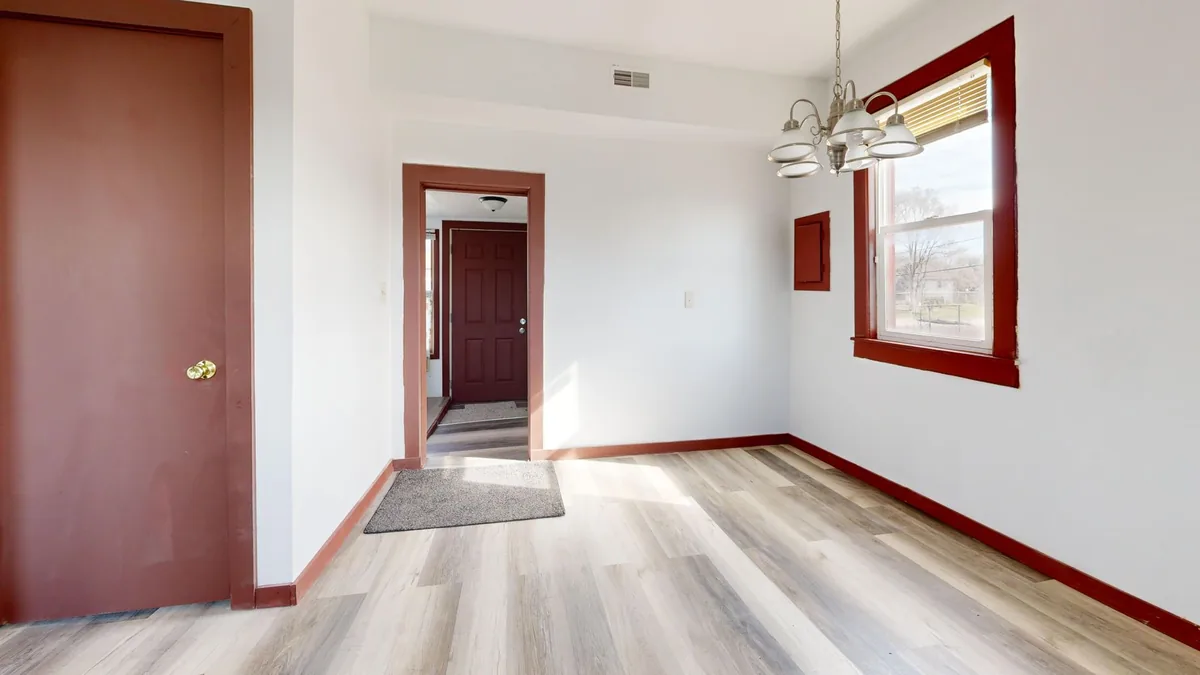
Two boxes sit side by side in the aisle, or the old kitchen floor is already out and you need to order, and both say waterproof or water resistant. Treating that word as one promise is where the choice goes wrong: one laminate maker’s care sheet says its planks are “water resistant, not water proof”, another sells its laminate as waterproof, and the vinyl guides read here differ on how wet a room can get. Below, laminate and vinyl plank go through the same questions using the makers’ own installation, care and product pages, and the last section gives an answer for each room.
The short answer
| Laminate plank | Vinyl plank | |
|---|---|---|
| Made of | A wood-based core, a printed image layer and a protective surface | PVC; the lines read here are rigid core (SPC or WPC) with a wear layer |
| Wet rooms | Depends on the line: “water resistant” (Shaw Repel) to “waterproof” (CALI); Pergo’s and Quick-Step’s sheets rule out a room with a floor drain | The vinyl guides read call the planks waterproof; Karndean’s guide allows bathrooms and laundry rooms, not rooms that stay wet |
| Thickness | 10 to 14 mm in CALI’s laminate guides | 4.7 to 14 mm in CALI’s vinyl guide; 5 mm in the TritonCORE Pro listing |
| Surface wear rating | An AC class (AC3 on the one of two priced pages that prints a class) | A wear layer in mil (20 mil on the TritonCORE Pro listing) |
| Temperature range | Climate-controlled, 60 to 85°F (Pergo, Quick-Step, CALI laminate) | CALI vinyl: 32 to 113°F for four collections, 0 to 140°F or wider for the other three |
| Subfloor and gap | Flat to 3/16 in per 10 ft; 3/8 in gap (Pergo, Quick-Step) or 1/2 in (CALI) | Flat to 3/16 in per 10 ft; gap 3/16 to 3/8 in by maker |
| Price per sq ft (reference) | $3.56 and $4.08 on two lines | $2.03 and $3.56 on two lines |
| Cleaning | Damp mop at most; steam mops: makers split | Damp mop at most; CALI says never a steam mop |
Each cell is scoped to the guides read; other lines can differ, so check the sheet in your own box.
What is each one made of?
Laminate plank is a layered board. One maker that sells both describes laminate as multi-layered: a core “usually made of a high-density wood mix”, a photographic layer that imitates wood or stone, and a protective coat. On its own, laminate plank means a click-together floating plank: the Pacifica, Santa Cruz and Mavericks planks in CALI’s laminate guides run from 47-13/16 by 7-11/16 inches at 10 mm to 86-5/8 by 9-7/16 inches at 14 mm, and the 12 mm Bel-Air Imperial planks priced below are 6.54 by 47.83 inches.
Vinyl plank is made primarily from polyvinyl chloride (PVC). The lines read here are rigid core: the TritonCORE Pro listing gives an SPC rigid core, a 20 mil wear layer, 5 mm thickness and a 1 mm cork pad attached, and CALI’s vinyl guide sorts its own collections into WPC (Laguna, Legends, Trestles) and SPC (All-Star, Longboards, SP1). The same maker says worn laminate has to be replaced because it can’t be refinished, and that vinyl can’t be refinished either.
Which can go in a bathroom, kitchen, laundry room or basement?
The same word covers different promises, so go by the line’s own sheet.
Laminate
- Pergo’s March 2026 sheet and Quick-Step Studio’s April 2025 sheet each call their planks suitable for climate-controlled indoor installations only (35% to 65% relative humidity, 60 to 85°F), allow above, on or below grade, and say not to install over a floor with a sump pump or in a room with a floor drain.
- Bathrooms: a Pergo guide from January 2014 allows them if every expansion space (3/8 in) is sealed with sealant or 100% silicone and there is no floor drain, and it defines standing water as water left on the surface for longer than 30 minutes. Shaw’s Repel sheet says “Repel is water resistant, not water proof” and asks for silicone caulk at tubs, toilets, sink areas and perimeters.
- CALI sells its laminate as waterproof. Its warranty covers topical moisture, wet mopping included, if the perimeter is sealed, and excludes flooding, plumbing failures and leaks from icemakers, dishwashers and washing machines. The Mannington Historic Oak page reads “Waterproof: Yes featuring SpillShield Plus”, while the retailer listing priced below tags the same line “Water Resistant” as well as “Waterproof technology”.
Vinyl plank
- Karndean’s rigid core guide says its planks will not absorb, swell or be damaged by water, and that damp mopping and topical spills cleaned up promptly will not harm the floor. They are suitable for traditional residential bathrooms, kitchens and laundry or utility rooms, and not for rooms that will be continually wet. Where a wet area needs sealing, it asks for an expansion joint at the doorway and recommends 43 sq ft as the maximum net sealed area.
- CALI’s vinyl guide says its vinyl plank is waterproof, but that moisture from concrete hydrostatic pressure, flooding or plumbing leaks can affect the floor over time, and CALI’s Longboards vinyl warranty excludes damage from those causes.
- IncStores.com’s guide for its rigid core planks says plank integrity will not be affected by moisture, that mold or mildew growth is probable when excessive moisture is present, and that the plank is not a moisture barrier. The three vinyl installation documents read here have no floor-drain or sump-pump rule.
In our reading, a laundry room, a full bathroom or a basement with a drain is where vinyl plank’s documents leave more room than laminate’s, but no document here covers a floor that floods, and for a bathroom floor that will see standing water regularly how to tile a bathroom floor covers the other route.
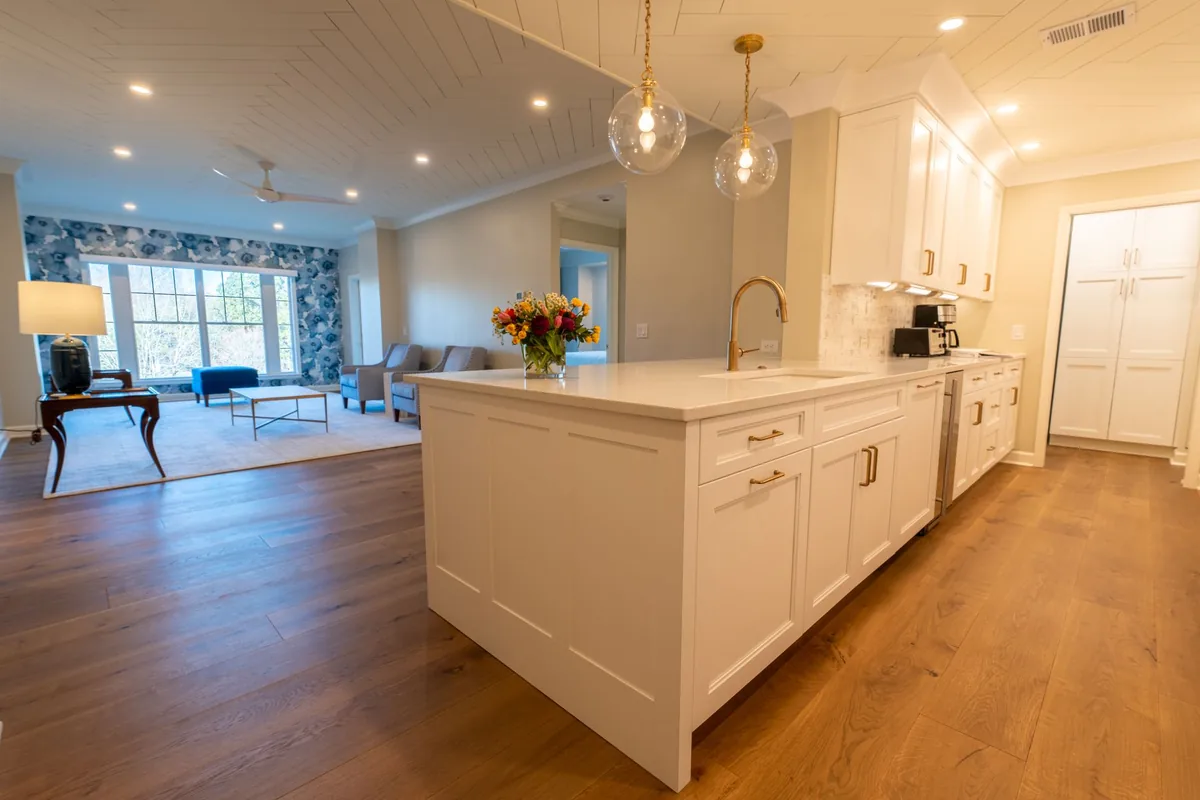
How do they feel and sound underfoot?
None of the pages read gives a head-to-head sound or comfort measurement, so what can be compared is thickness and padding.
- Thickness. CALI’s laminate guides give 10, 12 and 14 mm; its vinyl guide gives seven collections from 4.7 mm (SP1) to 14 mm (Longboards Icons). The TritonCORE Pro listing is 5 mm, and the 12 mm Bel-Air laminate listing is thicker than that.
- Pad. Pergo’s and Quick-Step’s sheets put planks with no pad attached over a layer of laminate underlayment. TritonCORE Pro comes with 1 mm of cork attached, and the Shaw Endura listing says its attached underlayment gives noise reduction and comfort underfoot. Karndean says a separate underlay is not normally recommended, CALI’s vinyl guide says no underlayment over 2 mm, and its laminate guides say none over 3 mm.
- The maker’s pitch. One maker that sells both says some laminates sound hollow and that its own laminate is backed by an acoustic XPS pad, and that vinyl is soft and absorbs sound, with “most” of its vinyl collections backed by an IXPE pad. That is the maker’s description, not a measurement.
- Noise you can’t buy out. CALI’s laminate and vinyl care sheets both say occasional floor noise from structural movement is normal and not a defect.
Whichever you pick, try a sample over the pad you plan to use (our suggestion).
Which stands up better to pets, chairs and sunlight?
- Surface rating. Laminate pages use an AC class: the Bel-Air page prints “Class AC3 rated for residential and commercial applications”, while the Mannington page prints a 12 mm thickness and an aluminum oxide wearlayer coating but no class. Vinyl uses wear-layer thickness in mil: 20 mil on the TritonCORE Pro listing, and the Shaw Endura listing prints no mil figure. The two scales don’t convert, so don’t set an AC number against a mil number (our reading).
- Pets. CALI’s laminate and vinyl care sheets both say to keep pet nails trimmed. A scratch that goes through the laminate’s top layer or the vinyl’s wear layer means replacing the plank on CALI’s sheets, and light scratches have separate CALI touch-up products for each.
- Chairs and heavy furniture. CALI’s laminate and vinyl sheets both ask for soft rubber casters at least 2 inches across, and warn that furniture of 500 pounds or more may stop a floated floor moving freely. Pergo’s sheet asks for rubber casters and felt pads. IncStores.com recommends adhesive for any of its locking planks that will carry rolling loads or heavy furnishings.
- Sun and temperature. CALI’s laminate and vinyl sheets both say to limit direct sun with curtains or blinds. CALI’s vinyl cleaning page says sunlight and UV can fade vinyl. IncStores.com asks for UV film or blinds and requires gluing down planks that can’t be shaded, and Karndean asks for a 3/8 in gap in sunrooms. On temperature, the laminate sheets read here say climate-controlled indoor use, 60 to 85°F, while CALI’s vinyl guide lists 32 to 113°F for Legends, Laguna, Trestles and Longboards Icons, 0 to 140°F for All-Star and SP1, and -25 to 165°F for Longboards. In our reading, a cold or sunny room is where some vinyl guides leave more room than the laminate sheets, but only for the collections whose own band covers it: CALI’s other four vinyl collections go no lower than 32°F, and the TritonCORE Pro listing requires full glue-down where the room can fall below 32°F or rise above 140°F.
What changes when you install it?
In the guides read here the two floors are fitted the same way (floating click-lock, spacers at the walls, nothing nailed through the plank), and the differences come down to a few numbers. The full steps are in how to install laminate flooring and how to install vinyl plank flooring.
| Pergo laminate | CALI laminate | CALI vinyl | Karndean rigid core | |
|---|---|---|---|---|
| Subfloor flatness | 3/16 in per 10 ft | 3/16 in per 10 ft | 3/16 in per 10 ft | 3/16 in below level over 10 ft |
| Over concrete | 6 mil polyethylene barrier; slab tested | A moisture barrier always required | Barrier when the slab tests over its limit | Membrane above its limit |
| Underlayment | One layer for planks with no pad | None over 3 mm | None over 2 mm | Separate underlay not normally recommended |
| Boxes | 48 h at 60 to 85°F, unless already at living conditions | 24 h unopened; room 5 days at living conditions | 24 h for four collections, none for three | Generally not essential at 65 to 85°F |
| Gap at walls | 3/8 in | 1/2 in | 3/8 in or 1/4 in by collection | At least 3/16 in |
| Sealing | Perimeter sealed with silicone or tape | Backer rod and silicone required | No sealant or backer rod in the tool list | Sealant not for general gap filling |
| Cutting | Saw with a 40-tooth carbide blade in the tool list | Table or circular saw | Utility knife, table saw, miter saw | Knife and straight edge for each row’s last piece |
The IncStores.com guide for its rigid core planks takes 1/4 in at the walls and the same 3/16 in per 10 ft flatness. The main practical gap is the sealing: CALI’s laminate guides list backer rod and silicone, and Pergo’s sheet asks for the entire perimeter to be sealed, where the CALI vinyl tool list has neither (our reading).
What does each one cost?
Prices below are the per-square-foot and per-box prices each retailer page showed, without a discount code. They are example lines, not a ranking, and the two vinyl lines and the two laminate lines were picked to show the spread.
| Line | Type | Wear surface | Price (reference) | Box |
|---|---|---|---|---|
| Bel-Air Imperial | Laminate, 12 mm | Class AC3 | $3.56 per sq ft | $46.49, 13.05 sq ft |
| Mannington Historic Oak | Laminate, 12 mm | Aluminum oxide wearlayer coating | $4.08 per sq ft | $70.99, 17.4 sq ft |
| TritonCORE Pro 7 in | Rigid core vinyl, 5 mm, cork attached | 20 mil wear layer | $2.03 per sq ft | $56.79, 28 sq ft |
| Shaw Endura 512C Plus 7 in | Rigid core vinyl, underlayment attached | ArmourBead surface finish | $3.56 per sq ft | $66.49, 18.68 sq ft |
The cheapest of the four is a vinyl line, but the dearer vinyl line costs the same per square foot as the cheaper laminate, so there is no consistent gap (our reading). For a 200 sq ft room that is $406, $712 and $816 before waste and shipping (our arithmetic), and the four pages show shipping of $25.99 to $44.84 per carton on top (price for reference only). If the floor is one line of a bigger project, bathroom remodel cost shows where flooring sits in the budget.
How do you clean each one?
- Day to day. Sweep or vacuum with the beater bar off: CALI’s sheets for both floors, Shaw’s Repel sheet and Pergo’s sheet agree on that. Mop damp, not wet. CALI’s vinyl cleaning page says weekly with a microfiber mop and no soaking, the TritonCORE Pro listing says a damp and never a wet mop, and CALI’s laminate sheet says never flood-mop or wet-mop, while its warranty speaks of normal wet mopping.
- Steam mops. Laminate makers split: Pergo’s March 2026 sheet says no steamers and Shaw’s Repel sheet no steam cleaners, Quick-Step Studio’s sheet allows a residential steam mop on a microfiber pad at the setting for the product or the lowest setting, the Mannington page lists “Steam Mop Approved: Yes”, and CALI’s laminate care sheet allows one where its blog says never. CALI’s vinyl sheet says never.
- What to avoid differs by line. CALI’s vinyl sheet bans vinegar, ammonia-based cleaners and acetone. Pergo’s laminate sheet allows 1 cup of vinegar or 1/3 cup of non-sudsing ammonia per gallon of water, and Shaw’s Repel sheet uses acetone on tough spots such as oil, paint and ink. Use only the cleaner your own line’s sheet names.
So which one for your room?
Each line is our reading of the sections above, for the guides read here.
- Full bathroom, laundry room or a floor that gets wet often: vinyl plank, with a line whose guide allows wet rooms (Karndean allows bathrooms and laundry rooms but not rooms that stay continually wet). Laminate only if your line’s own sheet allows it, with the perimeter sealed.
- Basement over concrete: either, after testing the slab. Pergo’s and Quick-Step’s laminate sheets rule out a floor drain or sump pump; the vinyl documents read here don’t.
- Kitchen: either. CALI’s guides say not to float the floor under fixed cabinets, so the cabinets go in first; seal the perimeter as a laminate sheet asks, and note that CALI’s laminate warranty excludes dishwasher and icemaker leaks.
- Bedroom or living room: wet isn’t the issue, so decide on thickness, the pad and price per square foot. CALI’s care sheets for both floors say to limit direct sun.
- Sunroom or a room that gets cold: vinyl plank whose own guide lists a band that covers your room (in CALI’s guide only All-Star, SP1 and Longboards go below 32°F; the TritonCORE Pro listing requires full glue-down where the room can fall below 32°F), with the 3/8 in gap Karndean asks for in sunrooms. Karndean’s guide rules out outdoor installs, so an open porch is outside every document here.
- Rolling chairs or heavy furniture: either, with soft casters; IncStores.com wants glue for rolling loads.
Where these numbers come from
Installation, care and warranty lines are from the makers’ own pages: Pergo (March 2026 and January 2014), Quick-Step Studio, Shaw Repel, CALI’s laminate and vinyl guides, care sheets, warranties and blog, Karndean, IncStores.com and the Mannington page. Prices, box sizes and the AC3 and 20 mil lines are from four flooringinc.com product pages, read on 3 November 2026 without a discount code. The counts and the 200 sq ft totals are our own.
Frequently asked questions
Is vinyl plank or laminate better for a bathroom?
In the guides read here, the vinyl makers' wording is the more permissive one (our reading). Karndean's rigid core guide calls its planks suitable for traditional residential bathrooms, kitchens and laundry rooms, but not rooms that will be continually wet. On the laminate side it depends on the line: Shaw's Repel sheet says water resistant, not waterproof, and asks for silicone at tubs, toilets and sinks, while a Pergo guide from 2014 allows bathrooms only with every expansion space sealed and no floor drain.
Can laminate or vinyl plank go in a basement?
Pergo's and Quick-Step Studio's laminate sheets allow installation above, on or below grade, but not over a floor with a sump pump or in a room with a floor drain. The IncStores.com guide for its rigid core planks gives no such rule, and its TritonCORE Pro page lists basements. CALI's laminate guide and IncStores.com's rigid core guide both say the plank is not a moisture barrier, and CALI's vinyl guide asks for a barrier when the slab tests over its limit, so test the concrete first either way.
Can you steam mop laminate or vinyl plank?
The makers split. On laminate, Pergo's March 2026 sheet and Shaw's Repel sheet say no steamers or steam cleaners, while Quick-Step Studio's sheet allows a residential steam mop with a microfiber pad on the setting for the product or the lowest setting, and CALI's laminate care sheet and warranty allow it but its blog says not to. CALI's vinyl care sheet says never to use a steam mop. Follow the sheet for your own line.
Is laminate cheaper than vinyl plank?
Not consistently, on the four lines priced here. Per square foot (reference) the two vinyl lines are $2.03 and $3.56 and the two laminate lines $3.56 and $4.08, so the cheapest line is vinyl but the dearer vinyl line costs the same as the cheaper laminate. Compare per square foot, since box sizes run from 13.05 to 28 sq ft.
- #laminate flooring
- #vinyl plank flooring
- #waterproof flooring
- #flooring comparison