How to Measure a Couch: Doorways, Slipcovers and Cushions
How to measure a couch: where the tape starts and stops for length, depth, height, seat and arms, plus the numbers for doors, slipcovers and cushions.
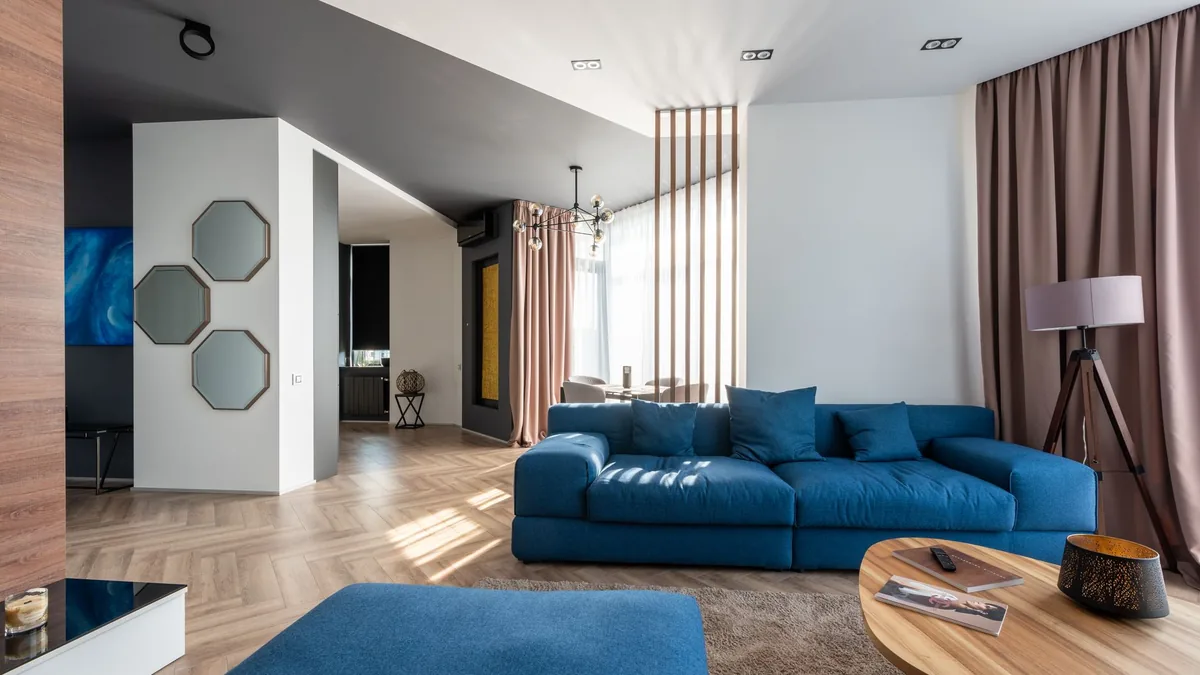
The slipcover stops short of the arms, the new cushions don’t fill their covers, or the couch jams in the doorway. One easy slip is measuring only the seat: on one retailer’s guide, wide arms or rolled cushions can add several extra inches to the full width, and the numbers a slipcover maker asks for are not the ones a doorway needs (our reading). Below, each number says where the tape starts and stops, then which of them you need for a door, a slipcover, new cushions or a comparison with another couch.
The short answer
| Number | Tape runs from | To |
|---|---|---|
| Length (also called width) | Outer edge of one arm | Outer edge of the other arm, at the widest point |
| Depth | Front of the seat | Back, cushions and frame included |
| Height | Floor | Tallest point of the back |
| Seat height | Floor | Top of the seat cushion |
| Seat depth | Front edge of the seat | Back cushion (back of the frame if there is none) |
| Diagonal depth | Bottom back corner | Straight edge laid from the top of the back frame to the front of the arm (the point on the edge nearest that corner, tape at right angles to it; our reading) |
Definitions are from retailers’ and makers’ measuring guides, each linked below; where two guides differ, the sections say so.
What do you need before you start?
A tape measure, a pen and paper, a second person for the long runs and a straight edge at least as long as the couch is deep for the diagonal (our suggestion). Guides differ on the tape: one slipcover maker’s guide says to use a flexible one, not a ruler, so you can follow curves, seams and cushions, while a cover maker’s guide says a cloth or plastic tape works better, and a metal one is fine if it is all you have, measured in straight lines from edge to edge. One slipcover maker suggests getting a friend to help with the longer parts of the sofa.
Guides name the side-to-side number two ways: length on a retailer’s size guide, width on another retailer’s measuring guide, where it is the side that stretches across the wall. It is one measurement. Write the three overall numbers as width, depth, height, the order one maker’s delivery guide lists them on its product pages, so a listing’s numbers line up with yours (our suggestion). If you are measuring a couch in a store, one retailer’s list to jot down is overall length, overall depth, seat depth, seat height and diagonal depth.
Where does the tape go for length, depth and height?
Stand the couch where it will sit, or imagine it against a wall, and take the three numbers in this order.
- Length. From the outer edge of one arm to the outer edge of the other, as one retailer’s size guide puts it. A cover maker’s guide adds that this is at the widest point, with the full arms included, not the seat width.
- Depth. How far the couch comes out from the wall, per one retailer’s measuring guide, and from the front of the seat to the back, cushions and frame included, on the size guide above. If there is an attached chaise or ottoman, include it, and use this overall depth rather than the seat depth for planning, on one sofa maker’s guide. If an arm sticks out further than the seat, tape to the furthest point forward (our suggestion).
- Height. From the floor to the tallest point on the back of the sofa, on that retailer’s size guide. Hold the tape vertical (our suggestion).
Awkward shapes
- Rolled or flared arms. Tape to the widest point of each arm, as the cover maker’s guide above says for length. Laying a straight edge across both arms at that point and measuring along it keeps the tape from sagging (our suggestion).
- Attached back cushions. If they extend further than the frame, measure depth from the outermost rear point, on the cover maker’s guide linked above. The height definition above says tallest point on the back, so attached cushions that rise above the frame count (our reading). For a door, take loose back pillows off first (our suggestion); for depth and seat depth, leave them in place, as the definitions above include cushions.
- Curved or camelback back. Height goes to the top of the curve and depth to the furthest point of the back (our suggestion). One slipcover maker says the curvier the sofa, the more measurements you will need.
- Chaise, L-shaped or U-shaped sectional. For an L-shape, one cover maker’s guide measures each section as its own sofa: width from the outer arm edge to the open corner side, depth front to back, and height from the floor to the top of the backrest. For a U-shape or a chaise, measure each section the same way (our suggestion). On one maker’s product pages, the chaise or sectional length is the longest point of the layout, and one sofa maker counts any chaise in the depth. For modular sofas, that maker says to check both the overall size and each module’s. Listed sizes for real sectionals are in our best sectional couch picks.
How do you measure the seat, arms and legs?
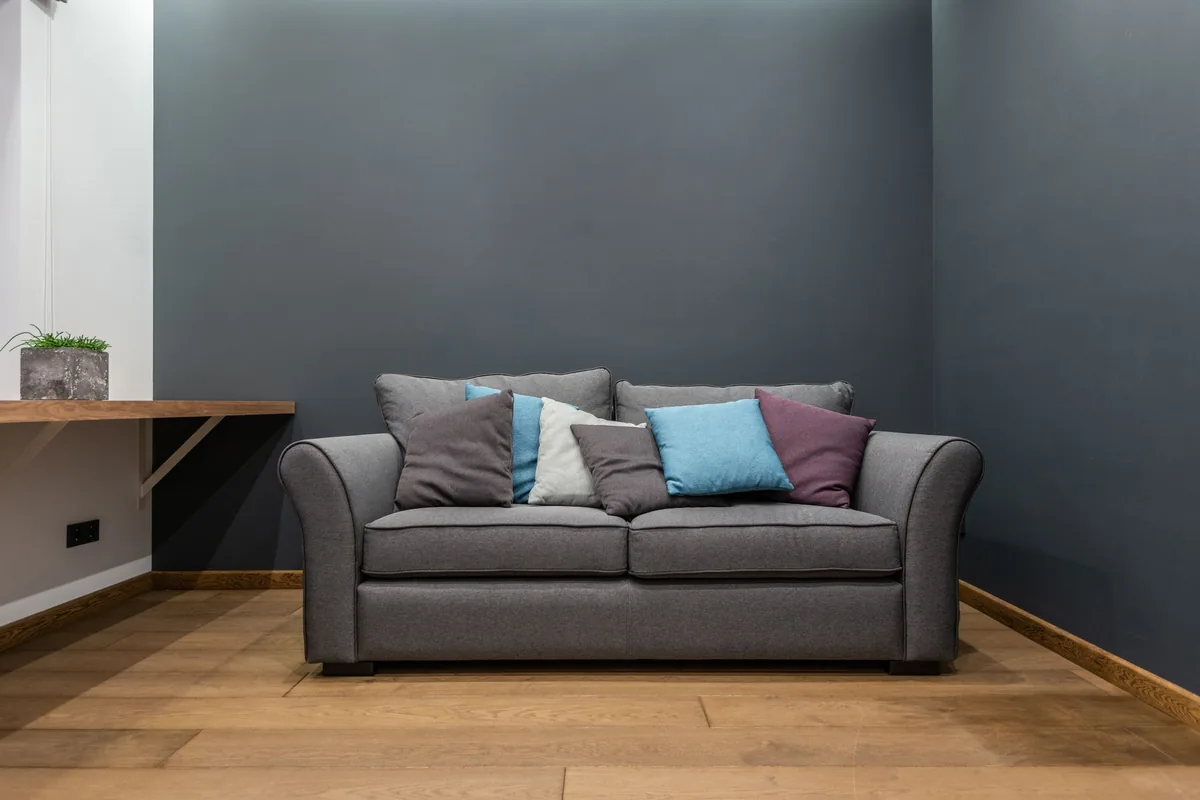
The overall numbers say what the couch takes up; these say what you are sitting on. Take them with the cushions in place unless a maker’s form says otherwise (our suggestion).
| Number | Tape runs from | To | Whose definition |
|---|---|---|---|
| Seat height | Floor | Top of the seat cushion; one maker says the crown, its highest point | One sofa maker’s product pages; McGee & Co. glossary |
| Seat depth | Front edge of the seat | The back cushion, or the back of the frame if there are no back cushions | McGee & Co. glossary; the product pages above say seat edge to back cushion |
| Seat width | Inside of one arm | Inside of the other arm | McGee & Co. glossary |
| Arm height | Top of the seat cushion | Top of the arm (our suggestion) | Typical arm heights and widths are in our standard couch size guide |
| Arm width | One side of the arm top | The other side of the arm top (our suggestion) | Where to measure is our suggestion |
| Leg height | Floor | Underside of the frame (our suggestion) | One slipcover maker usually asks for it when the cover is meant to hang clear of the floor |
If a listing’s seat depth looks off against yours, check whether it stops at the back cushion or runs to the back of the frame (our suggestion).
How do you measure diagonal depth?
Diagonal depth is the number for tight turns and doorways. On one retailer’s measuring guide the method is:
- Lay a straight edge from the highest point of the back frame to the front of the arm.
- Measure from the bottom back corner of the sofa up to the point that bisects the straight edge: the point on the edge closest to that corner, with the tape at right angles to the edge (our reading).
Do it from the side of the couch with a helper holding the straight edge (our suggestion). Three guides describe it three ways: the one above, another retailer as back corner to front arm, and a third maker as the top back corner to the bottom front corner on the opposite side. So a listing’s diagonal depth may not be the same number as yours (our reading).
If the legs come off. The back-corner-to-front-arm guide also says removing sofa legs, cushions or even doors from their hinges can create a few extra inches of clearance. If the legs unscrew, measure again with them off instead of subtracting, and keep the leg height from the table above; the height drops by about that much (our arithmetic). If the arms detach, measure again with them off as well (our suggestion).
Which numbers do you need for a door, a slipcover or new cushions?
Getting it through a door
Take width (length), depth, height and diagonal depth. On one retailer’s guide, the sofa’s width must be less than the entryway’s height or its clearance depth, and the diagonal depth less than the entryway’s width; the guide adds that these rules do not guarantee a fit. For a modular couch, one sofa maker says to check each module’s measurements as well as the overall size (measure each piece of a sectional the same way, our suggestion), and if the couch ships boxed, one maker’s guide says to measure for both the box and the sofa. Our furniture buying guide covers the route: doors, hallways, stairs and elevators.
Buying a slipcover
Slipcover makers ask for more numbers than a door does, and each has its own form, so follow the one you order from. One custom maker has you measure seam to seam, rounded to the nearest quarter inch: the back frame, the inside of each armrest, then each arm’s front width and height, with two more lengths for round or wedge arms, then the sides, back and cushions. Its leg height is usually measured if you want the cover clear of the floor; for a long skirt it says to ignore leg height and provide all vertical lengths to the floor instead. It has you stick the tape to the sofa for a more upholstered look, and its vertical measurements can run perpendicular to the floor for a relaxed skirted look.
Another custom maker says to keep the tape flat against the fabric and follow seams and curves, because a tape that lifts or cuts across a curve will usually read too small, which is the opposite of a doorway’s straight line (our reading). On its guide, seat width is the open space between the armrests, not the full outside width. The back drape starts at the inside back corner and runs straight down to the floor with the tape vertical: from where the seat meets the backrest if you are not ordering separate cushion covers, or from the top of the base with the seat cushions taken off if you are. If the backrest leans back, it says to measure from the highest back point straight down. Enter decimals and round up when in doubt. A loose sun-and-dust cover maker lists width, depth, height, a back diagonal and seat height, and says to choose the larger size if you fall between two.
If you go made-to-measure, the Solid Natural Custom Chair & Sofa Slipcover at Slipcover Shop, the maker of the second guide, is one example: its page lists the sofa type from $289 (price for reference only).
Replacing the cushions
Measure the cover, not the old foam. One foam maker’s guide says compressed foam gives undersized numbers, and has you lay the empty cover flat and measure inside seam to inside seam: width left to right, depth front to back, and thickness from the top seam to the bottom seam. For a snug fit it suggests adding half an inch to width and depth and keeping thickness exact, or at most a quarter inch over; if you plan to wrap the foam in Dacron batting, it says to skip the half inch, because the batting adds roughly a quarter to half an inch a side.
If you are ordering new slipcover cushion covers instead, one slipcover maker’s help article says to measure the covers seam to seam and to avoid measuring directly at rounded corners. If you can only measure the inserts, it says to fluff them first, then reduce the figures by 0.5 to 1 inch, because many manufacturers cut covers slightly smaller than the inserts.
A T-shaped cushion has more numbers. On one cushion maker’s guide, they are the front width, the back width along the zipper, the depth, the nub depth, the nub width, and the thickness, for which it asks for both the seam-to-seam figure and the overall height, read at eye level. Measure every cushion separately, because the foam maker notes that covers on one sofa are not always identical.
Comparing with a new couch
Use the same definitions for the couch you have and the one you are looking at: length is arm edge to arm edge, depth includes cushions and frame, and seat depth is measured to the back cushion. If a listing doesn’t say how it measures seat depth, ask the seller (our suggestion). The size ranges by type, and which seat height and depth suit you, are in our guide to standard couch size.
Where these numbers come from
Definitions and steps come from retailers’ and makers’ measuring guides, each linked where it is used, and the slipcover price from one maker’s product page, all read on 19 November 2026. Figures and steps marked “our suggestion”, “our reading” or “our arithmetic” are ours.
Frequently asked questions
How do you measure an L-shaped couch?
Measure each section as its own sofa. On one cover maker's guide (an L-shape), that is width from the outer arm edge to the open corner side, depth front to back, and height from the floor to the top of the backrest. For a door, measure each section too (our suggestion); for a modular couch, one sofa maker says to check each module as well as the overall size. For a U-shape or chaise, the same per-section method is our suggestion.
Do you measure a couch width with the arms?
Yes, for the overall number: from the outer edge of one arm to the outer edge of the other, at the widest point on one cover maker's guide. One retailer's guide says to check the full width, not just the seat, because wide arms or rolled cushions can add several extra inches. The space between the arms is the seat width, a separate number.
How do you measure a couch for a slipcover?
On one custom slipcover maker's guide, use a flexible tape that follows the seams and curves, not the shortest straight line; enter decimals and round up when in doubt. That maker's seat width is the open space between the armrests, and the back drape is measured straight down to the floor with the tape vertical. Use the form of the maker you order from.
How do you measure couch cushions for replacement?
Measure the cushion cover, not the old foam, which compresses: on one foam maker's guide, from inside seam to inside seam, then add half an inch to width and depth (not if the foam will be wrapped in batting) and keep the thickness the same, or at most a quarter inch over. A T-shaped cushion needs more numbers: front and back width, depth, and the depth and width of each nub, on one cushion maker's guide.
- #couch dimensions
- #sofa measurements
- #slipcover
- #couch cushions