Best Twin Mattress for Kids: Firmness, Height and Bunk Fit
Six kids' twin mattresses compared on height, firmness and spill care, with the picks for a bunk or trundle bed, a price for each and a drawback for every pick.
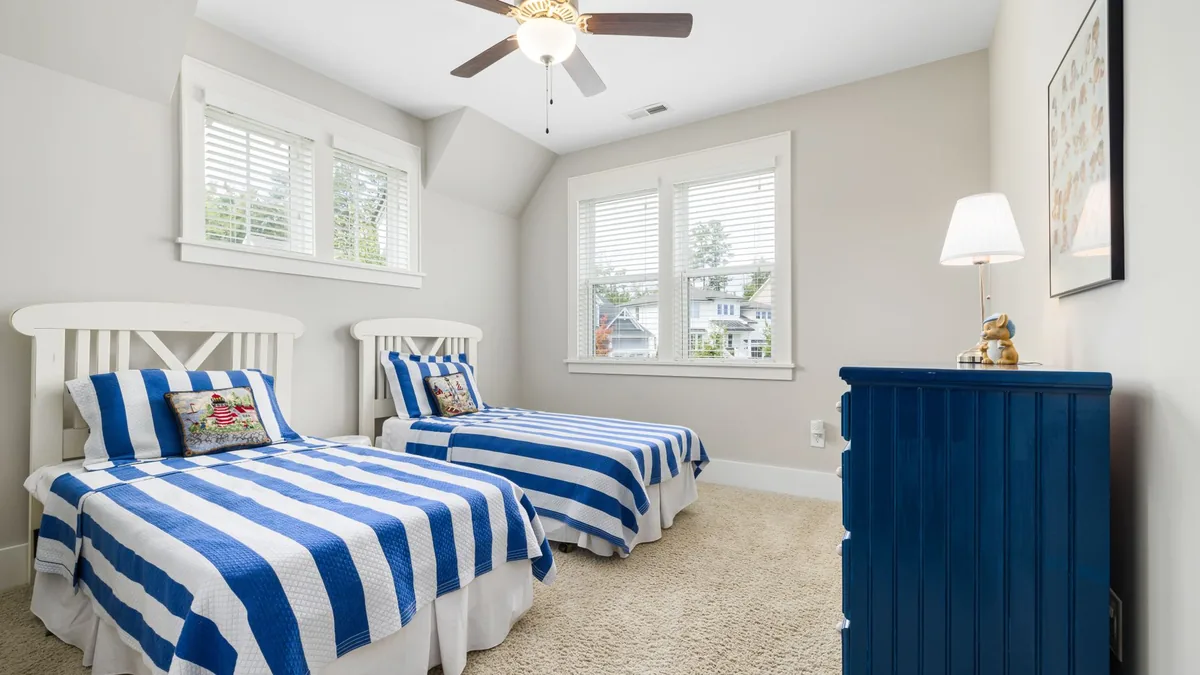
Your child has outgrown the toddler bed, or a new bunk is in the room, and the twin mattress is the last thing to buy. The easy mistake is to grab the thickest, plushest twin on the shelf: on a top bunk the guardrail is built to stand at least 5 inches above a mattress of the maximum thickness the bunk’s maker specifies, so a taller mattress takes away rail the bed was built to have (our reading). Below are six twin mattresses sold for kids or for bunks, each with its height, feel, spill protection, a drawback and a price.
The short answer
| Pick | Height and type | Best for | Price (reference, twin) |
|---|---|---|---|
| Saatva Bunk & Trundle Mattress | 7 in, coil and foam, medium | A top bunk or trundle where height decides | $549 |
| Newton Kids’ Twin Mattress | 5.5 in, washable core | The lowest profile, and messes you can wash | $500 |
| Nolah Nurture Kids Mattress | 8 in, flippable hybrid | A kid whose preferred feel will change | $597 |
| Saatva Youth Mattress | 10 in, flippable innerspring | A standard frame, ages 3 to 12 by the maker’s labels | $864 |
| Naturepedic 2-in-1 Waterproof Organic Kids Mattress | 7 in (6 in trundle sizes), flippable | Potty-training years, then a quilted side | $799 |
| Naturepedic Verse Organic Mattress | 9 in, firm | Keeping one mattress into the teen years | $999 |
Will it fit the bed? Twin size, bunks and trundles
A twin is 38 x 75 inches on five of the six pages (Newton lists it as 75 x 38); Nolah prints 38 x 74, an inch shorter. Our bed sizes chart has the twin and twin XL side by side, so measure your frame before you order.
Height is the part that changes on a bunk or a trundle:
- Top bunk or loft. Under the federal bunk-bed rule, the upper edge of the guardrails has to be at least 5 inches above the mattress when a mattress of the maximum thickness in the maker’s instructions is on the bed, and those instructions have to state that thickness. It applies to bunk beds made or imported on or after 19 June 2000. The rule also has the instructions warn against letting children under 6 use the upper bunk. The instructions state a maximum for mattress and foundation together. So read the bunk’s label or manual for its maximum mattress-and-foundation thickness, count any bunkie board or foundation you put under the mattress toward it, and make sure the rail top sits at least 5 inches above the mattress surface (our reading).
- Trundle. Saatva’s trundle FAQ says height is the thing to look for, so the lower bed slides all the way under the main bed. Measure the clearance under your frame before you pick (our suggestion). Naturepedic sells its 2-in-1 in a 6-inch twin trundle size and a 71-inch “short” trundle size as well as the 7-inch twin.
- Standard frame. Height matters less here, but Saatva’s FAQ points to mattress plus frame as the total height your child climbs into.
How firm should a kid’s mattress be?
The makers print different answers, and each uses its own scale (our reading):
- Nolah Nurture: soft side 4-5/10, firm side 6-7/10.
- Saatva Youth: an ages 3-7 side called Plush Soft and an ages 8-12 side called Medium-Firm.
- Saatva Bunk & Trundle: medium, 5-7/10.
- Naturepedic 2-in-1 and Verse: firm; the Verse page marks it 8-9 on a firmness graphic.
- Newton: firm support, in the page’s words, from its Wovenaire core.
On where a young child should start, Saatva’s FAQ suggests medium-firm for toddlers, and Nolah’s FAQ says younger children generally need a firmer surface while older kids tend to prefer plusher, with no exact timeline for flipping. If you cannot tell which your child will want, take a flippable one, the Nolah or the Saatva Youth, and let the child say which side feels better (our suggestion). The Naturepedic 2-in-1 flips between a waterproof side and a quilted side, and both sides are described as firm.
What happens when there is an accident?
Only the Naturepedic 2-in-1 describes a waterproof surface, and only on one side. What each page says:
- Naturepedic 2-in-1: the little-kid side has waterproofing the page describes as wiping clean with a damp cloth; the big-kid side is spot clean only.
- Newton: the page says the mattress is not waterproof, but the cover is water resistant, the cover machine-washes cold and the core is rinsed by hand in a tub; it comes in three sections so only the soiled one needs washing. Newton sells a waterproof pad separately.
- Saatva Youth and Saatva Bunk & Trundle: the Youth page headlines the cover “Accident-proof” and describes a water resistant finish, and the Bunk & Trundle page lists a water-resistant cover; Saatva’s FAQ suggests a mattress pad for added protection from stains and moisture.
- Nolah Nurture: the page does not describe a waterproof surface; Nolah sells a kids’ encasement with a waterproof barrier, machine-washable, as a separate item.
- Naturepedic Verse: spot clean only, with no waterproof surface described on the page.
If accidents are likely, the Naturepedic 2-in-1 or the Newton are the two built for it; for the other four, budget for a protector (our suggestion).
The six picks
Prices are for the twin. Heights and firmness are the figures each maker prints.
For bunk and trundle beds
Saatva Bunk & Trundle Mattress
Best for a top bunk or a trundle where height decides. At 7 inches it is among the lowest of the six (the Newton is 5.5 and the Naturepedic 2-in-1 twin is also 7), and the page says it fits on the top bunk “without sitting over the guard rails” and fits under the main bed of roll-out or pop-up trundles. The feel is medium, which the page calls “Ideal for kids, teens, and even overnight guests”. Confirm the 7 inches against your bunk’s own maximum before you order.
Drawbacks: The page says it is designed for use exclusively on bunk and trundle beds, it has one firmness and no flip side, and its weight limit is 250 lbs. The cover is water-resistant rather than waterproof, so add a protector. It costs $49 more than the Newton (our arithmetic).
Newton Kids’ Twin Mattress
Best for the lowest profile, and for messes you can wash. At 5.5 inches it is the lowest of the six, and the page calls that low profile ideal for bunks and trundles; it is also the lowest price here. The cover and the core wash, the case for it if accidents are still happening. Check the 100-pound limit against your child before you buy.
Drawbacks: The page says it is designed for kids up to 100 lbs and does not recommend adults sleep on it for longer, so it may not last into the teen years (our reading). It is not waterproof, the core is rinsed by hand and air dried, and the page suggests sheets with an 8-inch pocket.
For a growing kid on a standard frame
Nolah Nurture Kids Mattress
Best for a child whose preferred feel will change. One side is soft (4-5/10) and the other firm (6-7/10), with side handles for flipping, and the page says two sleep surfaces spread out wear. The cover is organic cotton and the page lists GREENGUARD Gold and CertiPUR-US® foam.
Drawbacks: At 8 inches it is taller than the bunk-and-trundle picks, and the page does not mention bunk or trundle beds. The twin is 38 x 74, an inch shorter than the 75 inches the other pages print, so check your frame. The page does not describe a waterproof surface.
Saatva Youth Mattress
Best for a standard frame and a child you expect to keep it for years. The two sides are labelled by age, Plush Soft for ages 3-7 and Medium-Firm for ages 8-12, and the cover is described as water-resistant. The page says it can go on a bunk or loft bed if the upper edge of the guardrail is at least five inches above it, which for a 10-inch mattress means a rail 15 inches above its base plus any board under it (our arithmetic). Delivery on the page includes setup.
Drawbacks: The tallest of the six at 10 inches; Saatva’s own FAQ says it is thicker than a standard bunk-bed mattress. Its weight limit is 250 lbs and the twin weighs 45 lbs. A standard frame needs a foundation or box spring, and a slatted platform needs a solid surface or a board over the slats.
Naturepedic 2-in-1 Waterproof Organic Kids Mattress
Best for the potty-training years, and for trundles. Start on the waterproof side, which the page says wipes clean, then flip to the quilted side once accidents stop. The page lists a 38 x 75 x 6 inch twin trundle size and a 38 x 71 x 6 inch short one, the only page here that lists separate trundle sizes. It describes the mattress as steel coils with organic cotton and without polyurethane foam, and lists GOTS and GREENGUARD Gold among its certifications.
Drawbacks: Both sides are firm, so there is no soft option. The quilted big-kid side is spot clean only. The twin trundle sizes list a 200 lb limit against 325 lbs for the twin, and the trundle sizes are $699 against $799 for the twin.
For the teen years
Naturepedic Verse Organic Mattress
Best for keeping one mattress from big-kid bed to teen. The page calls it a kids and teen mattress for the years between toddlerhood and adulthood, with a 325 lb limit in twin. The page’s FAQ sets the 2-in-1 for the potty-training years and the Verse for big kids and teens.
Drawbacks: At $999 it is about twice the Newton (our arithmetic). It is firm only, spot clean only, and the page describes no waterproof surface. At 9 inches it is thicker than the bunk-and-trundle picks, so check a bunk’s maximum first.
Which one for your situation
- Top bunk or loft: start from the bunk’s own maximum thickness. The 5.5-inch Newton is the lowest of the six, and the 7-inch Saatva Bunk & Trundle and Naturepedic 2-in-1 come next.
- Trundle: the Newton (5.5 in), the Naturepedic 2-in-1 in its 6-inch trundle sizes, or the Saatva Bunk & Trundle (7 in); measure the clearance first.
- Tightest budget: the Newton at $500 and the Saatva Bunk & Trundle at $549 are the two lowest.
- Still having accidents: the Naturepedic 2-in-1 (a waterproof side) or the Newton (a washable cover and core).
- A child who will want a different feel later: the Nolah Nurture or the Saatva Youth, both flippable by firmness.
- Keeping it into the teens: the Naturepedic Verse, which the maker pitches for kids and teens, or the Saatva Youth up to its labelled age 12.
Before you order
- Measure the frame and the gap. Twin length, the bunk’s maximum mattress-and-foundation thickness and a trundle’s clearance are the three numbers to have in hand (our suggestion).
- Check the base. Nolah’s page gives a slat gap of no more than 5.5 inches; Saatva’s FAQ says a slatted platform needs a solid surface or a board over the slats.
- Match the sheets to the height. Newton suggests sheets with an 8-inch pocket for its 5.5 inches; a 10-inch Saatva Youth needs a deeper pocket (our reading). Our best sheets guide has fitted-sheet depths.
- Read the trial and return terms on each product page linked above before you order.
Where these numbers come from
Sizes, heights, firmness, certifications, spill care and weight limits come from each maker’s own product page, and the guardrail rule is from the federal bunk-bed regulation, 16 CFR part 1513. Prices are the twin prices shown on those pages without a code, read on 1 November 2026. The guardrail arithmetic, the price gaps and the situation picks are our own.
Frequently asked questions
What firmness is best for a kid's twin mattress?
The makers read here do not agree on one answer. Saatva’s FAQ suggests a medium-firm mattress for toddlers to start, and its Youth mattress puts a plush soft side at ages 3-7 and a medium-firm side at ages 8-12. Nolah’s FAQ says younger children generally need a firmer surface, older kids tend to prefer plusher, and it cannot recommend an exact timeline for flipping. Naturepedic builds both its kids’ mattresses firm. Each maker uses its own scale, so the numbers are not directly comparable (our reading), and a flippable mattress such as the Nolah Nurture or the Saatva Youth lets you change the feel later (our suggestion).
How thick a mattress for a bunk bed?
As thin as the bunk’s own label allows. Under the federal bunk-bed rule the top guardrail has to stand at least 5 inches above a mattress and foundation of the maximum thickness the bed’s maker specifies, and the bed’s instructions have to state that maximum. The six picks here run from 5.5 inches (Newton) to 10 inches (Saatva Youth), and Saatva says its 10-inch Youth is thicker than a standard bunk-bed mattress. Count any bunkie board or foundation under the mattress toward that maximum, and keep the rail top at least 5 inches above the mattress surface (our arithmetic).
Twin or twin XL for a kid?
Match the frame. A twin is 75 inches long on five of the six pages here (Nolah prints 38 x 74) and a twin XL is 38 x 80 on the pages that sell one (Nolah, Saatva Youth, Saatva Bunk & Trundle and Naturepedic Verse), five inches longer (our arithmetic). Saatva’s trundle FAQ says the lower bed of most trundles typically holds a twin, with some styles taking a twin XL or full, so check the trundle’s own length before you order.
Do kids need a waterproof mattress?
None of the six pages here describes a waterproof mattress on both sides. The Naturepedic 2-in-1 has one waterproof side that wipes clean, the Newton says it is not waterproof but its cover and core wash, the two Saatva pages describe a water-resistant cover, and the Nolah and Naturepedic Verse pages do not describe a waterproof surface. For those four, a waterproof protector is the usual add-on (our reading).
- #twin mattress
- #kids mattress
- #bunk bed mattress
- #trundle mattress