Closet Storage Drawers: Sizes, Fit and Sock Drawer Inserts
Closet storage drawers: measure width, depth and height, center them on the door opening, choose a type, then divide the drawers so socks stay sorted.
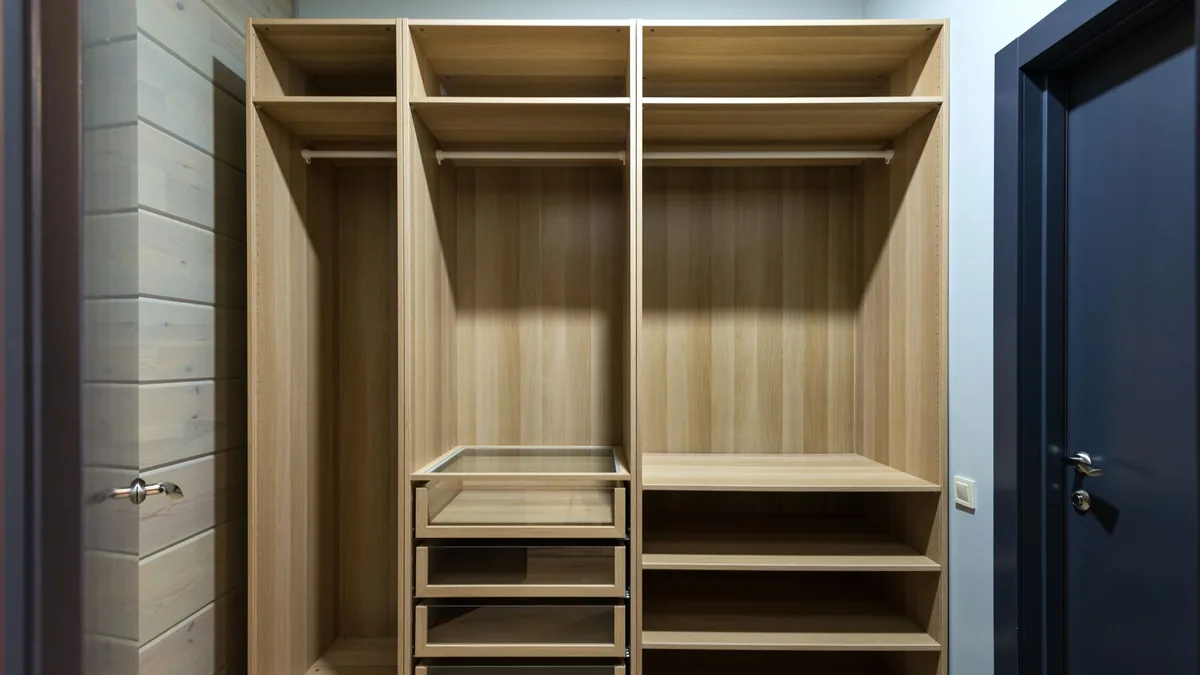
A dresser takes up half a bedroom wall, so you want the drawers inside the closet instead. The usual mistake is buying a tower for its look: it turns out to be too deep to leave the door room, too tall to sit under the hanging rod, or its drawers hit the door frame when they open. Below is the order to work in: measure, decide where the drawers go, pick the type that fits, decide what goes in each drawer, then divide the drawers so socks and small things stay sorted.
The short answer
| Step | What to check | Numbers from the makers |
|---|---|---|
| 1. Width | The section the drawers will stand in, centered on the door opening | One wood tower is 26.25 in wide outside; one plastic tower is 15 5/8 in wide (our reading) |
| 2. Depth | Back wall to the inside of the door frame, and the pull-out in front | Reach-ins are typically 24 to 26 in deep (one maker); units run 12 to 16 in (wood system) or 21 in (plastic tower, our reading) |
| 3. Height | Floor to the lowest thing above the drawers | ClosetMaid drawer frames are 30 or 42 in tall; an 80 to 84 in upper rod leaves 38 to 42 in over a 42 in frame (our arithmetic) |
| 4. Drawer size | What goes in each drawer | One maker: 6 in drawers for socks, ties and accessories, 8 in for sweaters |
| 5. Inside | Dividers measured to the drawer’s inside | Adjustable dividers: 11 to 15.75 or 16 to 22 in front to back; $26 to $44 a pair (Price for reference only) |
What do I measure before I choose closet drawers?
Four numbers decide which drawer unit your closet can take. Write each one down.
- Width of the section. Measure wall to wall where the drawers will stand. One closet maker says most reach-ins extend past the door frame, creating blind corners that are hard to reach, and says to keep drawers out of them.
- Depth. Measure from the back wall to the inside of the door frame (our suggestion). Standard reach-ins are typically 24 to 26 inches deep by that maker’s count. Then add the pull-out: the drawer travels forward past the front of the unit, so the floor in front of it has to be clear (our suggestion).
- Height. Measure from the floor to the underside of whatever sits above the drawers: a shelf, or the clothes hanging over them. A section that has to hold drawers and a rod is where the numbers in the next section matter.
- The door. Measure the door opening, not just the closet width: its width and where it sits between the side walls. Then note whether it is hinged or has bypass sliders. With sliders you can reach only half the closet at a time, and ClosetMaid asks you to allow clearance for drawers, especially in closets with sliding doors. The same maker’s measuring guide tells you to record the clearance doors and drawers need to open freely.
Then decide what the drawers are for: socks, underwear and belts, or folded sweaters and jeans. That sets how tall each drawer should be, covered below. The rest of the closet, from rod heights to shelf spacing, is in our closet organizer guide, so it is not repeated here.
Where in the closet should the drawers go?
On the door opening. One closet maker’s rule is that drawers must be centered with the door opening so they can pull out without hitting the door frame, and the corners go to long-hang clothes or bulky bedding. With bypass sliders, center the unit within one door panel’s opening rather than where the panels overlap (our suggestion).
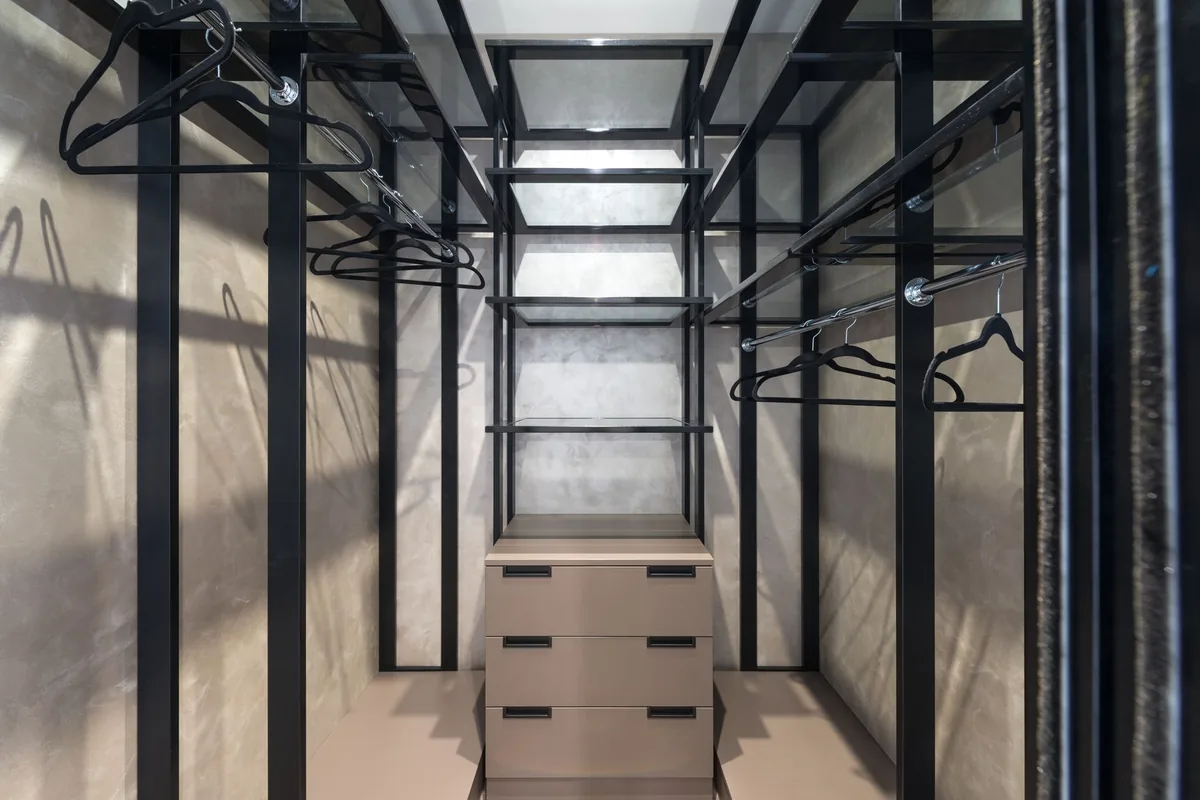
Under hanging clothes, or instead of them. A drawer bank and a rod compete for the same height. IKEA’s wardrobe guide suggests that if you cannot fit a full-height hanging section, hang clothes at the top and add drawers or shelves below. Check it against your numbers: ClosetMaid’s drawer frames are 30 or 42 inches tall, and one maker puts the upper rod of a double-hang section at 80 to 84 inches. A 42 inch frame under an 80 to 84 inch rod leaves 38 to 42 inches for hanging; a 30 inch frame leaves 50 to 54 (our arithmetic). Hang your longest short-hang item on a hanger, measure it from the hook down, and compare with the gap (our suggestion). If it does not fit, the drawers get their own section and the rod goes elsewhere. In a small reach-in, our small closet ideas article makes the same call between drawers and a second rod.
Which type of closet drawer fits?
Three kinds appear in the makers’ pages read here. Their sizes differ enough that the depth and height you measured will rule some out.
| Type | Sizes the maker gives | What to check |
|---|---|---|
| Wall-mounted wood system with drawers | One maker: 12 or 16 in deep; tower 26.25 in wide outside, 24 in inside; drawer boxes 11.25 or 15.25 in deep, 21.75 in wide, 5 in tall | Fits a reach-in, screws into studs, so the wall must take it |
| Drawer frames on a wire or rail system | ClosetMaid: frames 30 or 42 in tall; drawers in 4, 7 and 11 in sizes (its page calls them depths). Elfa’s international site: units 535 mm or 435 mm deep | Elfa’s units are about 21 and 17 in deep (our arithmetic); read the product’s own dimension line for which way each ClosetMaid number runs |
| Freestanding plastic tower | One maker’s wide 4-drawer tower: 15 5/8 x 21 x 33 1/4 in outside; drawers 18 1/8 in deep and 7 in tall inside | The 18 1/8 in drawer means the 21 in side is the depth (our reading), about 3 to 5 in short of a 24 to 26 in closet (our arithmetic); drawers lift out as bins |
Built in. One example is the John Louis Home Solid Wood Closet Organizer with 3 Drawers, a 6 ft tower with three 6-inch drawers, sold in 12 and 16 inch depths and listing reach-in closets among its uses; it is a full system with a 6 ft tower, shelves and hanging bars, not just a drawer unit. It costs $1,025 in the 12-inch depth (Price for reference only). Drawbacks: it is wall-mounted, so you need studs, and in the 12 inch depth the drawer boxes are 11.25 inches deep.
Freestanding. A plastic tower needs no tools, and a drawer comes out as a bin. Sterilite’s wide 4-drawer tower is listed at 15 5/8 x 21 x 33 1/4 inches outside and has an 18 1/8 inch deep drawer inside, so the 21 inch side is the depth (our reading): in a 24 to 26 inch reach-in that leaves about 3 to 5 inches in front of it (our arithmetic), and its drawers still travel forward past that. The page lists no price. Confirm the orientation and read the exact model’s page before you buy, because Sterilite sells several towers of different sizes.
Drawer frames on a wire or rail system. ClosetMaid’s frames and Elfa’s drawer-system units are the third route; Elfa’s wire drawers are made to fit units of the same width and depth. If you have a wider walk-in, our walk in closet ideas article covers where units like these sit in a plan.
What goes in which drawer?
Match the drawer height to the contents. One maker’s drawers come in 6 and 8 inch faces, and it calls the 6-inch good for socks, ties and accessories and the 8-inch for sweaters and bulkier items. ClosetMaid’s list for its drawers is socks, belts, purses and things that don’t hang or sit well on a shelf. IKEA’s guide to dressers puts everyday underwear, socks and accessories in the top drawers and sweaters or seasonal items in the larger, lower ones; a drawer bank in a closet can follow the same order (our reading).
In a three-drawer bank, that gives: top for socks, underwear and belts; middle for T-shirts and loungewear; bottom for sweaters and jeans (our suggestion). Stretchy knits go folded, not hung, because they can lose their shape on a hanger.
How do I stop socks turning into a jumble?
Once the drawers are in, the problem moves inside them: pairs slide to the back and come apart. Three steps, in this order.
- Measure inside the drawer. Front to back, side to side, and the height inside (our suggestion). That decides which divider you can buy and how tall to fold.
- Add dividers sized to it. NEAT Method’s Acacia Drawer Dividers are sold in sets of two, in two lengths and two heights, with padded ends that lock them in place. They are 2.5 or 5 inches tall and 15.75 or 22 inches long, compressing to as short as 11 or 16 inches, so the short pair fits drawers 11 to 15.75 inches front to back and the long pair 16 to 22. A pair costs $26 to $44 (Price for reference only). Drawbacks: two dividers set the same way make three lanes (our arithmetic), so a sock drawer shared by several people may need more than one pair.
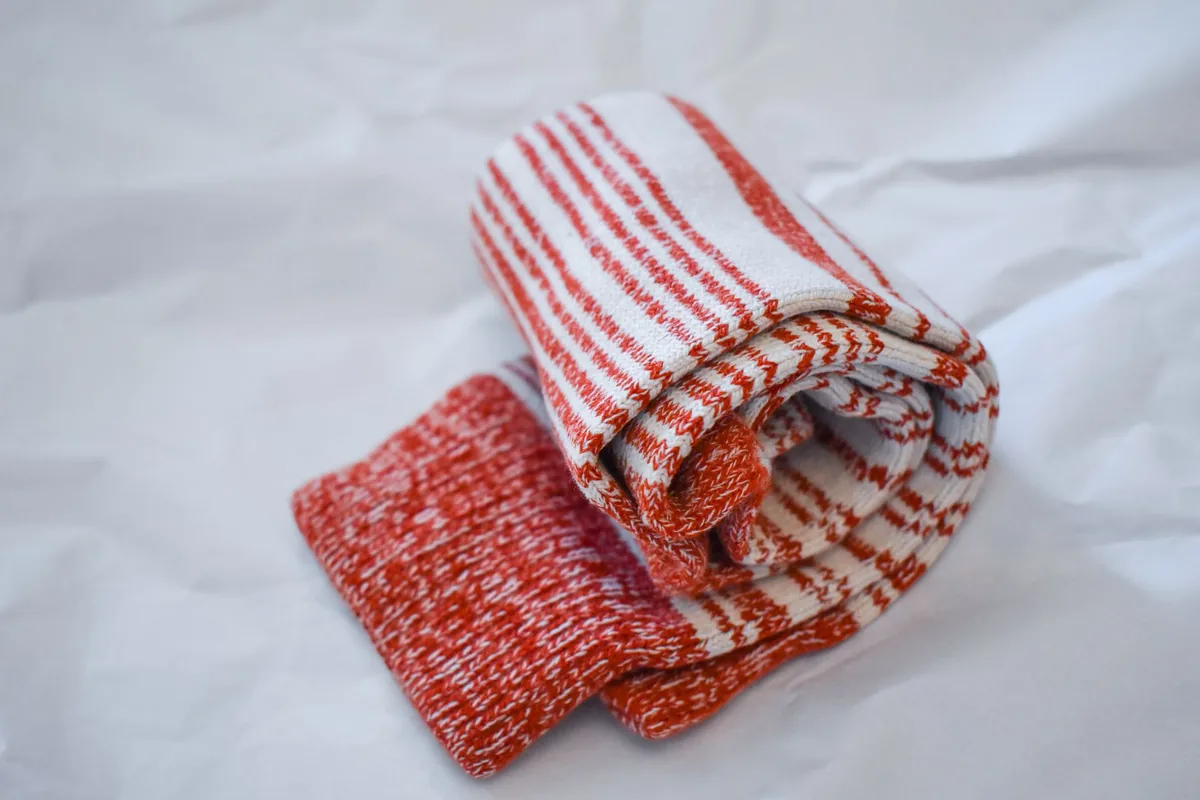
- Fold so the pairs stand up. NEAT Method’s file folding is to fold each item to the height of the drawer, then store the items in upright rows with the fold facing out. Divider lanes between the rows keep the pairs from sliding into each other (our reading).
Sort before you fill: how to organize a closet covers the keep-or-donate pass, so the drawers hold only what is left (our suggestion).
Where these numbers come from
Drawer, rod and depth figures come from the ClosetMaid, John Louis Home, IKEA, NEAT Method, Sterilite and Elfa pages linked above, read on 12 November 2026. Prices are from the brand product pages on the same date, with no code applied. The leftover-space, gap and metric-to-inch figures are our arithmetic, and the steps marked (our suggestion) are our own additions.
Frequently asked questions
How much room do closet storage drawers need to pull out?
Enough that the drawer clears the door frame. One closet maker says drawers must be centered on the door opening, not in the blind corners, and ClosetMaid asks for clearance, especially with sliding doors. Before you buy, open one drawer fully or tape its depth on the floor to see what it needs (our suggestion).
How deep are closet drawer units?
The three makers here differ. One maker's wall-mounted wood system comes 12 or 16 inches deep, with drawer boxes 11.25 or 15.25 inches deep. One plastic tower is listed at 15 5/8 x 21 x 33 1/4 inches outside with 18 1/8 inch deep drawers inside, so its 21 inch side is the depth (our reading), and Elfa's international drawer-system units are 535 mm (about 21 inches) or 435 mm (about 17 inches) deep (our arithmetic). A reach-in is typically 24 to 26 inches deep by one maker's count.
What size sock drawer organizer do I need?
Measure the inside of the drawer, front to back and side to side, and pick a divider that spans or adjusts to that. One maker's adjustable wood dividers compress from 15.75 to 11 inches or from 22 to 16 inches, so they suit drawers 11 to 15.75 or 16 to 22 inches front to back.
How do I stop socks turning into a jumble in a drawer?
Fold each pair to the height of the drawer and stand the pairs upright in rows with the fold facing out, which NEAT Method calls file folding; divider lanes keep them from sliding (our reading). Keep socks and underwear in a shallow drawer at the top (our suggestion).
- #closet drawers
- #sock drawer organizer
- #closet storage