Linen Closet Shelving: Depth, Spacing and What Goes Where
Plan linen closet shelving: what to measure, 12 or 16 inch shelf depth, the gap between shelves, which shelving to fit and where towels and sheets go.
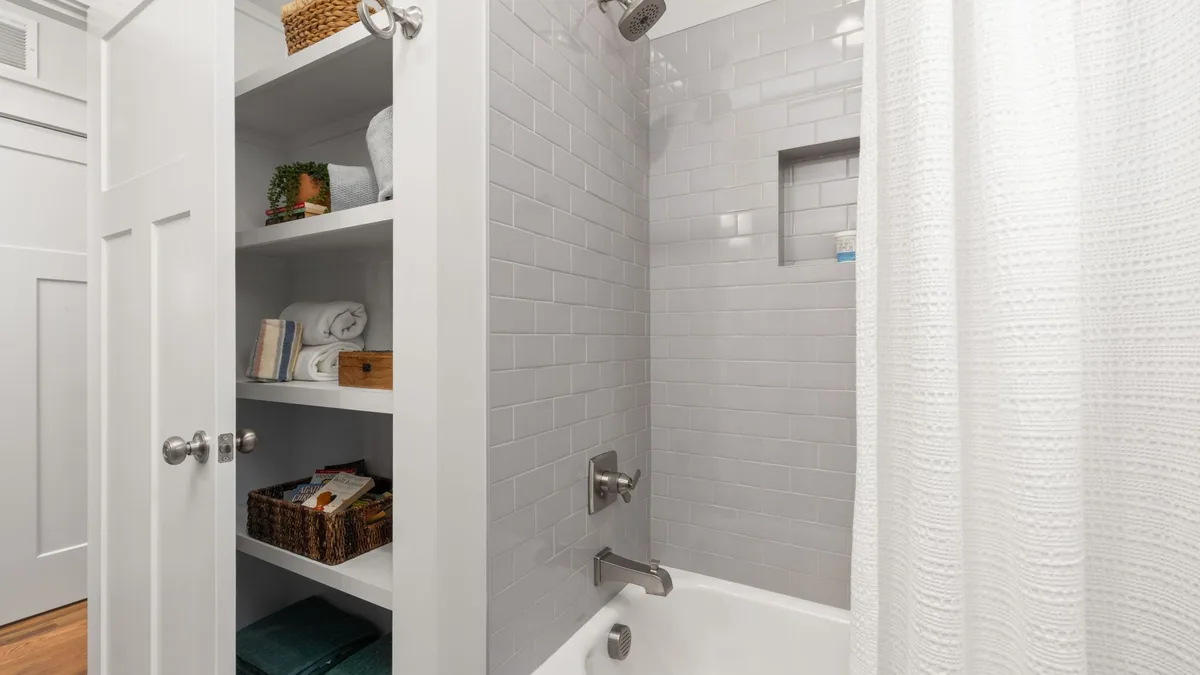
Stacks of towels lean into each other, a pillowcase has slid to the back of a deep shelf, and the sheet set you want is under three others. Buying baskets before looking at the shelves is the step that goes wrong: depth and gap decide whether a stack stays upright and reachable, and one maker’s guide says a 16-inch shelf has 33% more surface than a 12-inch one but pays off only if you can reach the back. Below is the order to work in: measure the closet and a folded stack, pick a depth, set the gaps, choose and fit the shelving, then put each kind of linen where you use it.
The short answer
| Question | Short answer |
|---|---|
| How deep? | 12 in for reach-ins and walk-ins only 5 ft wide; 16 in for large walk-ins and bulky items such as folded blankets or large bins (one maker’s advice; ClosetMaid and John Louis Home each sell 12 and 16 in) |
| How far apart? | 12-14 in is one maker’s figure for folded sweaters; for towels and sheets, your own stack’s height plus room for a hand (our suggestion) |
| How to fold? | Large linens folded to the full depth of the shelf (one maker’s advice) |
| What goes where? | Everyday towels and sheets at eye level, sorted by size; rarely used items on the top shelf; heavier boxes low |
| How to fix it? | Into studs where you can; on one track system the wall standards go no more than 24 in apart |
What should I measure before changing the shelves?
Measure the closet, then measure what has to live in it, and write both down before you look at any shelf.
- Depth, from the back wall to the inside of the door frame. It caps the shelf depth. One maker puts standard reach-in closets at 24 to 26 inches deep.
- Width and height, wall to wall and floor to ceiling. A low ceiling can rule out a shelf at 84 inches, one of the typical shelf heights in one closet maker’s guide.
- The door. Note how it opens. Sliding doors limit access to the middle of a reach-in, which is one reason the maker quoted for depth above prefers 12-inch shelves there (next section).
- Your shelves now. The height of each shelf from the floor, the gap above it, and whether it is fixed or sits on brackets you can move (our suggestion).
- A folded stack of each thing. Fold one bath towel, one sheet set and one blanket the way you will store them, then measure the depth and height of each stack at the number you want to keep (our suggestion). Your own folded stack is the number the next two sections work from.
- How many sets. One bedding maker’s rule of thumb is three sets per bed or person: one in use, one in the hamper and one in the closet. Anything beyond that is what you cut or move out before you plan the shelves (our suggestion).
How deep should linen closet shelves be?
Two depths appear on the ClosetMaid and John Louis Home pages: 12 and 16 inches. ClosetMaid sells its shelf-and-rod wire shelving 12 or 16 inches deep, and John Louis Home sells its wood shelving in the same two depths. One of them calls 12 inches the standard for reach-in closets and for walk-ins only 5 feet wide, and 16 inches the choice for large walk-ins and for bulky storage such as folded blankets or large bins. Some products use an uncommon 14-inch depth, so read the listed depth before you buy.
Deeper is not automatically better. The same guide warns that shelves deeper than you can reach make dead zones where things disappear, and it often prefers 12 inches in a reach-in even when the closet is 24 to 26 inches deep: a 16-inch top shelf leaves little gap under the door header to move bins through, and sliding doors leave less room to reach in. In a linen closet that dead zone is the pillowcase at the back.
Fold to the shelf. For large linens, one maker’s shelf guide says to fold them to the full 12-inch or 16-inch depth of the shelf. Wide items such as linens can lean when stacked, and folding them to consistent, stackable sizes gives a more stable base. A stack folded to the shelf depth also leaves no empty space behind it where something can hide (our reading).
If the shelves you have are too deep, the problem is reaching the back, so change what sits there. Put rarely used linens at the back in a box or basket you can slide forward, and check the box’s depth against the shelf before you buy it (our suggestion).
How far apart should the shelves be?
For folded sweaters, one maker gives 12 to 14 inches between shelves: more than that leads to leaning towers, and less makes it impossible to pull one item out without ruining the stack. That figure is for sweaters. Towels and sheets stack to different heights depending on size and how many you keep, so use 12 to 14 inches only as a starting point and set each gap from the stack you measured: its height, plus enough room above to slide a hand in and lift the top item out (our suggestion).
Two habits make a gap forgiving. The same maker’s shelf guide recommends shelf dividers to keep wider items from shifting, and aiming for 80% full so you can take one item without disturbing the rest of the shelf. If a gap is too tall for your stacks and the shelves are fixed, either add a shelf (next section) or put a box on the shelf to split the gap into two levels (our suggestion). The closet organizer guide covers rod heights and the other spacings for a clothes closet.
Which shelving should I put in?
Three kinds turn up on those pages.
- Wire. ClosetMaid’s wire shelving comes in 12 and 16 inch depths and 4, 6, 8 and 12 ft lengths, and you cut it with a hacksaw or bolt cutter in one-inch steps. Its SuperSlide shelf may also be used with standard hardware in linen closets, and shelf caps go on the cut ends to protect clothing.
- Laminate. In a reach-in, one wood maker says typical laminate systems use 14-to-16-inch side panels that make the closet feel shallower.
- Solid wood, slatted. The John Louis Home 4 ft Solid Wood Closet Shelving Kit is one example.
John Louis Home 4 ft Solid Wood Closet Shelving Kit. $125 for the 12-inch depth and $143 for 16 inches (Price for reference only), in five finishes (White was sold out in both depths when the page was read). It is a 48-inch shelf with two angle brackets, four L-clips, two end brackets and the hardware, cut to length with a fine-toothed saw, and the maker lists it for closet, pantry, linen, bedroom and laundry use. The maker pitches it for 48-inch spaces and for replacing failing wire shelves in a linen closet. Drawbacks: the slats are 1 inch wide with 0.5-inch gaps, so toiletries and other small items need a basket or box (our reading). The same page gives two different load figures: 25 lb per lineal foot in its dimensions, and 50 lb per linear foot when mounted into studs in its description and FAQ, so plan loads on the 25 (our suggestion). The maker’s line that it will not leave indentations on towels or linens is its own claim.
Fitting it. The steps below are the maker’s order for its shelf kit, except where marked.
- Empty the closet and take out the shelf you are replacing (our suggestion). Measure the space and cut the shelf to length if needed, with a fine-toothed blade on a miter saw or table saw, or a fine-toothed straight handsaw.
- With a long level, draw a reference line for the shelf height rather than trusting the floor to be straight. Fit the 4 L-clips evenly spaced along the shelf span, with the #8 1 1/2 in. screws; where there is no stud, use wall anchors.
- Fit the two end brackets on the side walls, level with the back L-clips, marking the 12 or 16 inch depth with the shelf end template if your kit has one (or by measuring out from the back wall, our suggestion), and secure them with the #8 1 1/2 in. screws.
- Set the shelf onto the hardware to test-fit it, check that it sits flush and square, then fasten it at each hardware point with #4 3/4 in. screws.
- Fit the angle brackets flush against the back wall and tucked under the front rail. Screw into a stud with the #8 3 in. screw; where there is no stud, fit a wall anchor first. If one end has no side wall, skip its end bracket; the angle brackets carry that end (the maker’s free-hanging option).
If you fit a track system instead, ClosetMaid’s instructions put the wall standards no more than 24 inches apart and no more than 4 inches from the end of the shelf, recommend studs whenever possible and toggle bolts in drywall, and say the closer together the standards are, the stronger the installation.
To build the shelves yourself, the diy closet organizer plan covers boards, cuts and anchors.
What goes where on the shelves?
Take everything out and wipe the cupboard down first, as IKEA’s linen-closet guide starts, then put things back in this order. The placement follows one bedding maker’s linen-closet guide and one closet maker’s height bands, with IKEA’s guide for sets and labels.
- Top shelf: rarely used items. Heated blankets, guest sheets, beach towels and tablecloths can go on the topmost shelf, easy to find but out of arm’s reach. The closet maker’s bands call 84 inches and up deep storage, and a top shelf hidden behind a door header suits bulky linens that are easy to recognize.
- Eye and arm height: everyday towels and sheets, sorted by size. The closet maker’s active zone for what you touch daily is 30 to 66 inches from the floor.
- Low: the heavy things. Heavier boxes can go on the lower levels with lighter, seasonal items above; the bedding maker puts a big basket of blankets on the floor.
- Sheet sets together. Fold each set and tuck it into one of its pillowcases so the set stays in one piece. IKEA’s guide suggests sorting linens into categories and making sets by size and style, with a separate set for guests.
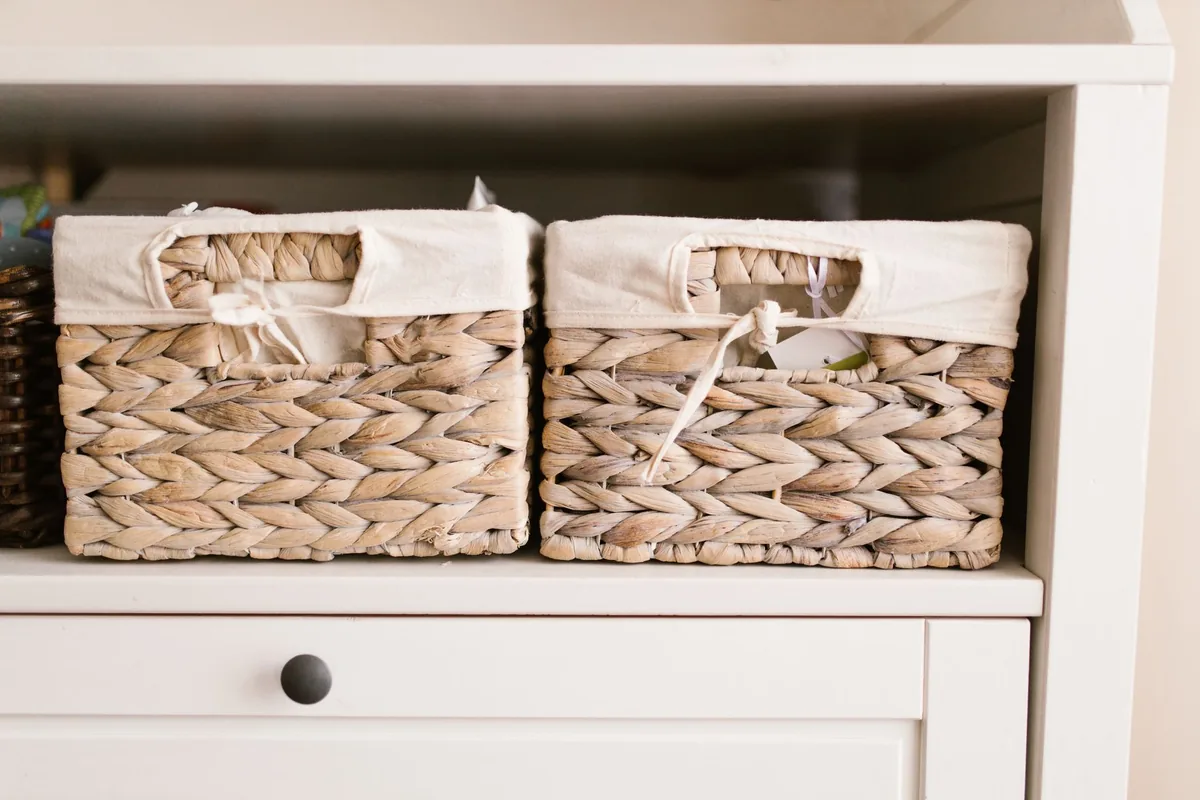
- Small things in labeled baskets. Hand towels, washcloths, cleaning supplies, soaps and toiletries can each get a basket or tray with a label, and IKEA’s guide also puts labels on shelves and boxes.
If the towels you use daily are better kept in the bathroom, bathroom storage ideas covers the wall and cabinet options, and the bedding guide explains what the sheets and covers you are folding are made of.
Where these numbers come from
Depths, heights, spacings and load figures come from the John Louis Home and ClosetMaid pages linked above, the bedding and linen-closet advice from Brooklinen’s and IKEA’s guides, and prices from the John Louis Home product page, each read on 12 November 2026 with no code applied. Anything marked our suggestion or our reading is ours, including how to measure and set the gaps for your own folded stacks.
Frequently asked questions
How deep should linen closet shelves be?
12 or 16 inches are the two depths ClosetMaid and John Louis Home each sell. One maker advises 12 inches for reach-in closets and for walk-ins only 5 feet wide, and 16 inches for large walk-ins and bulky storage such as folded blankets or large bins. Fold large linens to the full depth of the shelf so each stack uses all of it.
How far apart should linen closet shelves be?
One maker gives 12 to 14 inches between shelves for folded sweaters: more than that leads to leaning towers, less makes it impossible to pull one item out without ruining the stack. That figure is for sweaters, so for towels and sheets set each gap from your own measured stack, its height plus room to slide a hand in (our suggestion).
Can I use wire shelves in a linen closet?
ClosetMaid's SuperSlide wire shelf may be used with standard hardware in linen closets. One solid-wood maker pitches its slatted shelf as one that will not leave indentations on towels or linens, which is that maker's claim about its own product; the same page lists a 0.5-inch gap between slats, so small items go in a basket (our reading).
Where should towels and sheets go in a linen closet?
One bedding maker's linen-closet guide puts everyday towels and sheets on the eye-level shelves, sorted by size, and rarely used items such as guest sheets, heated blankets, beach towels and tablecloths on the top shelf, with a labeled basket for each kind of small item. One closet maker's height bands put what you touch daily between 30 and 66 inches from the floor and its shelf guide puts heavier boxes on the lower levels.
- #linen closet organization
- #towel storage
- #shelf depth
- #closet shelves