Queen vs Full: Which Bed Size Fits Your Room and Budget
Queen vs full: width per sleeper, which fits a 9 or 10 ft room once the frame is in, and what a queen adds to the bill for the same mattress, frame and sheets.
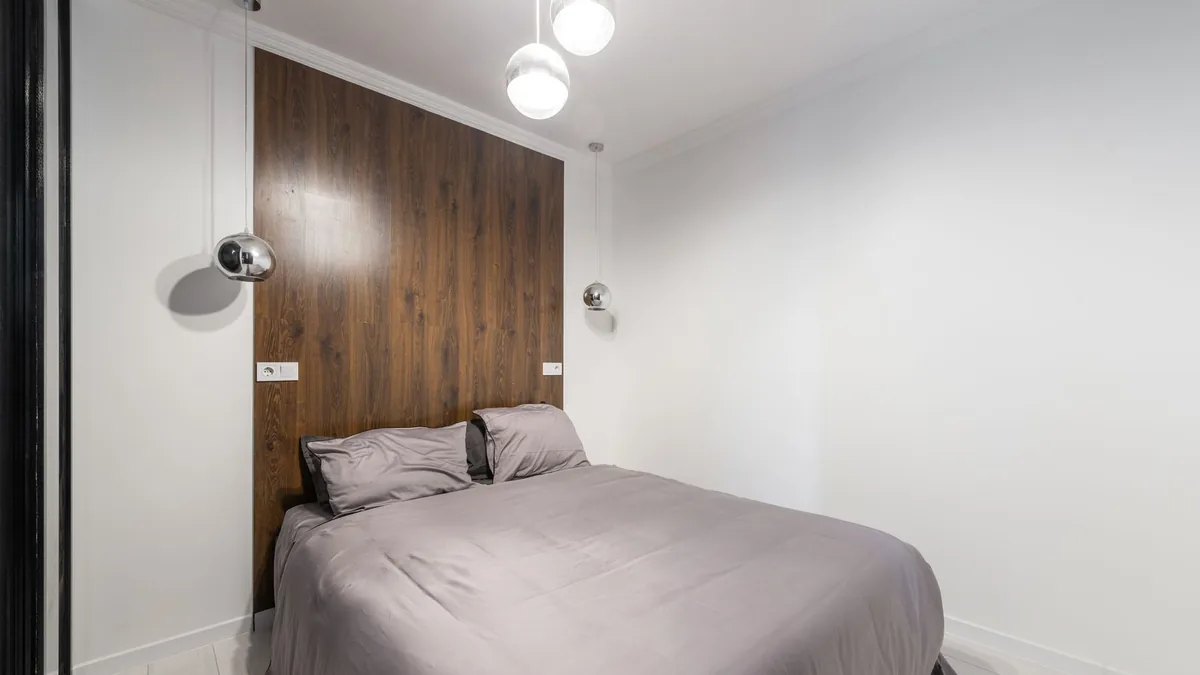
You have a full and a queen open in two tabs, and the number that jumps out is 6 inches of width. Comparing the two mattresses leaves out the frame that goes under them and the sheets that go on top, and those set both the floor you lose and the bill: for one mattress, one frame and one sheet set, the queen versions cost $310 more (our arithmetic). Below: who each size suits, how much floor each leaves in a 9- or 10-foot-wide room with a real frame, what the step up to a queen costs item by item, and a verdict for your situation.
The short answer
- One sleeper under 5 feet 10 inches (the stricter cut-off here), in a smaller room: a full. It is 54 inches wide, 16 more than a twin, and on the frame below it still leaves 26.7 inches a side in a 9-foot-wide room (our arithmetic).
- Two adults every night: a queen, at 30 inches each against 27 on a full. One maker tells couples to start at a queen; another says many couples are perfectly cozy on a full.
- Room 9 feet wide, getting in on each side: a full. A queen on that frame leaves 23.6 inches a side, just under the 24-inch walkway the makers’ guides here suggest (our arithmetic). Against one wall a queen leaves 47.3 inches on the open side, but 9 feet is below the 10 x 10 ft queen minimum on the makers’ guides read here and in our bed sizes guide.
- Taller sleeper: a queen. A full is 75 inches long, the same as a twin; on the two makers’ pages here, the cut-off for a full is 5 feet 10 inches or about 6 feet, and other guides go higher (see bed sizes).
- Tight budget: a full. For the same mattress, frame and sheet set the queen adds $310 here, $200 of it the mattress (our arithmetic).
How do a full and a queen compare?
Four things decide it: who sleeps on the bed, how tall they are, how much floor the room has once the frame is in, and the total bill. Here are the two sizes side by side; the other bed sizes are in our bed sizes chart.
| Full (double) | Queen | |
|---|---|---|
| Mattress, width x length | 54 x 75 in | 60 x 80 in |
| Width each, two sleepers | 27 in | 30 in |
| Length in feet and inches (our arithmetic) | 6 ft 3 in | 6 ft 8 in |
| Smallest room, one maker’s guides | 9 x 10 ft | 10 x 10 ft |
| One wood platform frame, outer width x length | 54.7 x 77.1 in | 60.7 x 82.1 in |
| Mattress + frame + sheet set below, price (reference) | $2,389 | $2,699 |
Is a full enough for one person, or for two?
For one adult, yes, on the two makers’ pages read here. A full is 16 inches wider than a twin at the same 75-inch length. One mattress maker’s full guide calls it the right choice for a single adult who wants room to spread out, and also lists teens and guest rooms. On another maker’s full-vs-queen page, a full offers plenty of space for most single people, while solo sleepers who tend to stretch out at night should choose a queen.
For two adults, the makers disagree. Shared, a full gives each person 27 inches, narrower than a crib mattress, and a queen 30. The first maker says a full works for short guest stays but is tight as an everyday couple’s bed, and that couples should start at a queen. The second maker’s comparison says many couples are perfectly cozy on a full and that it is big enough for couples who like to sleep closely, but suggests a queen if one of you is a bed hog, and lists a full as not enough space for people with large pets or kids. If a child or a dog regularly ends up in the bed, count them in (our suggestion).
For anyone tall, length decides it. A full is 75 inches long, 6 feet 3 inches, and a queen 80 inches, 6 feet 8 inches (our arithmetic). The cut-offs for a full differ: on the second maker’s page, anyone 5 feet 10 inches or taller will likely need the queen’s extra 5 inches; on the first maker’s full guide, a full suits sleepers up to about 6 feet. Other guides go higher: one maker’s comparison guide says a full can accommodate someone up to 6 feet 7 inches (the height notes in our bed sizes guide compare them), so check your height against the 75-inch length rather than any one cut-off (our suggestion). That first maker’s queen guide in turn puts the queen at sleepers up to about 6 feet 2 inches. If you are taller than that, compare the longer sizes in the bed sizes chart above.
Will a queen fit your bedroom with a real frame?
The frame, not the mattress, is what sits on the floor. One wood platform frame with a headboard, the Allen, is sold in both sizes and prints its outer footprint: 54.69 inches wide by 77.05 long for the full and 60.71 by 82.09 for the queen. That frame adds under an inch to the width of either mattress and about 2 inches to the length (our arithmetic); others add more, and a queen guide on one mattress maker’s site puts typical queen frames at 62 to 65 inches wide.

How much walkway is enough? The full and queen guides from the first mattress maker above say to keep at least 24 inches of walkway on each open side of the bed, and that a dresser needs roughly 36 inches clear in front to open its drawers. Their smallest rooms are 9 by 10 feet for a full and 10 by 10 for a queen; other makers’ minimums are compared in the bed sizes chart.
Here is what each bed leaves in a 9- and a 10-foot-wide room, centered, with a walkway on each side (our arithmetic):
| Room width | Full mattress | Full on the frame | Queen mattress | Queen on the frame |
|---|---|---|---|---|
| 9 ft (108 in) | 27 in a side | 26.7 in a side | 24 in a side | 23.6 in a side |
| 10 ft (120 in) | 33 in a side | 32.7 in a side | 30 in a side | 29.6 in a side |
| 9 ft, bed against one wall | 54 in open side | 53.3 in open side | 48 in open side | 47.3 in open side |
Reading the table (our reading):
- A 9-foot-wide room is the full’s room if you want to get in from each side. The queen on this frame falls just short of 24 inches a side; the first maker’s queen guide calls 24 inches a side in a 9-foot room workable, but tight once a nightstand takes its share. A 9-foot room is also below the 10 x 10 feet that maker, and all three makers compared in our bed sizes chart, give as a queen’s minimum. If you plan a nightstand beside the bed, subtract its width from that side’s walkway too (our suggestion). On a 65-inch frame, the top of that typical range, a queen would leave 21.5 inches a side (our arithmetic).
- A 10-foot-wide room takes either size on this frame: about 30 inches a side for the queen, more than 32 for the full. A queen on a frame up to 65 inches wide still leaves 27.5 a side (our arithmetic); a 73-inch frame like the wood one in our bed sizes guide leaves 23.5, just under 24.
- Against a wall, either bed leaves more than 47 inches on the open side of a 9-foot room. With two sleepers, one climbs in over the other, and for a queen the room is still below the 10 x 10 ft minimum above.
- Length is the smaller issue in a 10-foot-long room: from the headboard wall, the full frame leaves 43 inches at the foot and the queen frame 37.9. A dresser facing the foot of the bed needs about 36 inches clear in front plus its own depth, more than either bed leaves, so in a room that size it goes on another wall (our reading).
Check your own room in three steps:
- Measure the wall the headboard will go against, wall to wall in inches, and the room’s length out from that wall.
- Subtract the frame’s outer width, from the frame’s product page, not the mattress size. Halve what is left if you want to get in on each side; each half should be at least 24 inches. Watch the order: the frame above lists length first.
- Subtract the frame’s length from the room length for the space at the foot, then mark the outline on the floor with tape before you order, as one mattress maker’s size guide suggests, and open the doors and drawers around it (our suggestion).
How much more does going up to a queen cost?
The same three pieces in each size, as listed on the makers’ own sites:
| Item, same model in each size | Full, price (reference) | Queen, price (reference) | Queen costs more by (our arithmetic) |
|---|---|---|---|
| Organic 11″ Hybrid Mattress | $1,499 | $1,699 | $200 |
| Allen Wood Platform Bed Frame | $700 | $800 | $100 |
| “Original” Percale Sheet Set | $190 | $200 | $10 |
| Total | $2,389 | $2,699 | $310 |
The mattress is $200 of the $310 difference here, nearly two-thirds (our arithmetic). That gap depends on the model: across the 15 same-model, same-feel full and queen pairs in that mattress maker’s catalog, the queen costs $85 to $300 more at the prices shown (our arithmetic). So price your own mattress in both sizes before you decide the queen is out of reach (our suggestion).
The top layer need not cost anything extra. A down-alternative comforter from the sheet maker above comes in one Full/Queen size, so the same comforter at the same price covers either bed; on a full it simply hangs further down each side (our reading). Fitted sheets are the exception: they have to match the mattress size. If you are choosing sheets anyway, our best sheets picks cover the options.
Full or queen: which should you choose?
Run your answers from the sections above through these (our reading):
- One sleeper under 5 feet 10 inches (the stricter cut-off here), in a room about 9 feet wide: a full. You keep a walkway on each side and the money, and two people can still share it for a short guest stay.
- One sleeper who sprawls, in a room 10 feet wide or more: a queen, if the extra cost (here $310, or your own sum) is affordable. If it is not, the full still gives you 16 inches more than a twin.
- Two adults every night, or a child or dog who regularly joins: a queen. At 27 inches each a full is a short-stay bed on one maker’s guide, though the other maker says couples who like to sleep closely can be cozy on it.
- Two of you in a room only 9 feet wide: a queen can still go in against one wall, or with about 23.6 inches a side on a slim frame, though a 9-foot room is below the 10 x 10 feet the makers’ guides here give as a queen’s minimum, and the first maker calls it workable but tight once a nightstand goes in. A full buys back about 3 inches of floor a side and costs 3 inches of bed each.
- Anyone 5 feet 10 inches or taller (about 6 feet on the other page here; other guides go higher): a queen is the safer pick for its 5 extra inches of length, whatever the width question says. Compare your height with the 75-inch length too (our suggestion).
If you go for the queen, our rug size for a queen bed guide covers what goes under it.
Where these numbers come from
Mattress sizes, width per sleeper, room minimums, walkways and the fit advice come from mattress makers’ size guides, and frame footprints and prices from the makers’ product pages, linked above and read on 17 October 2026. The floor left around each bed, the heights in feet and inches and the price differences are our arithmetic.
Frequently asked questions
Is a full bed big enough for two adults?
It depends whose guide you read: one maker calls a full fine for short guest stays but tight as an everyday couple's bed, and says couples should start at a queen; another says many couples are perfectly cozy on one, but suggests a queen if one of you is a bed hog. Shared, a full gives each person 27 inches of width and a queen 30.
How much bigger is a queen than a full?
A queen mattress is 60 by 80 inches and a full 54 by 75, so the queen is 6 inches wider and 5 inches longer. On one wood platform frame sold in both sizes, the queen frame is 60.7 by 82.1 inches and the full 54.7 by 77.1, so the frame difference is about the same 6 and 5 inches (our arithmetic).
Will a queen fit in a 9-foot-wide bedroom?
Only just, if you want to get in on each side. A 60-inch queen mattress in a 108-inch room leaves 24 inches a side, and the same queen on a 60.7-inch frame leaves 23.6, just under the 24-inch walkway the mattress makers' guides suggest (our arithmetic). Pushed against one wall, the queen frame leaves 47.3 inches on its open side. Either way, a 9-foot room is below the 10 by 10 feet that one maker's guide here, and the three in our bed sizes guide, give as a queen's minimum, and that maker calls 24 inches a side in a 9-foot room workable but tight once a nightstand goes in. A full on its frame leaves 26.7 inches a side.
How much more does a queen cost than a full?
For one mattress, one frame and one sheet set read here, each in both sizes, the queen set costs $2,699 against $2,389 for the full: $310 more, of which $200 is the mattress, $100 the frame and $10 the sheets (our arithmetic). Across one mattress maker's line the queen adds $85 to $300 at the prices shown, depending on the model. A comforter sold in one Full/Queen size costs the same for either bed.
- #queen vs full
- #bed sizes
- #mattress sizes
- #room planning