Front Porch Ideas: Seating, Lighting and Planter Layouts
How to plan a front porch: measure the path to the door, fit a rocker, bench or swing, size and hang porch lights, and arrange planters, a rug and a door mat.
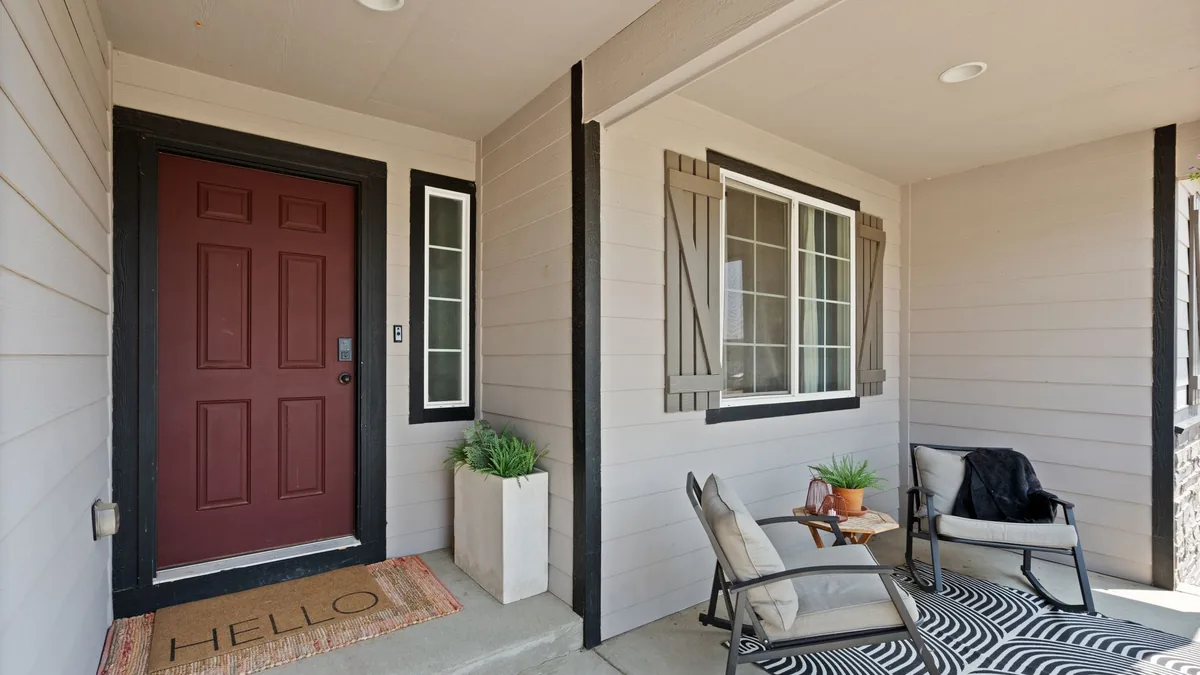
The rocker knocks the wall when you rock back, the lantern that looked big in the box looks tiny beside the door, and the planter you just watered is dripping onto the mat. Shopping from the photo skips the measuring: one rocking chair 33.8 inches deep comes with a recommended 2 to 3 feet of clearance in front and behind, so with the 3-foot path to the door running in front of it the porch has to be about 94 to 106 inches deep (our arithmetic). Below is the order to plan a front porch in: measure the porch and the path to the door, fit the seating, size and hang the lights, place the planters, then choose the mat and rug.
The short answer
| Step | What to check |
|---|---|
| 1. Measure | Porch depth and length, the door’s height, width and swing, and a 3 ft path from the steps to the door (our suggestion) |
| 2. Seating | Porch depth with the path in front (our arithmetic): bench 18 in deep, about 54 in; the Presidential rocker, about 94–106 in (82–106 in beside the path); a 30 in bistro table, about 102 in; a swing, 72–96 in plus its own depth, hung from a sound 2x6 or 2x8 joist |
| 3. Lighting | Fixture ¼–⅓ of the door’s height (one retailer: ⅓ for a single light, ¼ each for a pair), mounted about 66–72 in up; damp-rated under a roof, wet-rated where rain reaches it; about 450–800 lumens at the source (our conversion of one maker’s 40–60 W comparison) |
| 4. Planters | Drainage holes, and generally at least 2 gallons; a matched pair beside the door; 5-gallon containers can get heavy when wet |
| 5. Mat and rug | Mat sized to the door’s width (a medium 23 × 35.5 in mat for a 36 in door on one maker’s chart); 12–24 in of floor around an outdoor rug (one rug maker, for the look) |
What should you measure before you buy anything?
A front porch is a hallway first: people carry bags and parcels from the steps to the door, and everything else fits around that line. Measure these and sketch them on paper (our suggestion):
- Depth, from the house wall to the railing or the edge of the floor, at each spot where seating could go.
- Length, wall to wall or post to post, and where the posts, steps and any downspouts sit.
- The door: its height, its width, and which way it opens. Height sets the size of the lights in step 3; width sets the mat in step 5. If the front door, a storm door or a screen door opens out onto the porch, open it fully and mark the arc on the floor, then keep seating, planters and thick mats out of it (our suggestion).
- The path from the top step to the door. One maker’s bench guide allows at least three feet of clearance around a bench for walking space; keep the same 3 feet clear along this path (our suggestion).
- The ceiling, if the porch is covered: its height, and whether there is a joist or beam where a swing or pendant light could hang.
- What stays dry in a storm. That decides which light rating you need in step 3, and which cushions and rugs can stay out (our reading).
The depth figures below start from one convention: the seat backs onto the house wall and the 3-foot path runs in front of it. Where a seat needs clear room in front, as a rocker or swing does, the path counts toward that room (our arithmetic). Porch depth minus 36 inches is what is left for the seat and any room it needs behind it. Where a seat sits beside the path rather than in front of it, for example at the ends of a porch whose steps lead straight to the door, only the maker’s clearances apply: the rocker then needs 24–36 + 33.8 + 24–36, about 82–106 inches, and the bistro set and swing figures do not change (our arithmetic). On a 7-foot (84-inch) porch, for example, the path in front leaves 48 inches: enough for a bench, not for the rocker in front of the path (off the path, its 82 inches fits at the low end), the bistro set or the swing. With the path in front, a glider gets 48 − 24 = 24 inches for itself on that porch, less than the rocker’s 33.8 (our arithmetic), so a glider helps only if its own listing gives a smaller clearance than the balcony guide’s 2 to 3 feet, or it sits off the path.
What seating fits on your porch?
Each kind of seat needs its own footprint plus room to move or to walk past it. Here are the figures from one maker’s product page and guides, and the porch depth they add up to with the path in front.
| Seating | Size | Clearance in the maker’s guides | Porch depth with the 3 ft path in front (our arithmetic) |
|---|---|---|---|
| Rocking chair (Presidential) | 26.1 in wide, 33.8 in deep | 2–3 ft in front and behind (product page); 2–3 ft on all sides (balcony guide) | 24–36 + 33.8 + 36 = about 94–106 in (7.8–8.8 ft) |
| Bench (example) | 4 ft long, 1.5 ft deep | At least 3 ft on any side that sees foot traffic | 18 + 36 = 54 in (4.5 ft) |
| Porch swing | 2–4 ft long for one or two adults, 5–7 ft for more; seat 18–36 in deep | 3–4 ft in front and behind, 12–14 in on either side | 72–96 in plus the swing’s own depth |
| Bistro set (30 in table) | Table and chairs for two to four | At least 36 in from the table to walls | 36 + 30 + 36 = 102 in (8.5 ft) |
A rocking chair needs room to rock as well as to sit. The POLYWOOD Presidential Rocking Chair is 26.1 inches wide and 33.8 deep, with a recommended clearance of “2–3’ front and back to prevent bumping walls/furniture”. With its back to the house and the 3-foot path in front doubling as its front clearance, it needs 24 + 33.8 + 36, about 94 inches of depth, or about 106 with 3 feet behind it (our arithmetic). If you would rather nobody walks through the rocking room, add the front clearance on top of the path: about 118 to 142 inches (our arithmetic). Set beside the path, it needs only its own clearances, 24–36 + 33.8 + 24–36, about 82 to 106 inches (our arithmetic). Rocking chairs and gliders get 2 to 3 feet on all sides in the same maker’s balcony guide, so a pair needs that gap between them too (our reading). Set it on a flat, even part of the floor, since its rocking motion is designed for most flat, even surfaces. It costs $239 to $359 depending on color, at 11 October 2026 prices (price for reference only). Its drawback is the rocking room itself: with the path in front, on a porch less than about 94 inches (7.8 feet) deep it will either hit the wall or narrow the path below 3 feet (our reading).
A glider needs less room to rock, though not necessarily less porch depth (our reading): gliders are generally larger than rocking chairs but, in the same maker’s glider guide, need less room to move, because the fixed base lets the seat move back and forth only a few inches. The balcony guide above still lists 2 to 3 feet for both, so measure with the glider’s own listed depth plus that clearance before you buy.
A bench suits a narrow porch, because it sits still against the wall. Keep at least three feet of open space on any side of it that sees foot traffic, with a four-foot bench a foot and a half deep as the example in one maker’s bench storage guide. Against the house wall, that bench plus the 3-foot path takes 54 inches, 4.5 feet of depth (our arithmetic). On a porch that doubles as the main entrance, a bench is also somewhere for guests to sit and take off their shoes, and a side table by the front door gives you a place to set things down while you open it.
A porch swing needs swing room in front and behind, and a ceiling strong enough to hang it from. The same maker’s hanging guide lists 3 to 4 feet in front and behind and 12 to 14 inches on either side. Swings run two to four feet long for one or two adults and five to seven feet for more, with seats roughly 18 to 36 inches deep. So a 5-foot swing wants at least 84 inches of wall (60 + 12 + 12). In depth it needs 72 to 96 inches plus its own depth, with the 3-foot path fitting inside the room in front (our arithmetic). Hang it from a load-bearing beam or ceiling joist with adequate support on both ends, 2x6 or 2x8, that can safely hold the swing and anyone on it. Because structural supports differ, a carpenter or hardware professional can tell you which chains, hangers and connectors you need; professional installation is recommended for a daybed swing, and swings are quite heavy, so have a friend or family member help you hang one. If you cannot find a joist like that, or the porch ceiling sags, have a carpenter look before you hang anything (our suggestion).
A bistro set suits coffee for two: bistro tables and compact sets for two to four people are the size one maker’s dining guide calls perfect for balconies, narrow porches and cozy patios. With at least 36 inches between the table and the house wall, as that guide asks, and the 3-foot path on the other side, a 30-inch table needs 36 + 30 + 36 = 102 inches, 8.5 feet of depth (our arithmetic). Our guide to small patio ideas works through bistro layouts in more detail.
For what each frame material does in sun, rain and wind, and how to clean and store it for winter, see our patio furniture guide.
How big should porch lights be, and how high?
Choose the type by where it goes. As a general guide, one lighting maker pairs a large outdoor wall-mounted unit with the front door, an outdoor ceiling flush mount with a single-story porch, and outdoor pendants or a second- or third-largest wall mount with a multi-story porch.
Size wall lights from the door. For lanterns beside a door, choose fixtures about one quarter to one third of the front door’s height. One lighting retailer’s guide splits that range: about one third of the door’s height for a single light, while a pair can be slightly smaller, about one quarter; the same 1/3-to-1/4 range appears in another retailer’s guide. On an 80-inch door, that is about 27 inches for a single fixture or 20 inches each for a pair (our arithmetic). Go by the height on the spec sheet, not the size name: a second lighting maker’s “medium” LED wall lantern (now discontinued; shown only to read its spec sheet) is 9¾ inches tall, under half of that 20 (our reading).
Hang it a little above eye level. The three guides land between 66 and 72 inches, measured slightly differently: 5 feet 7 inches to 6 feet from the ground (the first lighting maker), about 66 inches above the door’s threshold (the first retailer), and, for most front doors, 66 to 72 inches from the floor to the fixture’s center point (the second retailer, which adds that going too far above 72 inches is generally not recommended). Where the electrical box sits matters too: depending on its location, a different arm style can put the bulb at the right height, per the first retailer’s guide.
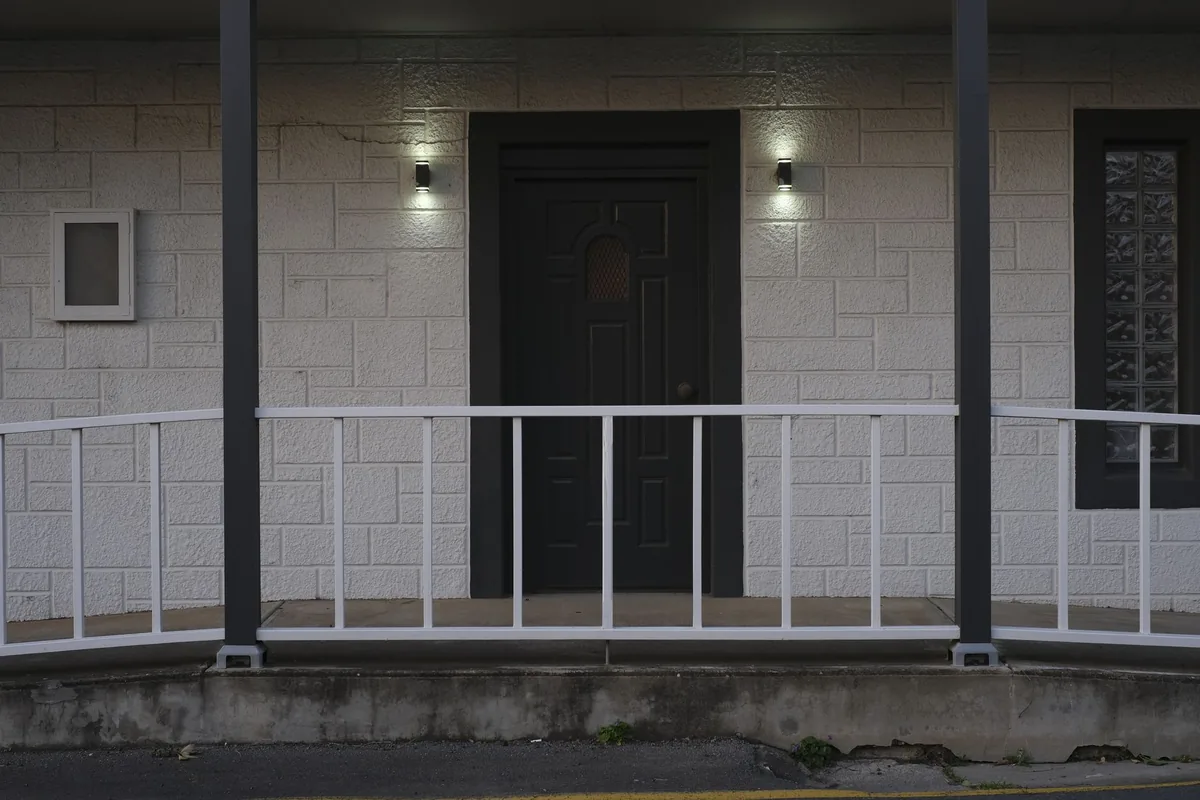
Match the rating to the roof. A damp-rated fixture suits covered places such as porches and cannot be exposed directly to water, even in a storm; a wet-rated fixture can be exposed to direct precipitation (the first lighting maker’s definitions). If rain reaches the wall beside your door, buy wet-rated (our reading).
Brightness. For doorway lighting, the first lighting maker’s front-door guide takes the light of a 40 to 60 watt incandescent bulb as the brightness to match (our reading). A replacement needs at least 450 and 800 lumens to match those two bulbs on an older ENERGY STAR CFL buying chart, so look for about 450 to 800 lumens (our conversion). Those are bulb figures: compare them with a fixture’s source lumens, from its bulb or LED module, not the lumens delivered out of the fixture, which will be lower (our reading). The discontinued 9¾-inch lantern above, for example, lists 623 lumens at the source, inside that range, and 326 delivered.
Color. Light color is measured in kelvin (K): lower numbers look yellowish, higher numbers whiter or bluer, and 2700K is warm white or soft white, the standard color of incandescent bulbs, on the same chart. The discontinued lantern above is 3000K. Use the same color temperature in every fixture on the porch so they match (our suggestion).
Wiring. Swapping a hard-wired fixture means working on a household circuit: switch off its breaker before you start, and if you have not wired a fixture before, hire an electrician (our suggestion).
How should you arrange planters by the front door?
Pick a layout. Large matching planters on either side of the front door make a balanced, elegant statement; tall planters frame a doorway and bring drama to a narrow space. With a single bench, the bench guide from step 1 balances it with planters or lanterns. Add it up before you buy: two 18-inch planters beside a 36-inch door take 72 inches of wall, before any trim or sidelights (our arithmetic). Keep both out of the path and the door’s swing (our suggestion).
Size and drainage. The best containers have drainage holes in the bottom, in one university extension guide to growing annual vegetables and flowers in containers; if yours have none, cut, punch or drill holes. Containers holding at least 2 gallons of soil generally work best; small ones dry out quickly and tend to blow over in windy weather, especially with tall plants. Raising containers slightly, on boards, bricks or paving stones, helps the drainage holes work. If a planter sits on a saucer, empty it after watering so the soil does not stay saturated; on a porch floor that also keeps standing water off the boards (our reading).
Weight. Containers holding at least 5 gallons of soil can be quite heavy, particularly when wet, which makes them hard to move and can cause problems when several sit on a balcony, roof or deck. Soilless mixes, peat moss with perlite or vermiculite, are quite light, and the extension guide points to them if you will move large containers regularly or keep many on a balcony or similar structure where excess weight can be a problem. Wheeled planter caddies, one maker’s tip for oversized planter boxes, make them easier to reposition. If the porch floor is soft, sagging or rotting, have it checked before adding several large planters (our suggestion).
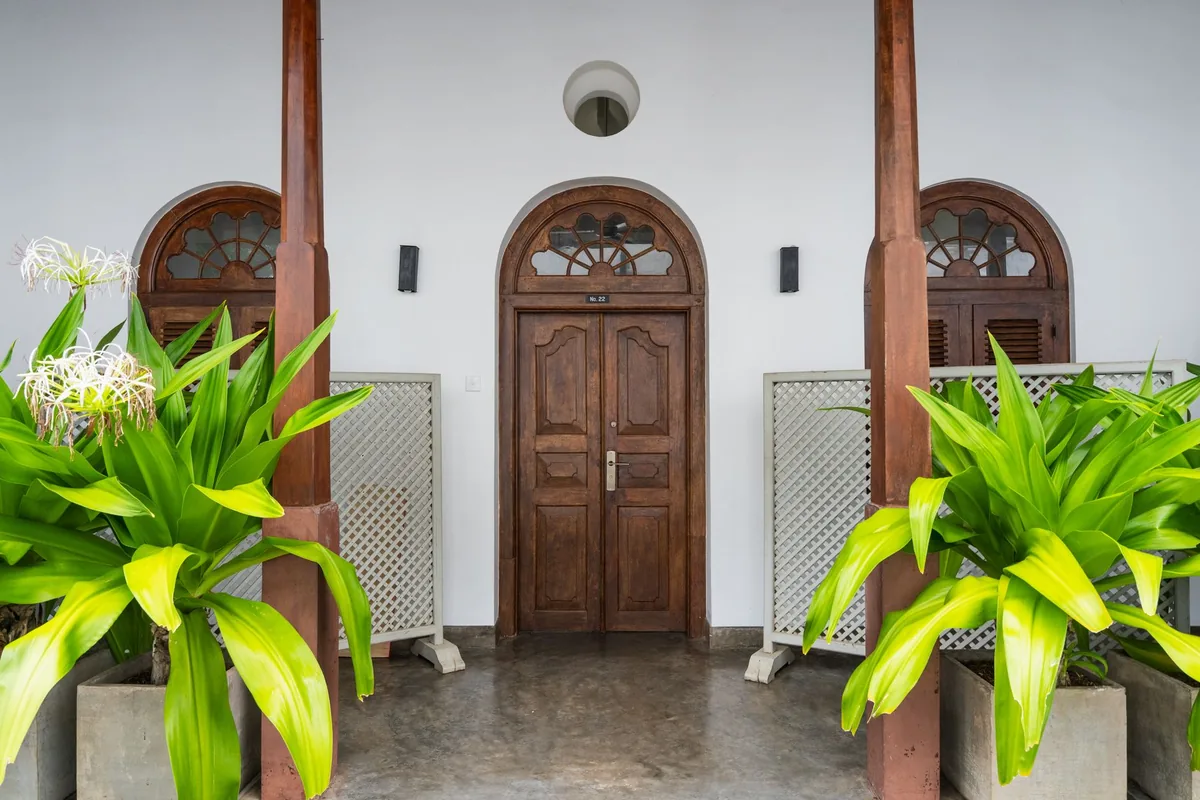
One planter that fits a pair. The POLYWOOD Nautical Tapered Square Tall Planter Box is 18 inches wide, 17.4 deep and 41.7 tall, and takes a 5-gallon pot or direct planting on an interior shelf with drainage holes. It weighs 56.5 lb empty and cleans with soap and water. It costs $379 to $569 depending on color, at 11 October 2026 prices (price for reference only). Its drawback is that weight, before any soil goes in; setting a 5-gallon nursery pot on the shelf instead of planting directly lets you lift the plant out on its own (our suggestion).
What size door mat and outdoor rug?
The door mat. Size it to the door’s width. In one mat maker’s sizing guide, a standard American single-entry door is typically 36 inches wide and its medium mats are designed for that width. Its large mats typically spill past a single door and, in most cases, reach partly into sidelights, which are typically 12 or 14 inches wide; its extra-large mats cover them edge to edge, and in most cases suit double doors, typically 72 inches wide. Before you order, mark the mat’s corners with tape and check that the door clears it, as the mat maker’s FAQ advises; its sizes can vary by up to 3%.
The WaterHog Squares Doormat is one example: sold as indoor/outdoor, 3/8 inch tall overall, and $45.00 for the medium (23 by 35.5 inches) at 11 October 2026 prices (price for reference only). To clean it, shake or sweep off loose debris, hose it off and let it air-dry. Its drawback is that the medium is sized for the door alone. A 36-inch door with two sidelights is 60 to 64 inches across with 12- or 14-inch sidelights (our arithmetic): the large (35.5 by 59.5 inches, $110, price for reference only) reaches partly into them, and the extra-large (45.5 by 70 inches, $170, price for reference only) covers them.
The outdoor rug. Let the seating layout and the porch’s size set the rug; for the best look, leave 12 to 24 inches of floor showing around it, in one rug maker’s size guide. A 3-by-5-foot rug fits under a small table and two chairs, 5-by-7 and 6-by-9-foot rugs suit mid-sized porches, and a 2-by-3-foot doormat can be layered on top of a 3-by-5 rug. A 5-by-7 rug with 12 inches of floor around it needs a clear area 7 by 9 feet; with 24 inches, 9 by 11 (our arithmetic). Keep the rug’s edge out of the path and the door’s swing so nobody catches a foot on it (our suggestion). Since it sits in the weather, choose an indoor/outdoor rug that dries quickly, resists fading and can be hosed off, the kind one maker’s balcony guide recommends. For rugs inside the door, our guide to area rugs covers indoor sizes; more outdoor guides are in patio and garden.
Where these numbers come from
Clearances, product sizes and planter tips come from POLYWOOD’s guides and product pages, light sizing and ratings from Kichler’s guides, a Progress Lighting spec sheet and the Lamps Plus and Home Depot buying guides, lumens and color temperature from an older ENERGY STAR CFL buying chart, container advice from a University of Wisconsin Extension publication, and mat and rug sizes from WaterHog and Ruggable, all read on 11 October 2026. Prices are those the brands’ pages showed without a code that day. Porch depths and wall widths marked as our arithmetic, and the lumen range marked as our conversion, are our own sums.
Frequently asked questions
How much space does a rocking chair need on a front porch?
More than its own depth. The POLYWOOD Presidential Rocking Chair here is 33.8 inches deep and lists 2 to 3 feet of clearance in front and behind. With its back to the house and the 3-foot path to the door in front of it, doubling as its front room, it needs about 94 to 106 inches of porch depth, 7.8 to 8.8 feet; set beside the path instead, only the maker's clearances apply, about 82 to 106 inches (our arithmetic). Rocking chairs and gliders get 2 to 3 feet on all sides in the same maker's balcony guide. Measured the same way, a bench 18 inches deep needs 54 inches, 4.5 feet (our arithmetic).
What size should a front porch light be?
About one quarter to one third of the door's height, in one lighting maker's front-door guide and two retailers' guides; one of the retailers gives one third for a single light and one quarter each for a pair. On an 80-inch door that is about 27 inches for a single fixture or 20 inches each for a pair (our arithmetic). The three guides put the mounting height between 66 and 72 inches, each measured slightly differently.
How many lumens should a porch light be?
About 450 to 800 lumens at the source, by our conversion. One lighting maker's front-door guide takes the light of a 40 to 60 watt incandescent bulb as the brightness to match for doorway lighting (our reading), and a replacement needs at least 450 and 800 lumens to match those two bulbs on an older ENERGY STAR CFL buying chart. Compare that range with the bulb or LED module's lumens, not the lower figure delivered out of the fixture (our reading).
What size doormat do I need for my front door?
Match it to the door's width. A standard single door is typically 36 inches wide, and one mat maker designs its medium mats, 23 by 35.5 inches on the mat here, for that width; in most cases its large mats reach partly into sidelights, while its extra-large mats cover them edge to edge and suit double doors about 72 inches wide. Either way, check that the door still opens over the mat.
How do you arrange planters on a front porch?
A matched pair of large planters, one on each side of the door, is the balanced layout one maker's planter guide suggests; tall planters suit a narrow space. Use containers with drainage holes that hold at least 2 gallons, the size one university extension guide to growing annual vegetables and flowers in containers says generally works best, keep them out of the path and the door's swing, and empty any saucer after watering.
- #front porch ideas
- #porch lighting
- #planters
- #outdoor rugs